

Stablecoins often market themselves as being “available 24/7, almost in real-time,” but before a cross-border corporate payment can be made on the blockchain, someone must first find sufficient liquidity in US dollars or local currencies. Quotations come from various over-the-counter traders, with balances, credit limits, and expiration dates scattered across chat software, emails, and their respective portals. By the time operators have compared the prices, the best quotation may no longer be valid. On October 15th, Fireblocks published an article about the liquidity of stablecoin payments, introducing their Liquidity Market service: allowing companies to inquire about prices from multiple traders simultaneously, compare quotations, credit limits, and balances on the same interface, and keep records of the transactions and corresponding quotations. The company stated that this service is planned to be launched within a week of Money20, with B2C2 and Zodia Markets as the first providers of liquidity. However, this timeline should not imply that all customers have already been connected to this service.
This is not a new issuance of a stablecoin, nor is it a promise to offer the cheapest foreign exchange. It targets the very specific procurement processes of payment companies: which trader can provide a price for a certain transaction, how much of that quota is still available, who approves the transaction, and whether it can be traced afterwards. No matter how fast the on-chain settlement is, it cannot eliminate the shortage of liquidity at the front end; if a company incurs high bid-ask spreads when converting between its local currency and US dollar stablecoins, the speed advantage may even be offset by the costs. For readers, it is best to start understanding this news by focusing on three key points: “who is conducting the transactions, who provides the quotes, and who manages the funds.”
The bottleneck in stablecoin payments is sometimes not the blockchain itself, but rather the quotation platforms.
According to Fireblocks, in the past year, its platform has processed an average of over $300 billion in stablecoin transactions per month. This figure represents the scale observed by the platform, but it cannot be directly equated with the total global stablecoin payments, nor does it prove that all of these transactions are for retail shopping. The typical process described by the company involves querying a few OTC traders one by one: one provides a price in Telegram, another confirms the amount via email, and the third requires logging into the portal to check their balance. While this approach is barely feasible for just two traders, extending it to more countries and currencies would make manual verification a bottleneck in the process. This is also why the payment company's products can claim instant settlement, yet the finance team is still waiting for back-office currency conversion and position replenishment.
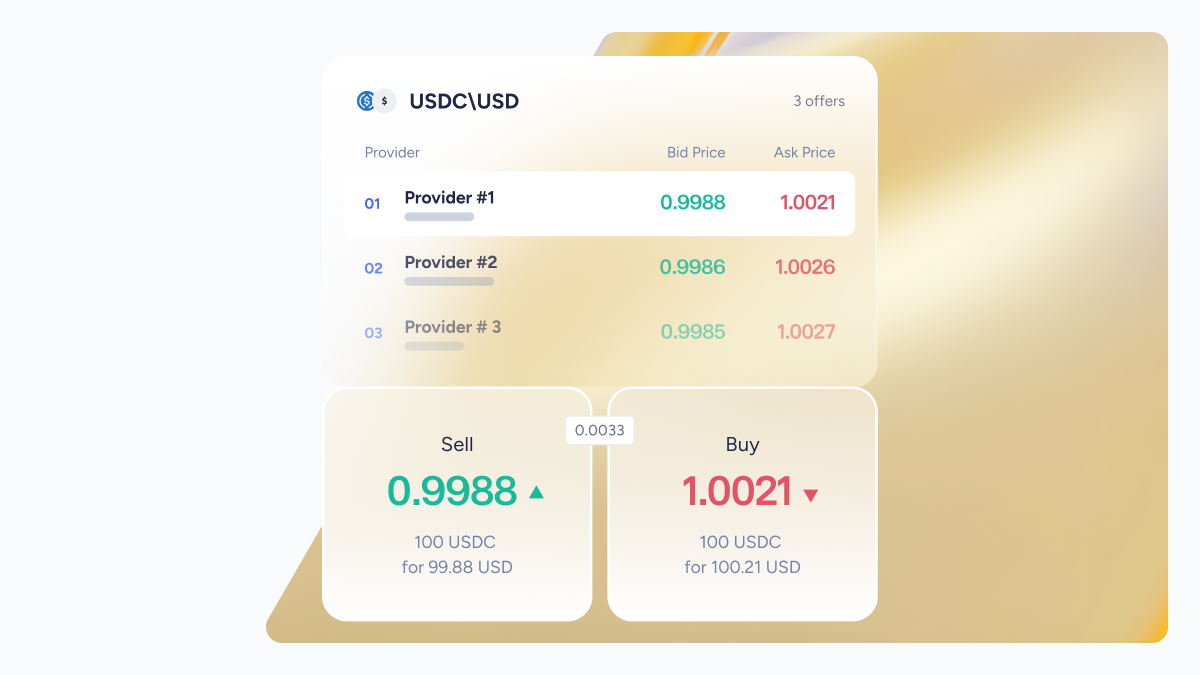
The approach of Liquidity Market is to connect existing transaction relationships into accounts within the platform, allowing for a centralized view of each trader's quota and balance. Bid and ask requests are sent simultaneously through a multi-trader quotation board. After a transaction is completed, the source of the quote, execution status, and historical records are retained, and it integrates with Fireblocks's own trading authorization policies. If these functions operate as designed, companies would not need to develop a new system for each trader individually, and audit teams would also be able to understand why a particular price was chosen for a certain payment. However, this is still just a description by a supplier of its own product, and there is a lack of externally disclosed real transaction slippage, inquiry success rates, or operational data for various jurisdictions. Improvement in efficiency can only be verified by users in the actual payment process.
The company also stated that there are already over 10 non-bank traders on the platform providing liquidity to payment companies, and more than 325 payment companies are using Fireblocks. These two sets of figures indicate a potential network of connections, but they do not mean that all these customers have already adopted Liquidity Market, nor can they be considered as the number of customers who have utilized this new service. The initial group of participants in B2C2 and Zodia Markets is just a starting point. Whether subsequent traders will join, whether there will be sufficient depth in pricing, and whether liquidity will still be provided under extreme market conditions will all directly affect the value of the product. Having an additional pricing window does not necessarily lead to cost reduction; it is only with sufficient, real, and executable competitive pricing that execution quality may improve.
The platform acts as a matchmaker and does not act as the counterparty in the transactions itself; therefore, the risks remain on the institution's books.
Fireblocks emphasizes that its network does not hold customer assets nor acts as a counterparty in transactions. This positioning is different from the proprietary liquidity of exchanges: the platform is responsible for connection, workflow, and security control, while the actual quoting and execution still come from external traders. The advantage is that payment companies can continue existing trading relationships, reducing the conflict of interest of a single platform setting prices on their behalf; however, the limitation is that the credit, settlement conditions, and legal responsibilities of each trader still need to be assessed separately. If a quote is revoked before the payment is completed on the blockchain, or if there is a delay in the local withdrawal process, the so-called “unified interface” will not automatically bear the losses.
Therefore, enterprises need to incorporate the validity period of quotes, credit usage, authorization thresholds, and on-chain confirmation of fund arrival into the same control system. For high-value cross-border payments, the price difference is just a part of the costs; trader failures, incorrect fund transfers, address verification, and local bank operating hours can also affect the final delivery. Only if products can integrate this information into the existing processes of the finance team can liquidity management shift from a manual, person-to-person inquiry approach to a repeatable operational capability. However, if a fancy quote screen is added without proper exception handling and backup mechanisms, any gains in efficiency will be offset by new operational risks.
Fireblocks The article proposes a product roadmap that addresses real-world pain points, rather than being the end to all frictions associated with stablecoin payments. Money20 A launch plan within 20 weeks, along with the first two liquidity providers and the platform's existing customer base, are all descriptions that can be verified at present; global coverage, how much margin can be saved, and the final settlement efficiency will require subsequent data. For stablecoins to become part of regular corporate financial management, blockchain speed accounts for only half of the equation; the other half depends on whether pricing, credit, and responsibility can also be institutionalized.
Source: Fireblocks, October 15, 2026, " Why Liquidity Is the Real Bottleneck in Stablecoin Payments ": https :// www.fireblocks.com / blog / stablecoin-payments-liquidity-bottleneck