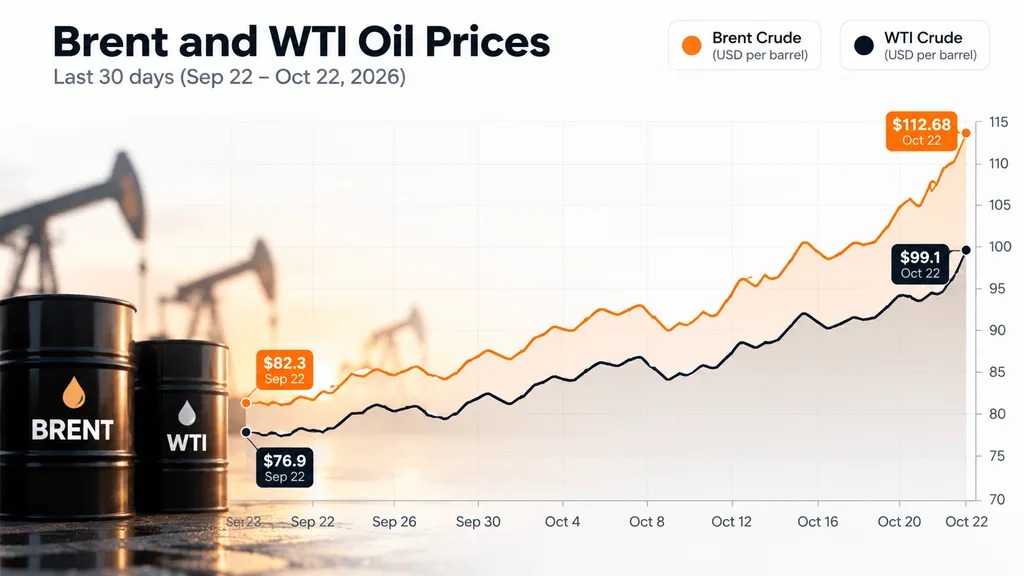
On Thursday (October 22), crude oil prices rose to a five-month high, with Brent crude reaching $112.68 per barrel at one point. This was due to a fatal drone attack on the Saudi Aramco Shaybah oil fields owned by Saudi Aramco, and at the same time, shipping routes in the Middle East were once again attacked.
Brent crude oil rose by more than 2% in the early session, while US West Texas Intermediate crude oil (_WTI) approached $100 per barrel. Prior to this increase, reports indicated that an incident at the Shaybah oil field resulted in two deaths, and there were also additional casualties at an airport in eastern Saudi Arabia.
Aramco oil field attack results in two deaths, but crude oil production continues
The Saudi Ministry of Energy stated that its air defense system intercepted a drone targeting the processing facilities at the Shaybah oil field on October 21st.
Falling debris ignited a contractor's vehicle outside the facility, resulting in the death of two workers, one from the Philippines and one from Nepal. Two other workers were injured.
The department confirmed that operations have not been affected. The daily production capacity of Shaybah is approximately 1 million barrels, making it an important part of Saudi Arabia's oil infrastructure.
Saudi Arabia has repaired some of the damaged infrastructure, but new attacks continue to highlight the security issues regarding its export routes.
Despite the restoration of Gulf exports, oil prices still rose to $112
Despite signs that crude oil transportation in the Middle East is recovering from previous disruptions, this round of price increases has still occurred.
According to an analysis by Reuters on October 22, crude oil exports from the Persian Gulf reached approximately 17.3 million barrels per day in October, exceeding pre-war levels.
However, shipping routes remain vulnerable. Attacks on oil tankers, higher insurance premiums, and expensive alternative transportation arrangements continue to drive up the costs of crude oil delivery.
The recovery of Saudi exports has already been evident in recent export data, even though the country's crude oil production is still below previous levels.
The International Energy Agency once warned that global inventories had been depleted, leaving buyers with less buffer in the event of unexpected supply disruptions.
Meanwhile, as of the week ending October 16th, US crude oil inventories decreased by about 3.1 million barrels, providing another layer of support for oil prices.
Will Brent oil prices continue to rise?
The short-term outlook depends on whether the attack will cause persistent disruptions to production, pipelines, or shipping routes.
On the contrary, if Saudi production remains stable and exports from the Gulf region continue to improve, the additional risk premium currently reflected in crude oil prices may decline.
Governments around the world have attempted to alleviate supply shortages by releasing emergency oil reserves, but such releases can only provide temporary relief.
As crude oil prices rise, the diesel shortage continues, with disruptions in refineries and transportation affecting the supply of fuel products.
Emir Abyazov
Editor-in-Chief Coinpaper, responsible for driving data-driven editorial operations, content discovery oriented towards SEO, as well as creating narratives that prioritize the audience interests in areas such as cryptography, artificial intelligence, and fintech.