Tesla scrolled down through the list of issues, but skipped over HW3.
Tesla has already admitted that HW3 vehicles cannot support FSD without supervision. When will car owners know whether they can upgrade the hardware for free, and when will Tesla provide a clear plan?
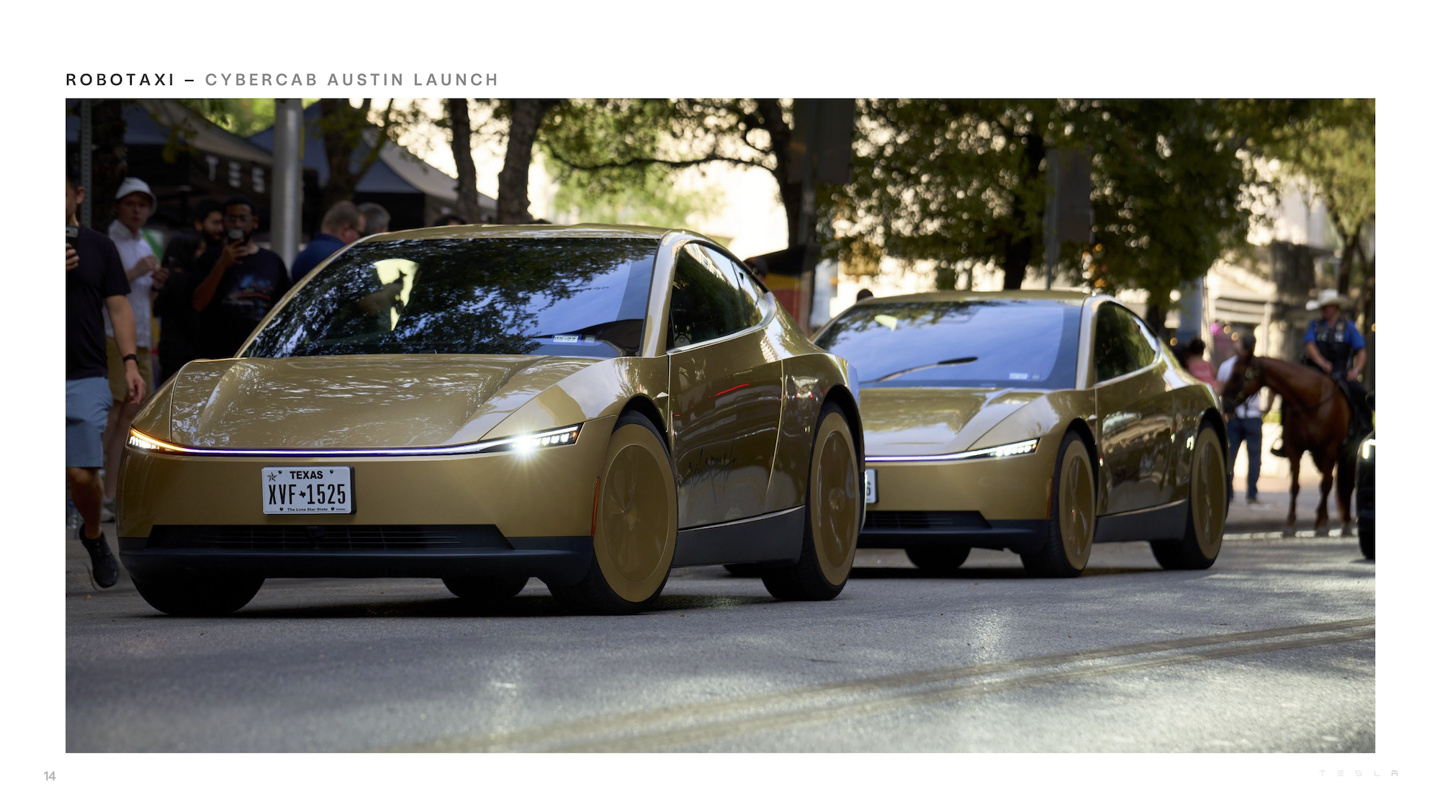
At the teleconference on Wednesday, the head of investor relations, Travis Axelrod, read out nine questions from Say.com. Tesla answered questions regarding Cybercab expansion, unmonitored FSD in customer vehicles, Cybercab ownership, as well as unit economics issues for Robotaxi and Optimus. Subsequently, they also addressed questions about Optimus training data, Optimus revenue, FSD maps, and factory capacity.
In all rankings released before the teleconference, the rankings for Optimus revenue and FSD map were both lower than that of HW3. The issue of Optimus training data didn't even make it into the top ten.
At the end of this session, Axelrod said, "That's all for the questions regarding Say.com." The analyst also did not ask any questions about HW3. Throughout the entire phone call, HW3, AI3, or any modifications and upgrades were not mentioned even once.
The question that was skipped is actually the other half of another question that Tesla answered.
The second question posed to Tesla was: "When can we expect customer vehicles to achieve unmonitored FSD?"
The person in charge of Tesla AI, Ashok Elluswamy, stated that the same software running on Model Y Robotaxi and Cybercab will be provided to customers through FSD v15. At some point around the second quarter of next year, the first batch of customer vehicles may join the Robotaxi fleet.
This is another delay, and a new timeline has been provided. However, historical experience suggests that this timeline is likely to be pushed further back again. This response also only applies to HW4. During the first-quarter 2026 teleconference, Elon Musk admitted that Hardware simply does not have the capability to achieve FSD without human supervision, citing that its memory bandwidth is only one-eighth of that of HW4. Therefore, whenever Tesla provides a timeline for achieving FSD without human supervision, it is actually not a timeline that applies to millions of Tesla cars; these cars were sold with the claim that they already possess all the hardware required for fully autonomous driving.
And the owner of HW3 was promised something by Musk during the last two teleconferences. In April, Musk mentioned that "mini-factories" would be set up in major cities to replace computers and cameras, with discounts offered for trade-ins. In July, when an analyst from Truist asked about this, Musk said that upgrading would make sense "at some point," and also mentioned that it would be possible to skip HW4 and go straight to the next generation of motherboards or AI5, with AI5 being used first for Optimus.
There are no costs, no timelines, and no processes involved. And this quarter, not even a mention of it was made.
Tesla's legal risks surrounding HW3 continue to rise
Tesla once sold FSD for up to $15,000 and promised that the vehicles themselves already came equipped with the required hardware. Today, the company is facing class actions in the United States, China, and Australia; in the Netherlands, a class claim has also expanded to nearly 7,000 owners of HW3 vehicles, supported by a law firm. Documents from the Dutch regulatory agency RDW show that Tesla has submitted only HW4 in Europe for FSD approval.
This year, HW3 car owners received a scaled-down version of the FSD v14 “Lite”. This is a driving assistance feature that requires supervision and falls far short of the capabilities they expected when they made their purchase.
Views of Electrek
Every response given by Tesla to HW3 is accompanied by a dollar figure, and it's likely to be a substantial one: either it's for estimating the cost of replacing computers and cameras in around 4 million vehicles for us, or it's for compensating car owners. Every statement regarding this matter could potentially be cited in court. At least for this quarter, it's cheaper to remain silent.
HW3 The upgrade issue is no longer just an engineering problem. Musk has already stated that this hardware cannot achieve the required capabilities. The real question is whether Tesla will stand by its promises to customers; however, for now, the answer seems to be silence. HW3 Will car owners receive a genuine solution before the judge intervenes? I bet they won't.
If you drive an electric vehicle, using household solar power can reduce fuel costs to nearly zero. Last year, electricity prices rose by nearly 10%, and it is expected to continue to rise. Installing solar panels is one of the best ways to offset these increasing costs. Through leasing and the PPA program, you can even start using solar power with no down payment and immediately start saving money. If you want to find the most cost-effective solution, you can check out EnergySage. This is a free service, and hundreds of pre-approved installers will compete for your order, so you can usually save 20% to 30% compared to searching on your own. There will be no sales calls before you choose an installer. Click here to get a free quote.
FTC: We use automated affiliate links that can generate revenue. For more information.