

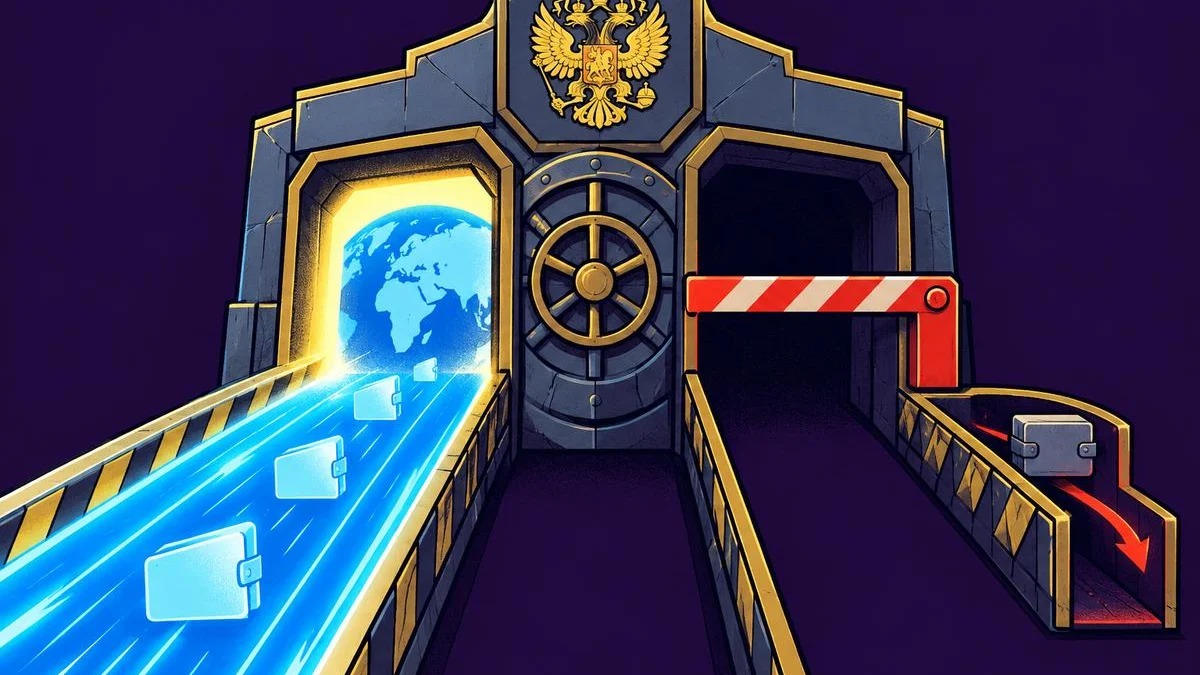
While tightening domestic transfer controls, Russia's cryptocurrency regulations still reserve a channel for overseas payments. On October 29th, the Russian Central Bank confirmed that unmanaged wallets can still be used for international settlements, but investors are not allowed to directly transfer cryptocurrencies from regulated Russian accounts to personal wallets.
Key Points
- Self-hosted wallets can still be used for international settlements.
- The ordinary retail purchase limit is calculated based on intermediary institutions, with an annual cap of 300,000 rubles.
- The transition period for direct peer-to-peer transactions expires on July 1, 2027.
- Encrypted companies registered within 90 days must join a self-regulatory organization.
Cross-border encrypted transfers still retain self-hosted pathways.
International settlement exemptions allow the use of wallets whose private keys are controlled by the holders themselves, without going through exchanges or custodian institutions. Vladimir Chisochkin, the First Deputy Governor of the Central Bank of Russia, confirmed this stance at a corporate governance forum hosted by the Moscow Exchange.
"Unmanaged wallets can be used for international settlements," Chi Siqiu Xin said to reporters on October 29th.
He also described an indirect route from regulated domestic accounts to self-hosted wallets: Investors can first transfer their assets to a regulated overseas custodian platform and then withdraw them to their personal wallets from there. However, direct transfers from regulated Russian digital accounts to these wallets are still restricted.
Russian crypto regulations tighten domestic access
Federal Law No. 282- FZ came into effect on September 1st, introducing control measures for licensed domestic cryptocurrency trading and custody services. This framework limits the annual purchase amount for ordinary retail investors to 300,000 rubles per intermediary.
Before obtaining tradable assets, retail investors must also pass a qualification review, while qualified investors are subject to a different set of requirements.
These domestic transfer restrictions do not prohibit investors from holding cryptocurrencies that are already stored in their personal wallets.
The transition period for peer-to-peer transactions is approaching.
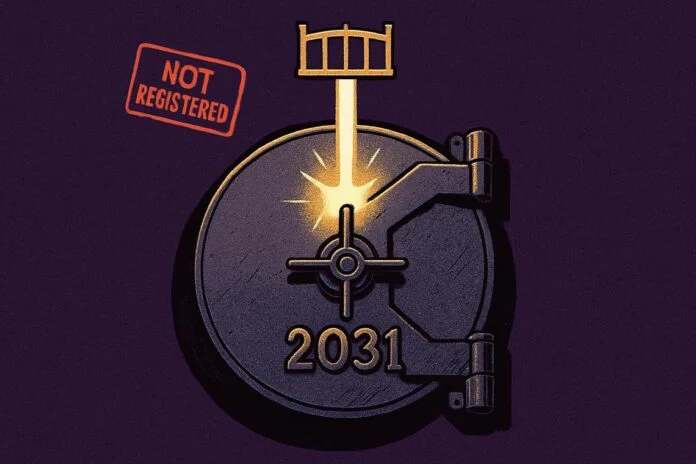
According to the Central Bank of Russia, individuals can continue to conduct direct peer-to-peer encrypted transactions until July 1, 2027. After that date, residents will be required to process such transactions through authorized intermediaries.
This transitional arrangement allows for the continuation of direct trading within a specified time frame, while also setting a deadline for transferring related activities to authorized services.
With NAUFOR taking over supervisory responsibilities, market infrastructure expands.
On October 29th, the Russian Central Bank designated the National Association of Securities Market Participants ( NAUFOR ) as the self-regulatory organization responsible for overseeing crypto exchanges and digital custody institutions. According to the Central Bank's records, there are currently 23 exchange operators and 8 custody institutions listed.
Within 90 days after registration, enterprises must join a self-regulatory organization. NAUFOR will be responsible for setting standards, supervising compliance, and guiding enterprises in fulfilling their relevant obligations.
The Moscow Exchange has announced plans to launch regulated cryptocurrency trading, while the Russian Federal Savings Bank ( Sberbank ), which is already registered as a digital custodian institution, intends to introduce crypto services in December.
This article was generated with the assistance of artificial intelligence and has been reviewed by an editorial team.