LakeSail Announces Cooperation with Oxide Computer Company to Promote Secure and Cost-Effective Private Clouds
PR Newswire
1h ago
Ai Focus
LakeSail announces a strategic partnership with Oxide Computer Company, stating that both parties will help enterprises modernize their data and AI infrastructure while maintaining security, performance, and cost control. Both sides indicated that the LakeSail open-source, Rust native, and Spark compatible computing engine Sail has been verified on the Oxide platform.
Helpful
No.Help

LakeSail announces a strategic partnership with Oxide Computer Company to help enterprises modernize their data and AI infrastructure while maintaining security, performance, and cost control.

This collaboration stems from the successful verification of Sail on the Oxide platform. Sail is an open-source computing engine launched by LakeSail, which is native to Rust and compatible with Spark. It has already been running on the integrated rack-level cloud platform of Oxide, establishing a verified foundation for a secure and customer-controlled AI environment.

Oxide provides a cloud-like user experience within the customer's data center through an integrated platform and a unified control plane. Its architecture includes a hardware trust root, as well as mechanisms for verifying the integrity of the software stack.

Sail retains Spark API, SQL, and DataFrame, while replacing the traditional JVM execution layer with the Rust native architecture. It supports Python, Apache Iceberg, and Delta Lake, allowing enterprises to modernize their systems without having to rewrite existing applications.

LakeSail indicates that by removing the JVM execution layer, Sail can reduce costs and performance bottlenecks related to cluster startup, garbage collection, memory tuning, idle capacity, and overconfiguration. Depending on the workload and configuration, LakeSail claims that its performance can be up to 10 times higher, and infrastructure costs can be reduced by up to 98% compared to equivalent Spark and deployments based on JVM.

Enterprises can use Sail as open-source software, or they can purchase the commercial version of LakeSail Platform to obtain management, governance, security, and support capabilities.

LakeSail, co-founder and CEO, Shehab Amin, stated: "We believe that data processing and AI should be completed within the same engine, rather than being handled by two separate systems that customers have to piece together. By combining the efficiency of Sail with the cloud infrastructure owned by customers through Oxide, companies can gain greater flexibility in construction without increasing complexity or the traditional JVM cost structure."

Oxide Computer Company, co-founder and CEO, and Steve Tuck stated: "As the importance of data management and processing continues to rise in AI, we are delighted to see LakeSail running on Oxide. The modern execution engine of LakeSail running on the local deployment of Cloud Computer in Oxide allows customers to gain insights from data more quickly, while still maintaining control over where the data is stored."

Availability

Sail can be used as open-source software. LakeSail Platform and Oxide Cloud Computers are sold and supported separately. Verified configurations are available for qualified enterprises to evaluate and use. Contact information: [ email protected ].

About LakeSail

LakeSail is the company behind Sail and the commercial version of LakeSail Platform. LakeSail was co-founded by Shehab Amin and Heran Lin. For more information: lakesail.com.

SOURCE LakeSail

Tip
$0
Like
0
Save
0
Views 27
HQYC reminds readers to view blockchain rationally, stay aware of risks, and beware of virtual token issuance and speculation. All content on this site represents market information or related viewpoints only and does not constitute any form of investment advice. If you find sensitive content, please click“Report”,and we will handle it promptly。
Submit
Comment 0
Hot
Latest
No comments yet. Be the first!
Related
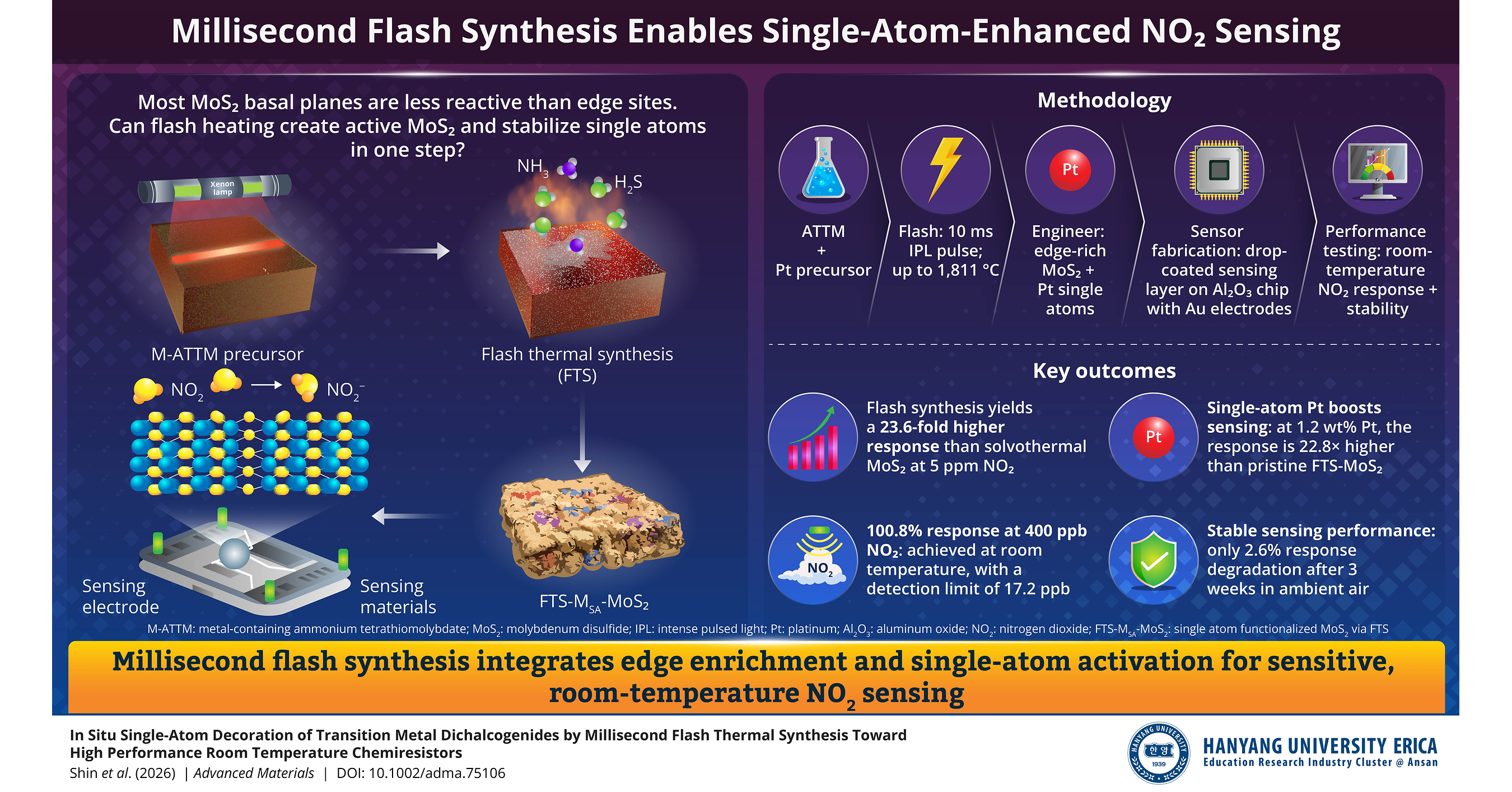
Hanyang University ERICA researchers have found that a 10-millisecond flash may help to create more sensitive gas sensors
Hanyang University ERICA and a research team from the Korea Institute of Science and Technology stated that they used flash thermal synthesis driven by 10-millisecond strong pulsed light to prepare molybdenum disulfide thin films with rich edges in one step, and introduced single-atom catalytic sites, which significantly improved the performance of nitrogen dioxide sensing at room temperature. The research results were published in Advanced Materials in September 2026, but the researchers noted that their performance in real-world environments and commercial devices still needs further evaluation.
PR Newswire
·2026-10-30 21:15:51
0
A barrel of crude oil is priced at $100, but it may cost $130 to transport it to the destination. Where does the extra $30 go?
The original text states that Brent crude oil seems to be priced at $100 per barrel, but the actual cost to buyers, including delivery costs, may be even higher. Transportation, insurance, financing, storage, and refining all increase expenses, and during periods of geopolitical tension, risk premiums further drive up prices.
Coinpaper
·2026-10-30 21:05:29
7
Bitcoin Current Price on October 30th
As of 8:15 a.m. Eastern Time today, the market price for a single Bitcoin ( BTC ) is $77,380.93, which is a decrease of $2,655.67 from yesterday morning and also about $30,941 lower than it was a year ago. The article also introduces the basic concepts of Bitcoin, its price history, influencing factors, as well as methods of purchasing and investing in it.
Fortune
·2026-10-30 21:05:25
13
Morning Brief: Binance's $6.4 billion hack overshadowed the most important day for Hyperliquid
Binance suffered a hacker attack worth approximately $6.4 billion, with Tether and Circle freezing about $2.39 billion in related funds; Aave and Polymarket also took measures due to the security incident. On the other hand, Hyperliquid saw a sharp rise due to its cooperation with ICE to advance compliant perpetual contract business in the United States, but then fell back due to market sentiment.
Decrypt
·2026-10-30 21:05:21
9
Monthly expenditure of 1.5 trillion token, annual expenditure of 132 million US dollars? The bills of Cursor engineers are beyond the reach of ordinary people.
OpenClaw founder Peter Steinberger estimated that last month, the AI cost of work was about 10 million US dollars; another Peter Piekarczyk calculated that the monthly cost could be as high as several hundred thousand to over a million US dollars based on the 1.5 trillion token displayed on the homepage of an engineer from Cursor. The article further discusses different billing methods, cache prices, Agent programming workflows, and the controversy this intensive AI development approach has sparked within the engineering community.
Wallstreetcn
·2026-10-30 21:05:16
7
View More