

As the tech sector has experienced a tough week, the S&P 500 has sent a signal that a better day is on the way: the breadth of the market is improving.
Despite ongoing concerns regarding artificial intelligence continuing to weigh on the tech sector, JPMorgan Chase Private Bank believes that there is a bullish signal in the benchmark indices, indicating that the market may soon see a rebound. Strategists at the bank pointed out in a recent report that the breadth of the market is expanding, a metric that measures the number of stocks in the S&P 500 that are rising relative to those that are falling.
For a large part of this year, the market breadth has been narrow, with only a few large-cap stocks driving gains at the index level, while most stocks have performed weakly.
However, this situation is changing.
The proportion of stocks in the S&P 500 that have reached a 20-day high has risen to over 50%. This is the first time this indicator has reached this level since the second quarter of 2025, when the market experienced a historic rebound following sales triggered by tariffs.
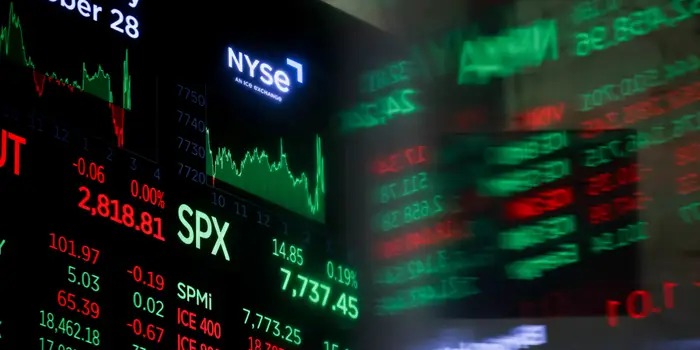
JPMorgan Chase stated that the recent expansion in market breadth tends to lead to further gains over the next three to six months, historically speaking. The bank has recently raised its year-end target for the S&P 500 to 8,000 points, indicating a potential upside of 5% from the current level.
Kriti Gupta, the Executive Director of JPMorgan Chase's Private Banking Department and a Global Investment Strategist, and Nick Roberts, the Portfolio Manager of the same bank, wrote in a report on Friday: "Despite a busy calendar of risk events, the breadth of the market and historical outperformance still give the U.S. stock market the conditions to achieve excess returns after the mid-term elections."
For U.S. stock market investors, the past few weeks have not been easy. Due to multiple rounds of heavy selling in artificial intelligence (AI) trading, the S&P 500 and the Nasdaq 100, which has a higher weight of tech stocks, are expected to close lower in October. Concerns regarding capital spending on AI have spread in several directions: investors worry that large tech companies are investing too much in AI; on the other hand, they also fear that if spending declines, it could trigger a series of consequences that would severely impact suppliers in the data center industry.
Deteriorating market breadth is one of the earliest warnings investors receive, indicating that things are not all well with artificial intelligence trading. Just a few weeks ago, benchmark indices were still hovering near record highs, but more than 80% of the constituents in the S&P 500 have fallen into a correction zone. Strategists believe that this decline in breadth suggests that damage is accumulating beneath the surface of the market.
As the midterm elections approach, more analysts are paying attention to this time point; historically, this is often seen as a "clearing hurdle" event, with stocks typically resuming their upward trend after the elections. According to an analysis by BlackRock, since 1970, the S&P 500 has averaged a gain of 14% in the six months following midterm elections.
Meanwhile, the selling of tech stocks continued on Friday as investors remained uneasy about related reports, as several tech giants stated that they would still increase capital expenditures next year despite negative cash flows. The Nasdaq index, which is dominated by tech stocks, has fallen by about 8% from its October high. At the same time, iShares semiconductors ETF have dropped by 28% from their 2026 highs, while Roundhill Neocloud ETF has fallen by 43% from their recent highs.