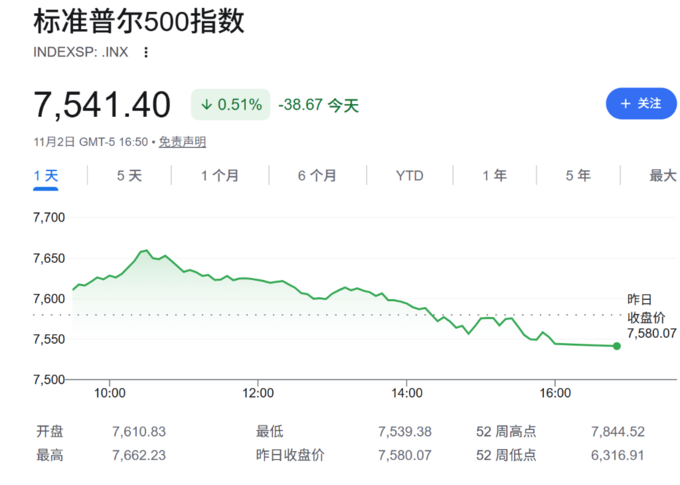
U.S. stock futures declined, while oil prices rebounded due to the bleak prospects for peace talks between the United States and Iran. With the mid-term elections approaching and the dual pressures accumulating, market risk sentiment has clearly eased.
S&P 500 futures fell 0.2%, while Brent crude oil rose 1.7% to above $106 per barrel. Meanwhile, spot gold fell below $3,900 per ounce, with a intraday decline of over 1%.
Geopolitical tensions and electoral uncertainties are jointly suppressing market sentiment. According to Reuters, despite both Washington and Tehran expressing a willingness to resolve the issue through diplomacy, significant obstacles to ending the war still exist. The NASDAQ 100 futures remained largely flat, as the index had already entered a technical correction zone earlier on. The boom in artificial intelligence trading has seen a noticeable cooling down. The European Stoxx 600 index fell by 0.6%, the MSCI regional index in the Asia-Pacific region declined by 1.1%, and South Korea's composite index closed down 3.59% at 5,648.79 points, while the Japanese stock market was closed.
Indosuez Wealth Management Chief Investment Officer Alexandre Drabowicz stated: "Investors are very cautious before entering the mid-term elections. Historically, the S&P 500 tends to recover and rise thereafter, and the fundamentals remain very solid. We need to wait for this event to play out."
S&P 500 futures fell 0.2%, while Nasdaq 100 futures remained virtually unchanged. South Korea's KOSPI index closed down 3.59% at 5,648.79 points. The Japanese stock market was closed. The yield on 10-year U.S. Treasury bonds did not change much, remaining at 4.91%; however, the yield on 10-year German bonds rose by 2 basis points to 3.31%. Brent crude oil increased by 1.7% to above $106 per barrel. Spot gold fell below $3,900 per ounce, losing more than 1% during the day.
The suspense around the election keeps investors on the sidelines
The mid-term elections in the United States are about to begin, and the control of Congress remains undecided, so the market has generally entered a wait-and-see mode. Indosuez Wealth Management Chief Investment Officer Alexandre Drabowicz stated: "Investors are very cautious before these mid-term elections. Historically, the S&P 500 usually recovers after these elections, and the fundamentals are still very solid. We need to wait for this event to play out."
According to the analysis of JPMorgan Chase's market intelligence department, there is a higher probability that the S&P 500 will strengthen after the elections. Multiple risks have emerged simultaneously—geopolitical uncertainties, technical adjustments in the artificial intelligence sector, and the unknown variables of the election results—are making it difficult for investors to easily increase their risk exposure.
Oil price rebound strengthens the logic of hedging
Brent crude oil saw a one-day increase of 1.7%, returning above $106 per barrel, becoming one of the main sources of pressure on current market sentiment. Reuters reports that although both the US and Iran have shown willingness to negotiate, there are still significant differences between them, and there is no clear timeline for a ceasefire agreement.
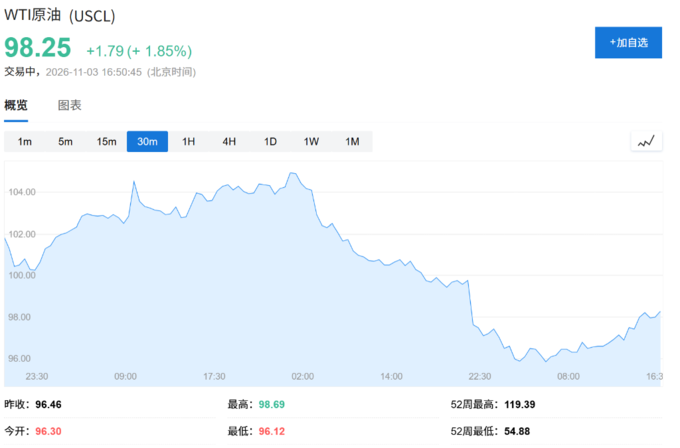
Rising oil prices have a dual impact on the stock market: on one hand, they drive up inflation expectations; on the other hand, they increase the cost pressures on businesses. The yield changes on government bonds are limited, and the trend of the US dollar is stable. The market is awaiting the release of a series of employment data this week, with the job vacancy report being released first today.
Tech sector under pressure, gold continues its downward trend
The decline in artificial intelligence-related transactions is becoming another major trend in the market. The NASDAQ 100 index has entered a technical correction, and the futures market shows a trend of stabilization at the opening, but it is still difficult to say that it has truly stabilized. South Korea's composite index, which is dominated by technology stocks, saw a single-day decline of over 3%, reflecting the synchronized pressure on the technology sector in the Asia-Pacific market.
In terms of gold, the spot gold price fell below $3,900 per ounce, continuing the recent downward trend. Between the demand for safe-haven assets and the stability of the US dollar, precious metals failed to receive effective support.