

The rebound in the AI data center led to a surprising political outcome during the mid-term elections on Tuesday. However, the ultimate biggest winners might be those tech giants that have already built many such facilities.
Voters across the United States sent a clear message on Tuesday: they want to slow down or stop the construction of new data centers. This could make it more difficult for the artificial intelligence industry to keep up with the surging demand.
Goldman Sachs warns that the election results could lead to restrictions that would affect approximately 45% of the planned data center expansions in the United States.
The biggest surprise came from Texas. Democrat Gina Hinojosa (Gina Hinojosa) defeated Republican Governor Greg Abbott (Greg Abbott). Hinojosa promised to immediately suspend the development of data centers in the state, which is home to some of the largest AI projects in the United States.
This sounds terrible for Amazon, Microsoft, and Google, which are the three largest data center operators in the world.
This differentiation highlights an important consequence of the election results: it makes it more difficult to build new data centers, which may strengthen the power of the largest tech companies while crushing some smaller competitors.
Amazon, Google, and Microsoft already operate vast data center networks filled with expensive NVIDIA chips, which provide computing power for the services of AI, including the services provided by OpenAI and Anthropic.
Smaller competitors are racing to catch up, investing billions of dollars in building new facilities and computing equipment.
However, if new projects are postponed or canceled, these challengers may be forced to bear the costs of expensive expansion plans, while their larger competitors continue to make money from facilities that are already in operation.
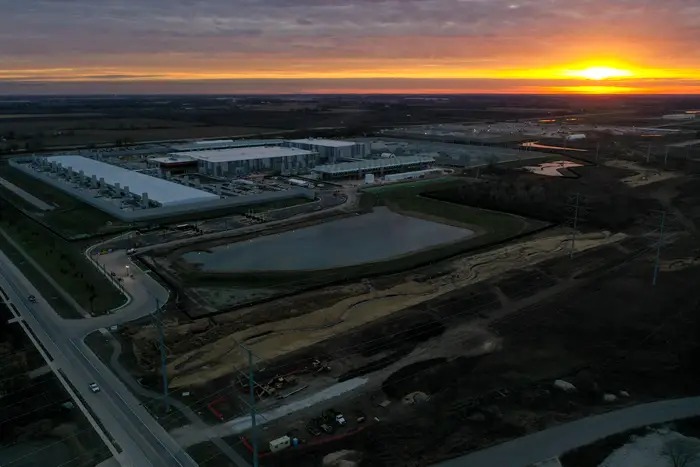
This means that Amazon, Google, and Microsoft will face less competition.
This may also mean higher prices.
With the demand for computing power in AI still surging, restrictions on new data centers may make the existing capacity even more valuable. This means that Amazon, Microsoft, and Google could see higher profits.
Macquarie analyst Paul Golding ( Paul Golding ) emphasized this development in a report to investors on Wednesday.
He wrote, "Approved and licensed project pipelines will become more valuable." He predicts that the growing demand for increasingly scarce data center capacity could drive up prices.
Signs of this supply and demand phenomenon are already evident. Tracking the issuance of Sil tokens that are used to rent NVIDIA GPU through cloud services shows that the prices of several popular chips have been steadily rising this year.
Circular Technology Brad Gastwirth, the global research director, told me: 'If demand continues to grow and protest activities delay the addition of new capacity, that could certainly help support the GPU rental prices.'
The irony in it is quite obvious.
Voters who attempted to curb the craze around the AI data centers may have just given Amazon, Google, and Microsoft greater control over this industry.