The National Institutes of Health ( NIH ) announced on the 5th the launch of the “Kidney Artificial Intelligence Discovery Challenge: From Nebulae to Nephrons” ( Kidney Artificial Intelligence Discovery Challenge : From Nebulae to Nephrons ), with a total prize fund of $100,000. Researchers are invited to apply artificial intelligence methods from astronomy to kidney disease data.
NIH indicates that approximately 35.5 million people in the United States suffer from kidney disease, yet there are still critical gaps in understanding regarding how this disease develops, progresses, and how patients respond to treatment. To help fill these gaps, NIH has invited researchers to utilize artificial intelligence, machine learning, and computer vision technologies to identify previously unrecognized patterns in kidney disease data. This challenge is organized with the assistance of the crowdsourcing solution platform HeroX.
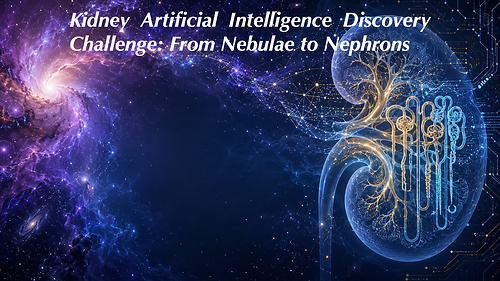
This challenge is managed by the Institute of Diabetes, Digestive and Kidney Diseases ( NIDDK ) of the country under NIH. NIDDK has established a Precision Medicine for Kidneys project ( Kidney Precision Medicine Project , KPMP ) aimed at mapping kidney cell types, tissue structures, and disease pathways. Participants will use the public data from KPMP Kidney Tissue Atlas , which includes whole-section biopsy images, spatial and molecular data, as well as clinical information, to identify rare or unexpected disease characteristics that may be overlooked by traditional analysis methods.
This method draws on techniques from astronomy. In the field of astronomy, anomaly detection based on AI helps researchers identify hidden, rare gravitational lenses in archived telescope images. NIDDK asks whether a similar approach could also uncover hidden findings in kidney pathology and contribute to the development of precision nephrology.
"This challenge invites researchers to examine kidney data in a completely new computational perspective, a method that has never been used before," said Dr. Robert Star, Director of the Department of Kidney, Urology, and Blood Diseases. "By drawing on anomaly detection methods that have been proven effective in fields such as astronomy, we hope to discover patterns that will deepen our understanding of kidney diseases and bring us one step closer to more personalized patient care."
Submissions will be evaluated based on the following criteria: discovery and novelty account for 50 points, technical methods and presentation account for 30 points, and the scientific explainability and usability of the results account for 20 points. NIDDK It is expected that a maximum of three cash awards will be awarded from a total prize pool of $100,000, with the first prize being $50,000, the second prize being $30,000, and the third prize being $20,000.
The submission period is from November 5, 2026, to April 29, 2027, and the review period is from April 30, 2027, to June 30, 2027. The winners will be announced on September 1, 2027.
Participants can register at herox.com / KidneyAI, and view the complete qualifications and submission requirements.