The boost to U.S. stocks from the Democratic Party's victory lasted only one day.
On Thursday, the market once again entered a panic mode, with the Dow Jones plummeting by more than 1,800 points and the Nasdaq falling by 5.5%, marking the worst day since April 2025.
The CME Volatility Index, which measures market fluctuations, VIX, soared by about 70%, marking the largest one-day increase in nearly two years and reaching its highest level in seven months. Companies related to AI construction saw a across-the-board decline as investors worried about a slowdown in growth after the mid-term elections. Market attention now turns to today's non-farm payroll report, and subtle changes in the Federal Reserve's monetary policy prospects could deal a new blow to the AI sector, which relies on financing.
Regulatory concerns remain unresolved
In Tuesday's mid-term elections, all states with the most ambitious AI data center construction plans shifted their support to the Democratic Party. Democrats won the governorships of Texas and Ohio, as well as key Senate seats, and also succeeded in the gubernatorial race in Georgia. According to Ballotpedia statistics, a total of 41 local referendum measures in 10 states imposed various forms of restrictions on data center construction.
For companies that are deeply tied to artificial intelligence infrastructure, the situation is deteriorating: rising interest rates and a surge in capital demands, coupled with the Democratic Party's comprehensive victory in Congress, have exacerbated market concerns that these sectors will be dragged down by excessive debt and insufficient revenue. As a result, the stock prices of new cloud service providers such as CoreWeave have plummeted for the second consecutive trading day. Since its listing in June, the market value of CoreWeave has evaporated by more than 70%.
Meanwhile, the Philadelphia Semiconductor Index tumbled by more than 12%. Qualcomm exacerbated the selling pressure after releasing disappointing earnings forecasts for this quarter; both Qualcomm and NVIDIA saw declines of over 9%, with NVIDIA's market value evaporating by nearly $450 billion.
The problem faced by chip manufacturers is that a global shortage of memory chips is driving up prices, making it more difficult to procure key components and leading to soaring prices of consumer devices. Intel reported last week a 78% increase in data center revenue, but due to the shortage of memory chips, its performance expectations fell short of expectations, resulting in a significant drop in its stock price. Investors are currently ignoring these impressive figures and are instead questioning the sustainability of this growth, as well as whether technology purchasers will be able to actually put all of this technology into use. "There will be an instinctive reaction in the market, which could lead to delays in some projects, and that will raise some concerns," said Richard Claude, portfolio manager at JPMorgan Henderson. "Unfortunately, we cannot find a solution to this problem in the short term."
Affected by this, the Nasdaq Composite Index recorded its largest single-day decline since President Trump announced tariff measures in April 2025, falling 10% from its record closing price on October 6th and entering a correction zone.
Melissa Brown, the head of global investment decision research at SimCorp, commented: "Investors seem to be beginning to realize that some newly elected members of Congress and governors are trying to slow down the development of artificial intelligence infrastructure. Although it seems unlikely that they will be able to completely stop it, any slowdown will cause concern, as the growth of artificial intelligence relies heavily on the rapid construction of supporting infrastructure."
Large tech stocks were not spared even after a rebound on Wednesday. Meta fell by 4%, and both Amazon and Alphabet fell by more than 2%. On Wednesday evening, the CEO of Meta acknowledged during an event that building data centers will "become more difficult" after the election. Meta, like its much larger peers Alphabet, Amazon, and Microsoft, has set ambitious infrastructure development plans with annual expenditure plans exceeding $100 billion. Meta reported negative free cash flow in the most recent quarter, in line with Alphabet and Amazon, which also saw negative free cash flow in the previous quarter.
Argent Capital Management Portfolio Manager Jed Elberuck stated, "It feels like we are now in a phase where data center capital expenditure beneficiary stocks, especially semiconductor stocks, are surrendering. However, I think the magnitude of these moves is too substantial."
President Ed Yardeni of Yardeni Research saw the potential light brought about by the contraction in artificial intelligence (AI) transactions and the obstacles to data center construction. "We hope to slow down the pace of AI development. It was too frenzied and speculative back then. Now, letting air out of the AI bubble is better than letting it burst."
It is worth noting that on Thursday, trading volume in the U.S. stock market significantly increased, with 26.9 billion shares traded, compared to an average of 17.7 billion shares traded over the past 20 trading days, representing a volume increase of over 50%.
Potential Risks: The Federal Reserve is Pressing Forward Step by Step
Today's market focus will be on the U.S. non-farm payroll data for October. Reporters from Yicai Finance have summarized that institutions predict that non-farm employment in October will increase by 65,000, up from 29,000 in September, with the unemployment rate remaining at 4.2%. Wage growth is expected to rise from 0.1% to 0.3%, a year-on-year increase of 2.9%. The average workweek is expected to remain unchanged at 34.4 hours.
Market participants believe that the unexpectedly strong employment data could affect the number and timing of future interest rate hikes.
On Thursday, two Federal Reserve officials presented reasons for adopting a modest and steady pace of interest rate hikes to address inflation that is higher than target. This marks the central bank's first statement since Democrats gained control of Congress and made progress in state-level elections, which could change the trajectory of price pressures in the economy.
"I expect monetary policy to take a restrictive stance in order to bring inflation down to 2% in a timely manner," said Beth Harkmarck, president of the Cleveland Federal Reserve Bank, in a speech ahead of an event in Zurich. This official has always been one of the firmest supporters of raising short-term interest rates to combat inflation. She stated that she prefers to achieve this goal through more frequent, small adjustments whenever possible, as this would cause less disruption to households, businesses, and financial markets. At the same time, a gradual increase in interest rates also helps to prevent "inflationary thinking" from spreading among the public.
Hammack's views on the interest rate path were echoed by Thomas Barkin, chairman of the Richmond Federal Reserve. He stated in Charlotte that inflation is "too high" and remains at a high level rather than easing. "The impact on policy is quite direct, and as for the future pace of interest rate hikes, a gradual approach is reasonable."
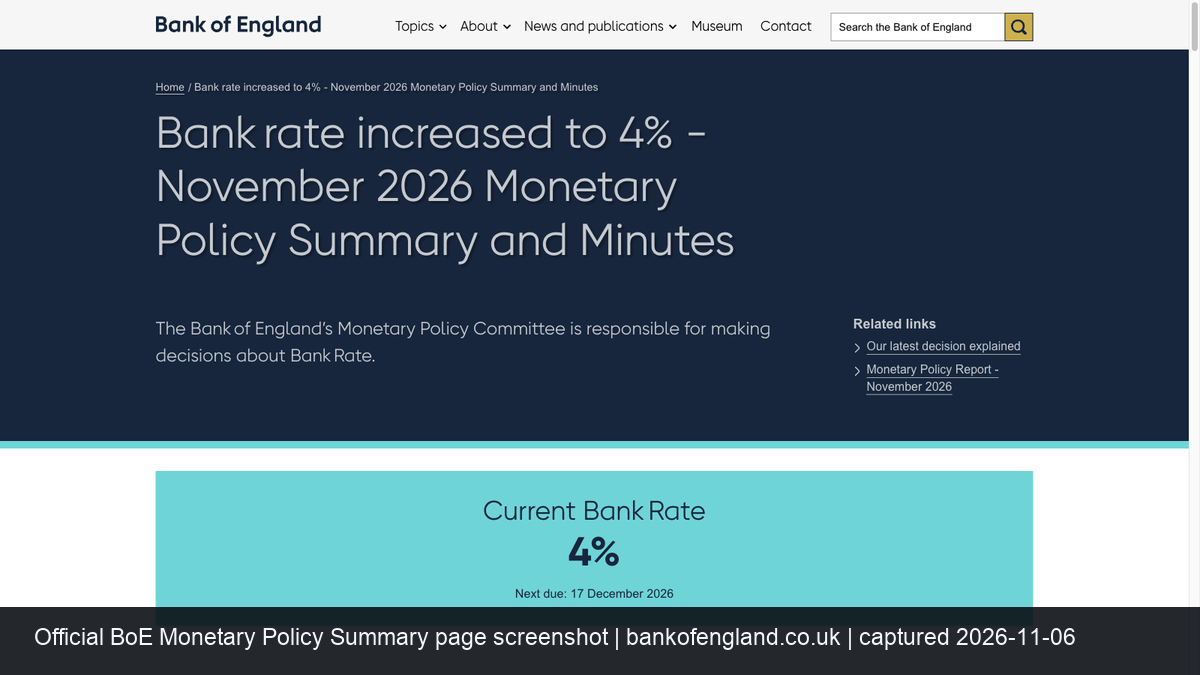
Last week, the Federal Reserve maintained its benchmark interest rate in the range of 3.75%-4.00%, despite policymakers acknowledging that inflation was higher than expected. The Fed raised rates in September, and financial markets generally anticipated another rate hike in December, with an additional increase of 25-50 basis points expected in the first half of next year.
Canadian brokerage TD Securities stated, "We still have confidence" that the Federal Reserve will raise interest rates by a total of 50 basis points by the beginning of next year. "If the mid-term elections can resolve the Iran conflict and/or reduce investment in artificial intelligence, the Federal Reserve may not need to further tighten policy after March."
The Democratic Party's sweeping victory in Congress will significantly weaken U.S. President Donald Trump's ability to govern in the remaining two years, and political rivalries may intensify further, but it is unlikely to fundamentally change the direction of his policies.
Kennedy believes that the results of the mid-term elections in the United States are unlikely to impose substantial constraints on Trump's administration's trade agenda.
The Philadelphia Semiconductor Index hit a six-month low.
The NASDAQ China Golden Dragon Index soared by over 3%.
Driven by the clear results of the U.S. mid-term elections and market expectations regarding fiscal spending constraints, spot gold saw a sharp rise on the afternoon of November 4th, breaking through the $4,000 per ounce mark.