In just a few days, the most powerful executives in the field of artificial intelligence went from being unshakable to becoming unemployed.
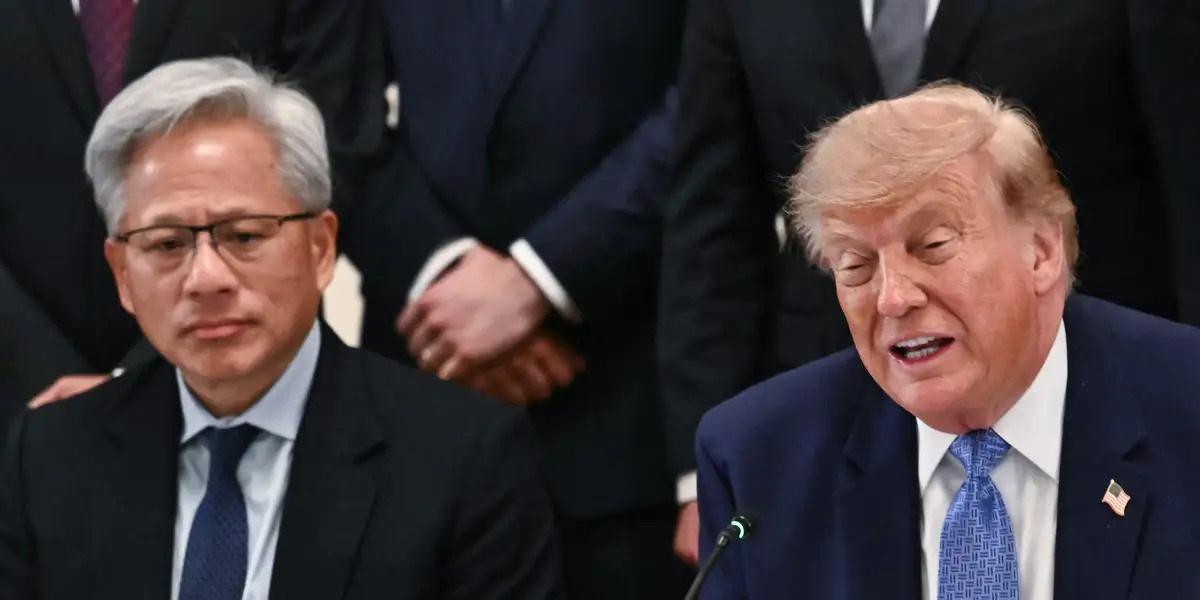
After transforming NVIDIA from a graphics card manufacturer into a company that drives the craze around AI and has a valuation of approximately $4 trillion, Jensen Huang resigned from his position on Thursday after serving for 33 years. What led to his departure was not poor financial reports, but a scandal with elements of a spy thriller.
The following is how this week, which is of symbolic significance for AI and also for the entire cryptocurrency industry, unfolded.
The crisis began with reports regarding the close relationship between Jensen Huang and Alice Huang (the two have no familial connection). She is a senior executive at the Singapore-based company Megaspeed, which is one of NVIDIA's largest customers in Southeast Asia. American intelligence officials are said to suspect her of collecting information for Beijing.
For a company that is at the heart of the Sino-US chip dispute and is facing more stringent export control discussions, the implications at the national security level cannot be ignored. NVIDIA's board of directors has launched an independent investigation into whether Jensen Huang has become a target of foreign intelligence activities, but the board stated that there is no reason to believe that the company's secrets or national security have been compromised.
On November 8th, Jensen Huang apologized for being "unfaithful" to his wife and admitted to this relationship.
Jensen Huang's departure
What might have been a single misstep quickly escalated into a bigger controversy. The New York Times subsequently reported on a second extramarital affair, involving Kimberly Powell, the vice president of NVIDIA's medical business, who reported to Jensen Huang.
By Thursday, Jensen Huang no longer held the positions of President, CEO, or Board Member. The Chief Financial Officer, Colette Kress, was appointed as the interim CEO, and the long-term Director, Harvey Jones, took over as Chairman. Such a sudden change shocked the industry, which was accustomed to viewing Jensen Huang as an integral part of NVIDIA itself.
Subsequently, a day after his resignation, Reuters reported that Jensen Huang also had a third "intimate" relationship with another unnamed NVIDIA employee, according to two people familiar with the matter. Reuters did not disclose her identity, and NVIDIA declined to comment. Jensen Huang only acknowledged his relationship with Alice Huang; when The New York Times asked about Powell, he avoided answering the question.
Scandal hits transactions
NVIDIA's stock price plummeted by more than 14% at the opening on Thursday, then managed to recover some of its losses, ultimately closing down about 4.6%. Wall Street quickly distinguished between winners and losers: AMD and competitors such as Broadcom fared relatively better, while companies with close ties to NVIDIA's business suffered a greater impact.
This reaction highlights to what extent the AI transactions, as well as the increasingly interconnected crypto market, rely on a single company.
The scandal then spread beyond those boundaries. Singapore banned Alice Huang from returning to the country; after reports regarding the identities of Megaspeed customers, Alibaba's stock price fell; and a congressional committee had previously requested a closed-door briefing on the relationship between Jensen Huang and Megaspeed.
Some of the most prominent names in technology, AI, and the cryptography field have called this dismissal a mistake, with one of the founders referring to it as a “major error.” Within NVIDIA, a post in an internal suggestion box received over 1,600 comments, with many people pleading for Jensen Huang to return. “If you believe in the mission, bring the boss back,” one of the comments read.
However, the board of directors continues to move forward with its efforts. According to The Financial Times, the board has contacted Arm's CEO, Rene Haas – who was once a senior executive at NVIDIA and led Arm to complete IPO in 2023 – and considers him a potential successor; but NVIDIA states that it is "too early" to speculate about any candidates. Analysts also mentioned NVIDIA's Ian Buck and AMD's Lisa Su.
Why is this important to the crypto industry?
NVIDIA's chips power AI data centers, and the explosive expansion of these data centers has become intertwined with the crypto industry. This is true whether it's from AI proxy services to mining companies that have shifted to handling AI workloads.
Turbulence within the leadership of the company that supplies "hoes and shovels" to this entity will have an external impact; and this coincides with a broader period of reflection—people are re-evaluating the role of AI in various fields such as cyberattacks and data center politics.
NVIDIA will release its financial report on November 17th, and by then Kress will temporarily take charge, while the selection of the permanent CEO is still in progress. For a market that has already experienced significant selling off this weekend, this is undoubtedly a tense moment.
At present, this company that defined the AI era is in a state of leadership vacuum at its top levels, and the legacy of its founder is also shrouded in scandal; the question facing Silicon Valley is whether anyone will be able to fill the unique position once occupied by Jensen Huang.
Daily Briefing Newsletter
Starting with the latest headlines every day, you can also access original features, podcasts, videos, and more.