

I'm not a conspiracy theorist. But sometimes, after new information emerges, a claim that once seemed absurd is worth considering seriously.
This is exactly how I felt during the extraordinary “downfall” of Jensen Huang, co-founder and longtime CEO of NVIDIA. NVIDIA is one of the most important AI companies in the United States.
Jensen Huang resigned this week. Previously, there were reports that he had an extramarital affair with a Chinese woman suspected of engaging in espionage activities in Beijing.
This woman is named Alice Huang, and she is also a senior executive at a company. The company purchased NVIDIA's powerful AI chips worth billions of dollars and is under investigation for concerns that some of these products may have been illegally transported to China.
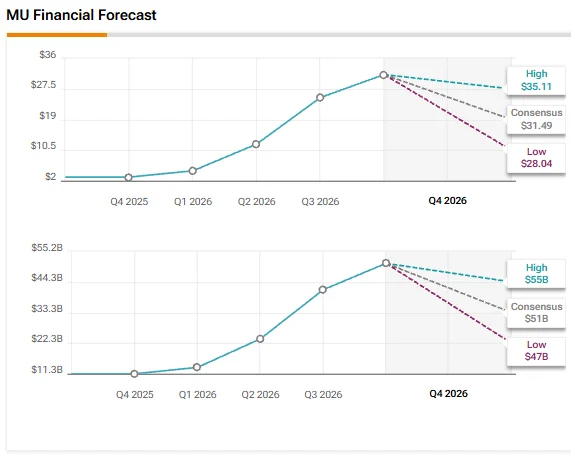
These accusations are highly explosive. The response from NVIDIA's board of directors was surprisingly swift; Jensen Huang resigned, and the company's stock price plummeted, with its market value evaporating by about $300 billion.
But now, some of the most respected news organizations in the United States are publishing reports with solid sources that seriously question the core allegations of this scandal.
These reports also point to another possible explanation for Jensen Huang's sudden resignation. Is it possible that these espionage allegations have been exaggerated, merely to achieve some political goal?
That sounds like conspiracy theory. A few days ago, I would have been very hesitant and unwilling to seriously consider such claims. Now, I’m not so sure anymore.
The intelligence is not certain.
On Thursday, CNN reported that U.S. intelligence agencies have not yet confirmed that Alice Huang is indeed engaged in espionage activities for China.
Want to see more Business Insider content in your news feed?
Add BI to Google so that when you search for important content, our reports are more easily found.
There is disagreement among officials regarding whether she was recruited by Chinese intelligence services. Some CIA officials do not believe that the intercepted communications are sufficient to prove that she intentionally passed on information to Beijing.
The lead author of this explosive report is Natasha Bertrand, a distinguished national security journalist who has investigated both Republican and Democratic administrations; her reports on Russia's invasion of Ukraine also helped her team win an Emmy Award.
The statement by Alice Huang, possibly made by Chinese intelligence personnel, is likely a key reason why the NVIDIA board removed Jensen Huang so quickly. (It is not yet confirmed whether Business Insider or Alice Huang has ever engaged in or is currently engaged in espionage for China.)
Now, there are already people who have issued an open letter demanding that the board of directors restore his position as CEO before this matter is clarified. The open letter has received over 100,000 signatures, including those from executives and current employees of NVIDIA.
There's more to come.
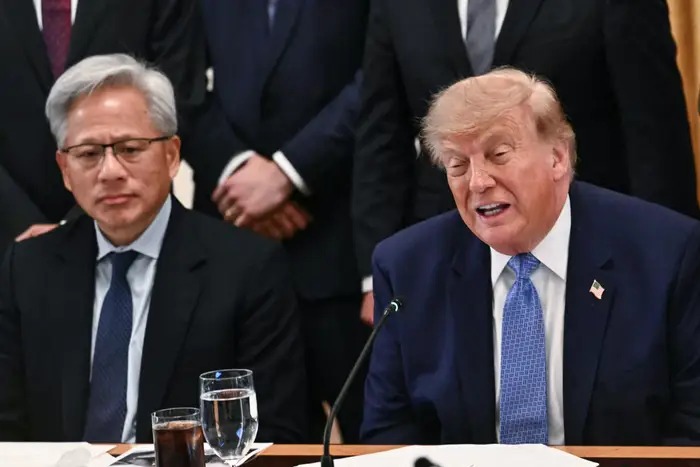
On Friday, The Washington Post reported that Secretary of State Marco Rubio, a well-known hardliner on China, received an intelligence report from the CIA with less definitive conclusions, and used it to draft a memo warning President Trump about the relationship between Jensen Huang and a woman alleged to be a Chinese spy.
According to an informed source, Rubio reworded the CIA's conclusions to make them more aggressive. According to The Washington Post, the disclosure of the memo's conclusions ultimately triggered a series of events that led to the end of Jensen Huang's 33-year tenure at NVIDIA.
The report by The Washington Post does not prove that Rubio deliberately distorted intelligence or intentionally sought to bring down Jensen Huang. However, it raises a question that I believe deserves serious attention: Could the intelligence regarding a potential Chinese spy have been exaggerated in order to help remove a significant obstacle to imposing tougher restrictions on China?
We've seen intelligence errors before.
There is an uneasy historical precedent here.
In 2003, after the Bush administration repeatedly warned Saddam Hussein of possessing weapons of mass destruction, the United States invaded Iraq. Secretary of State Colin Powell famously presented intelligence to the United Nations to support this claim.
After the invasion, investigators found that Iraq did not possess the alleged stockpiles of weapons. It was a serious intelligence failure.
Since then, there has been widespread discussion about to what extent this failure reflects intelligence shortcomings, political pressure, selective use of evidence, or intentional exaggeration.
But the bigger lesson is clear: when powerful individuals have policy goals they wish to achieve, intelligence assessments are often presented as more certain than the evidence at hand can support.
The Bush administration wanted to invade Iraq. The claims about weapons of mass destruction helped to gain support for this decision.
Looking along the chip
So, if the intelligence regarding Alice Huang is exaggerated, who would benefit from it?
To understand the possible motives, you need to be aware of the intense struggle within Washington surrounding the acquisition of NVIDIA technology by China.
For many years, the U.S. government has been attempting to prevent China from obtaining NVIDIA's most powerful AI chips, which are used in the development of advanced artificial intelligence. The concern is that China may use this technology to enhance its military power and challenge the United States' technological leadership.
But implementing these restrictions proved to be unexpectedly difficult. One of the reasons is cloud computing. The way it works is as follows.
An American company sold AI chips to a data center operator. These chips are still physically located outside of mainland China. Subsequently, the operator rents out computing power to customers via the internet, including Chinese companies.
Under the current US regulations, this type of remote access may be legal in certain circumstances. It is also one of the main advantages of cloud computing: you don't need to own a powerful computer, nor do you even have to be in the same country to use it.
However, some Washington officials believe that this represents a loophole that undermines the original intention of restricting the sale of chips to China. They hope to close this gap.
Jensen Huang has always been one of the most vocal opponents of completely cutting off China's access to certain technologies. He believes that if Chinese companies continue to use American technology, it will be more beneficial for the United States: it will generate revenue for American companies, keep China dependent on American products, and may also give Washington more visibility and influence over China's development.
Jensen Huang believes that if China is completely isolated, Chinese companies will only accelerate their development of their own technologies.
Of course, Jensen Huang also has clear financial interests. NVIDIA makes money by selling chips, and China is a huge potential market. He has also had direct contact with Trump and has repeatedly pushed the government to adopt a more lenient stance.
Now he's gone. Those who hope to tighten the restrictions have lost their biggest opponent.
The timing is quite thought-provoking.
There is another detail that perturbs me: this relationship and the concerns regarding Alice Huang are not new at all.
On October 9, 2025, over a year ago, The New York Times published a detailed investigation into Megaspeed. At that time, Alice Huang was an executive at this company headquartered in Singapore.
The New York Times reported that the company purchased nearly $2 billion in NVIDIA technology and is under investigation for potentially violating U.S. export restrictions.
The report also described the close contact between Alice Huang and Jensen Huang, including photos of the two together.
U.S. officials have been investigating this company since 2024. CNN states that the Federal Bureau of Investigation (FBI) has also been investigating this relationship for at least a year.
So, why did all of this suddenly turn into a survival crisis for NVIDIA CEO in November 2026?
One possible answer is that there has been a change in the political environment.
Axios This week's reports indicate that there are tensions within the government regarding efforts to tighten restrictions on China's access to NVIDIA technology.
Meanwhile, lawmakers are pushing for legislation that may limit Chinese companies from remotely accessing powerful American chips located in other countries. A bill known as the "Remote Access Security Act" has already passed the House of Representatives and is awaiting review by the Senate.
NVIDIA has always opposed efforts to impose comprehensive restrictions on such access.
A rather provocative judgment
On Thursday, the respected research institution SemiAnalysis published a rather provocative assessment regarding Jensen Huang's resignation.
"We're not conspiracy theorists, but several events that occurred almost simultaneously seem to form a narrative thread that's hard to ignore," they wrote.
"The U.S. intelligence community played a significant role in pushing for Jensen Huang to be removed from NVIDIA," the agency added. "With Jensen Huang, the biggest defender, leaving, restrictions on China's AI and chips will be implemented faster and more aggressively."
SemiAnalysis refers to this as a theory rather than evidence. However, it is worth examining, especially after the reports from CNN and the article in The Washington Post regarding Rubio's memo.
I am not here to tell readers whether China should obtain the most advanced AI chips from the United States. Both sides have serious arguments. I also do not approve of Jensen Huang's other behaviors, including the relationship between a company executive and his subordinates.
What worries me is whether American intelligence has been exaggerated in order to help bring down one of the most important leaders of a U.S. company.
If that's really the case, officials may have been undermining this leading position in the name of protecting America's AI leadership.
A week ago, the idea that Washington's hardliners helped bring down Jensen Huang sounded like a conspiracy theory. Today, it has become a possibility worth considering.
Considering the history of failures in intelligence judgment by the United States, I don't think we should simply accept everything the government says without question.