













Backpack has made another significant regulatory advancement in the United States. The company stated that the National Futures Association of the United States (NFA) has approved the exchange to act as a futures commission merchant (FCM).
The company announced on Wednesday that this approval, together with two earlier approvals from the Commodity Futures Trading Commission (CFTC) this week, completes the three-part regulatory framework for its expansion in the United States (Backpack).
On November 16th, CFTC registered Backpack as a derivatives clearing institution (DCO), authorizing it to clear margin futures, fully collateralized futures, futures options, and swaps. The regulatory authorities also designated Backpack as a designated contract market (DCM), approving its operation of a derivatives trading venue.
These three approvals, taken together, mean that Backpack will have control over exchanges, clearinghouses, and customer-facing intermediary services under the coordinated regulatory framework of CFTC.
What do these approvals mean for American traders?
This regulatory framework establishes a pathway for U.S. customers to directly use the crypto derivative products that Backpack intends to launch. The exchange plans to offer leveraged crypto perpetual futures, event contracts, and 24/7 trading through a single global order book. Customers will also be able to use eligible fiat and crypto assets as collateral, as well as manage combined margins between different positions.
The documents submitted by Backpack indicate that the platform will be launched in phases, with prerequisites including system testing, access for clearing members, and review by regulatory authorities. The first batch of contracts and their specific terms will determine which assets customers can use as collateral, as well as how the combined margin system will operate.
Chairman Mike Selig stated that these approvals represent the first applications from exchanges and clearinghouses that adopt a blockchain-based architecture for derivative execution and settlement. He added that these decisions demonstrate a regulated path towards the next generation of blockchain financial infrastructure.
In a tweet on Monday, Backpack CEO Armani Ferrante emphasized that Backpack intends to operate an exchange on its global platform that will be regulated by CFTC, and stated: "There will be no distinction between the Backpack international version and the Backpack US version. Our entire platform will operate in a venue that is regulated by CFTC. One Backpack; an exchange for the whole world, regulated by the United States."
Backpack Regulatory Progress Outside the United States
These approvals are built upon the broader international expansion of Backpack. The company obtained a complete set of regulatory licenses in Europe in July, covering MiCA, MiFID II, and PSD2. Earlier in November, Backpack also reached a partnership with Japan's Minna Bank.
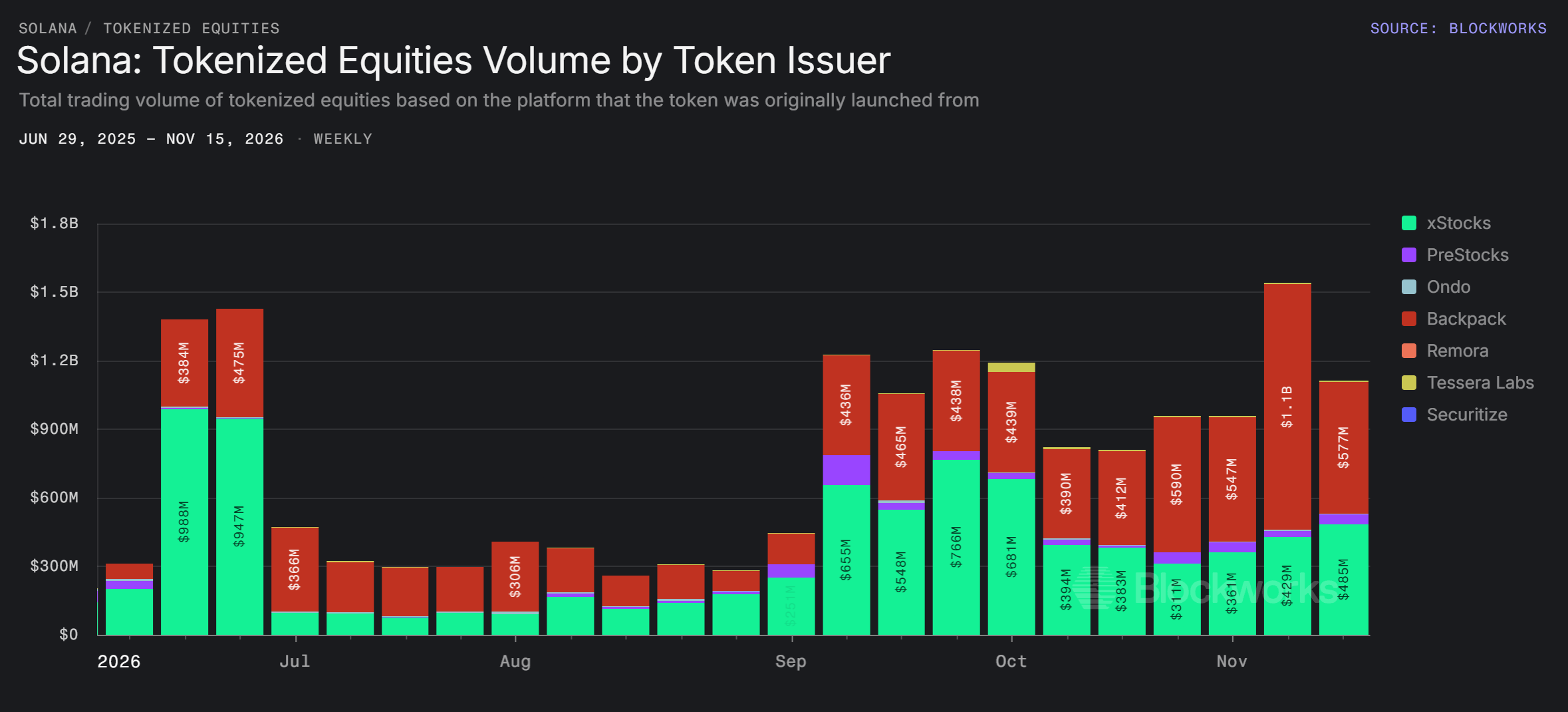
Meanwhile, the tokenized stock business of Backpack Securities has performed strongly. The platform has recorded over $500 million in tokenized stock trading volume in the past four weeks, with a single-week trading volume reaching a historic high of $1.07 billion just two weeks ago.
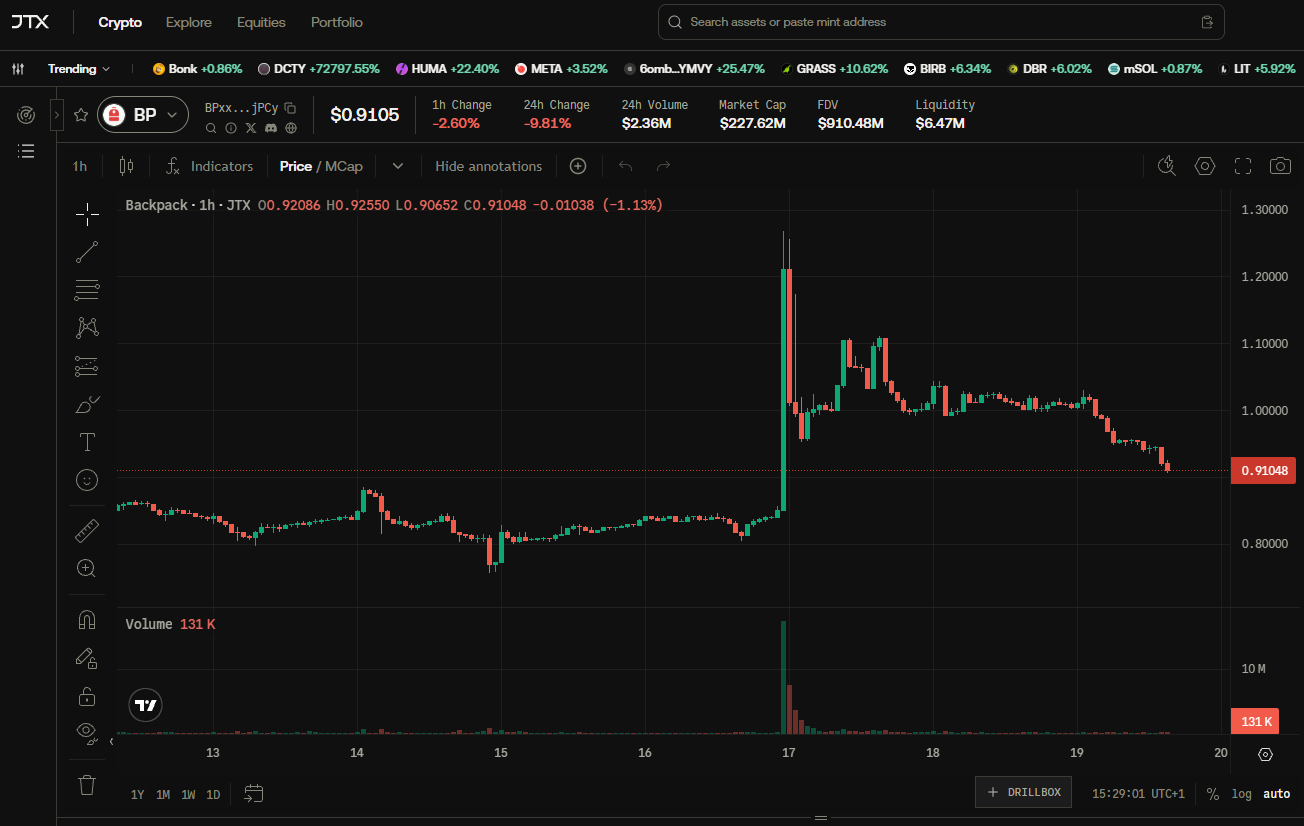
Its BP token also reacted to the announcement of CFTC, once rising to $1.20, before falling back to the current $0.91. Despite the pullback, BP has still seen a cumulative increase of nearly 10% over the past 7 days.
Anthropic IPO may become the next major test for Backpack.
Backpack is still preparing to introduce Anthropic's stock onto its platform later today, right after the much-anticipated NASDAQ listing of that company.