


Bitcoin erased all of its rebound from August to September, falling to its lowest level since September 2024, while Solana has attracted new capital inflows from ETF.
The entire crypto market, especially Bitcoin, faced a wave of selling during another brutal weekend. The largest cryptocurrency by market value tumbled to $55,130 late on Friday, hitting its lowest level since September 2024. This decline marked Bitcoin's seventh consecutive week of losses and wiped out all the gains that pushed BTC to $87,000 between August and September.
However, Bitcoin has since rebounded by about 15% from its weekend lows, returning above $60,000. On Monday morning, BTC was trading around $64,000, up more than 4% from the past 24 hours.
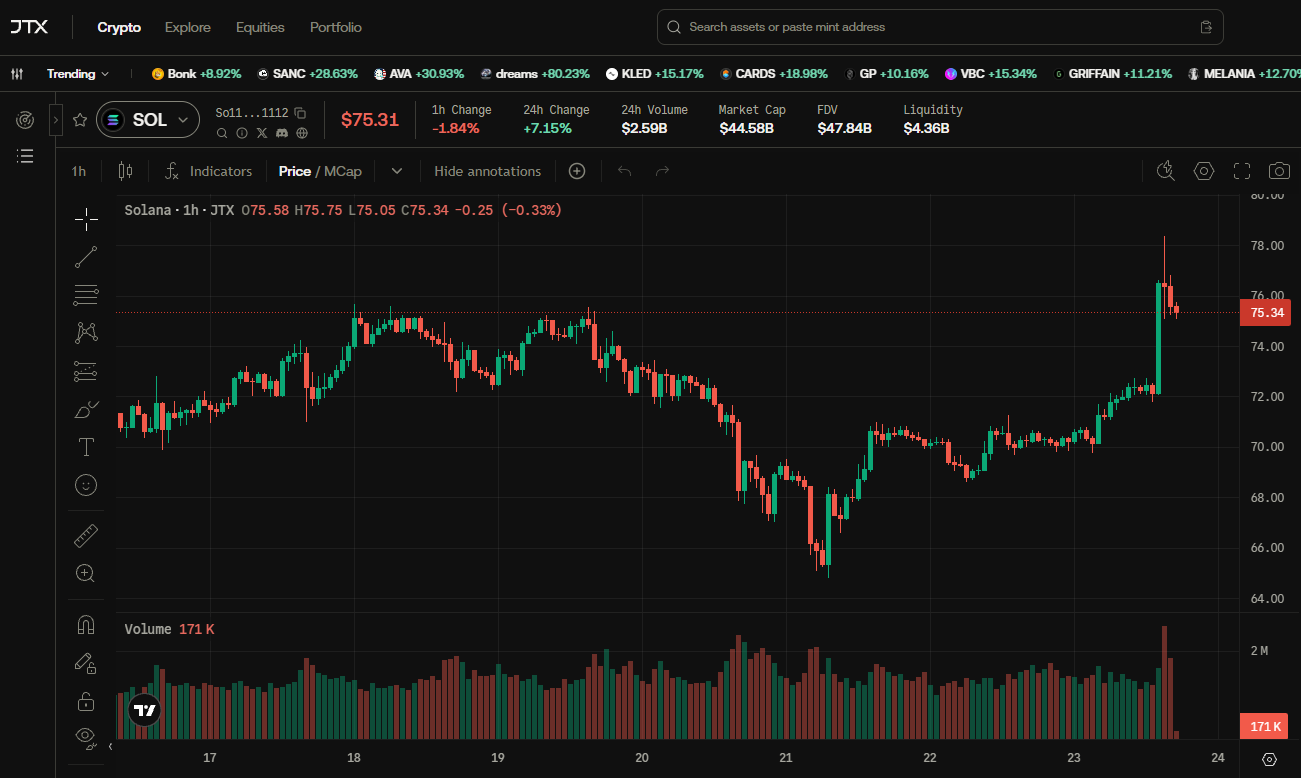
Solana also faced significant selling pressure, falling below $65 at one point over the weekend, but then rebounded to above $70. Currently, SOL is trading around $76, with a rise of nearly 8% in the past 24 hours.
Solana ETF Officially appointed, Bitcoin funds continue to lose value
U.S. spot Solana ETF attracted $4.38 million in net inflows last week, ending a six-week streak of net outflows.
This is also the first time in 7 weeks that these funds have recorded a positive performance for a single week. At the same time, spot ETF, which tracks Bitcoin, Ethereum, and other major cryptocurrencies, has seen net outflows during the same period, and this reversal is particularly noteworthy.
The outflow of funds from Bitcoin ETF is particularly severe. Last week, the US spot Bitcoin ETF recorded a net outflow of approximately $1.79 billion, marking it as the third-largest single-week redemption since its launch in January 2024.
Recorded as $2.61 billion for the week of February 28, 2025. As of Friday, the cumulative net outflow of Bitcoin ETF in November reached $4.14 billion, close to the total of $4.51 billion in June.
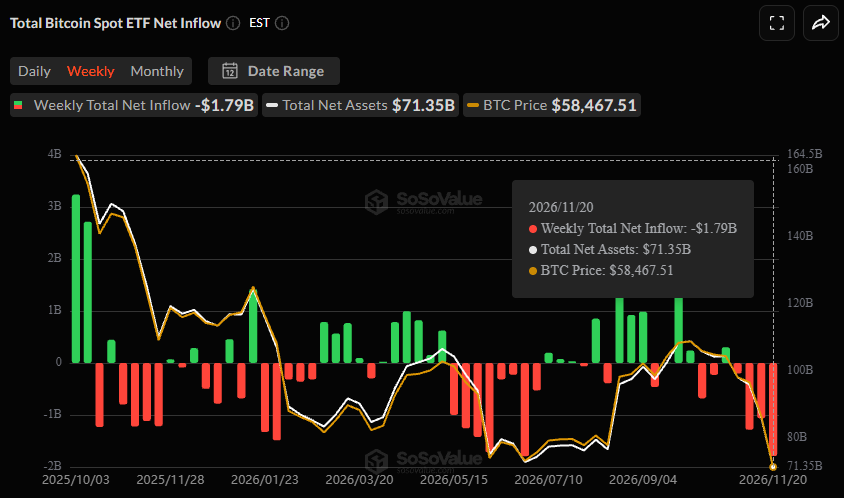
Bitcoin funds have experienced a total net outflow of approximately $4.34 billion over four consecutive weeks, bringing the net outflow from the beginning of the year to date to around $3.8 billion.
Peter Schiff suggests buying Solana instead of Bitcoin.
One of Bitcoin's most famous critics, Peter Schiff, has expressed an unexpected opinion regarding the relationship between Bitcoin and other cryptocurrencies. As the price of Bitcoin rebounds, Schiff believes that investors who expect Bitcoin to rise can switch to buying Solana.
He pointed out that major cryptocurrencies tend to move in the same direction, so SOL allows investors to gain exposure to potential Bitcoin rebounds without directly holding BTC. Schiff believes that this dynamic weakens the narrative of Bitcoin's scarcity.
Glassnode claims that the Bitcoin clearing cluster has been cleared
The selling pressure on Friday also resulted in the liquidation of a large number of leveraged Bitcoin positions. According to data from Glassnode, the market has cleared the largest cluster of estimated liquidations for Bitcoin futures long positions that it has been tracking, with these positions accumulating between $59,000 and $62,000 over the past few months.
This analytics firm stated that removing these positions eliminates an important potential passive selling source from below the market.
Strategy still bought 457 BTC despite market turmoil
Michael Saylor's subsidiary, Strategy, continued to increase its holdings of Bitcoin last week, purchasing 457 BTC at an average price of $64,898 each. The company also repurchased $212 million worth of STRC preferred stocks, which are currently trading at around $95, below the target price of $100.
Saylor announced that Strategy would increase its Digital Credit Securities Repurchase Program by $1 billion and reallocate another $1 billion from USD Reserve to USD Cash. As of November 22, 2026, Strategy held 851,305 BTC, valued at $54.1 billion at current prices, in addition to $4.8 billion in other assets.
Kraken The Canadian Bitcoin market once plummeted to $17,000
Abnormal fluctuations in the Kraken Canadian order book created one of the most peculiar market events over the weekend. On Saturday morning, the price of Bitcoin on that exchange's CAD market dropped to as low as 24,250 Canadian dollars, which is approximately 17,000 US dollars.
This anomaly began on Friday afternoon, when selling pressure pushed Bitcoin below $50,000 from below $70,000 in just one hour.
Kraken has an independent order book set up for each supported fiat currency. As a result, the Canadian dollar market, which has less liquidity, may experience significant price deviations and will not be synchronized with the more liquid US dollar market.
This anomaly also affected the pricing of stablecoins. USDT was once trading around 0.56 Canadian dollars, which means that for 1 Canadian dollar, one could almost buy USDT worth nearly 2 US dollars.
The support team from Kraken stated that all orders were executed correctly, and the security team did not detect any intrusions or account thefts. The transactions that have been completed will remain valid. Since then, prices have returned to normal.
U.S. inflation data may determine the next move
The crypto market is now facing another important macroeconomic test. The U.S. Personal Consumption Expenditures ( PCE ) Price Index – the Fed’s favorite inflation indicator – will be released on Wednesday. Economists expect prices to rise by 0.3% in October, following a 0.5% increase in September.
The minutes from the Federal Reserve's October meeting show that if inflation remains high, two officials believe the interest rate hike in December could be greater than 0.25%. Therefore, these data may affect interest rate expectations and determine how investors allocate their funds among risky assets.
As the global markets opened on Monday, there was a search for signs of stabilization. Crypto assets have rebounded by about 15% from their weekend lows, and U.S. stock index futures have also seen a rise since Jensen Huang resumed his role as NVIDIA's CEO.