

Tencent and Alibaba stated this week that domestically produced chips can mitigate the impact of new US restrictions on advanced AI processors on their cloud businesses, but they also admit that these restrictions may still slow down the development of new AI models.
On Monday, the U.S. Department of Commerce issued temporary regulations to expand export controls, and shortly thereafter, two technology giants announced their financial results, becoming some of the first Chinese companies to respond to these restrictions.
According to the new regulations, chip manufacturers and exporters need to obtain permission if they wish to sell advanced chips to data centers in Malaysia, Singapore, Thailand, Indonesia, and Brazil. The rule also requires that large data centers must get permission if they intend to provide substantial computing power to Chinese customers. Overall, these measures are likely to limit the computing power available to Chinese companies such as Alibaba and Tencent when developing AI models and providing services to users.
Tencent
Tencent executives distinguished between the computing power required to train new models and that needed to run existing models during a performance conference call.
Tencent's Chief Strategy Officer James Mitchell said to analysts on Wednesday: "We actually haven't seen any impact, as our cloud business today is mainly focused on inference." (Inference refers to the operation of the AI model, not training.)
Mitchell added that Tencent has reached a stage where its algorithms can run on what he described as "surprisingly few" domestically produced chips.
Tencent President Liu Chiping stated that the domestic supply chain should be able to meet the needs of inference, especially for Tencent's smaller-scale and more efficient models.
However, Liu Chiping described these restrictions as "regrettable" and admitted that it will now take longer for Tencent to train the next version of the Hunyuan model. "This has caused everyone in China to take a step back," he said.
In the long run, Liu Chiping expects that US regulations will "accelerate" the development of China's domestic chip industry. "We believe that all Chinese participants will actually have to rely on domestic supply chains and domestically produced chips."
Tencent announced that its revenue for the third quarter of 2026 was 207.3 billion yuan (31 billion US dollars), a year-on-year increase of 8%. Among this, the revenue from financial technology and enterprise services, which includes cloud computing business, grew by 9.4% to 63.6 billion yuan (9.5 billion US dollars).
Net profit increased by 0.3% to 65.1 billion yuan (9.8 billion US dollars). Capital expenditure increased by 527% to 81.4 billion yuan (12.2 billion US dollars).
Alibaba
On Thursday, Alibaba stated during its earnings conference that despite facing new restrictions, its goals for 2030 – including $100 billion in external cloud revenue and a EBITDA profit margin of 20% – are still on track to be achieved.
Alibaba's CEO, Jack Ma, told analysts during a conference call: "Our progress in domestic computing power has actually exceeded our initial expectations." The company has made significant investments in its self-developed chip division, Pingtouge, and plans to list it in Hong Kong.
Alibaba announced that its revenue in the third quarter of 2026 was 271.5 billion yuan (40.5 billion US dollars), a year-on-year increase of 10%. Cloud business revenue grew by 53% to 61 billion yuan (9.1 billion US dollars). AI
Net profit increased by 213% year-on-year to 64.4 billion yuan (9.6 billion US dollars). Capital expenditure grew by 60% to 50.5 billion yuan (7.5 billion US dollars).
However, Alibaba's confidence in its long-term goals is accompanied by warnings about the short-term prospects.
At the performance conference call, Wu Yongming said, 'The new regulations on computing power exports will affect next year's products and services, and there is still uncertainty in the supply chain.' He indicated that the growth rate of cloud revenue may slow down to 30% to 45%, before rebounding to 50% or higher by 2028.
Wu Yongming said that it is "still too early" to determine how the restrictions imposed by the United States will affect the development of his Tongyi Qianwen model family. However, he added that the company's current Pingtouge chips "are already capable of fully supporting the training of large-scale models, including extremely large-scale models." Wu Yongming predicts that Pingtouge's production capacity will increase in 2027 or 2028. "Once we reach that stage, we will actually be in a more favorable position to control and determine the pace of our iterative base models," he said.
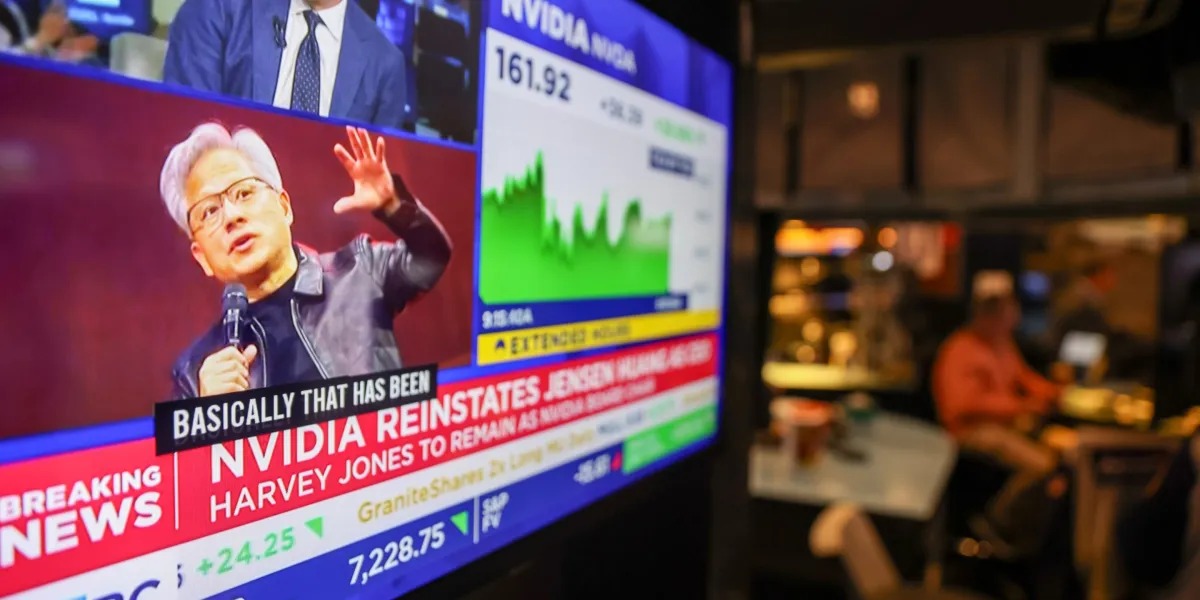
However, following the NVIDIA scandal, Alibaba has become the focus of public opinion; this incident led to the resignation of CEO Jensen Huang last week. The Information reports that before the US chip export controls came into effect in 2022, NVIDIA's sales team introduced Alibaba to a former Megaspeed executive, Alice Huang. The Singapore-based cloud computing company Megaspeed is suspected of violating US export controls by transferring advanced AI chips to China; Megaspeed denies these allegations.
On Thursday, a group of Alibaba shareholders sued the company, accusing it of concealing its connections with Alice Huang and Megaspeed. The shareholders claimed that media reports on these connections caused Alibaba's stock price to fall by 14% within four trading days, and they accused the company of underestimating the risk that violations of export controls could damage its business.
Alibaba did not immediately respond to requests for comment.
Chip Control
The Ministry of Commerce is facing increasing scrutiny, with doubts from the outside world about whether sufficient measures have been taken to prevent advanced chips from entering China. Data released on Thursday by the House Foreign Affairs Committee shows that the Ministry of Commerce has approved nearly 880,000 AI chips for use by Chinese companies – including 75,000 approved for Alibaba and 150,000 for Tencent – while the total number of chips that NVIDIA and AMD seek to export to Chinese companies exceeds 3.4 million.
Apart from Tencent and Alibaba, Chinese developers are also preparing for the potential impacts of stricter US chip restrictions. As reported on Thursday by The Information, a Beijing-based company Moonshot AI has cancelled a $150 million deal that was intended to acquire NVIDIA Blackwell chips through a data center in Indonesia.
The new regulations also limit the ability of Chinese companies to manufacture their own semiconductors using overseas contract manufacturers. The U.S. new rules have tightened the exemptions for chip manufacturers that allow them to transport advanced chips without permission. According to a report by The Financial Times, TSMC and Samsung Electronics have suspended shipments of certain chips to Chinese customers.