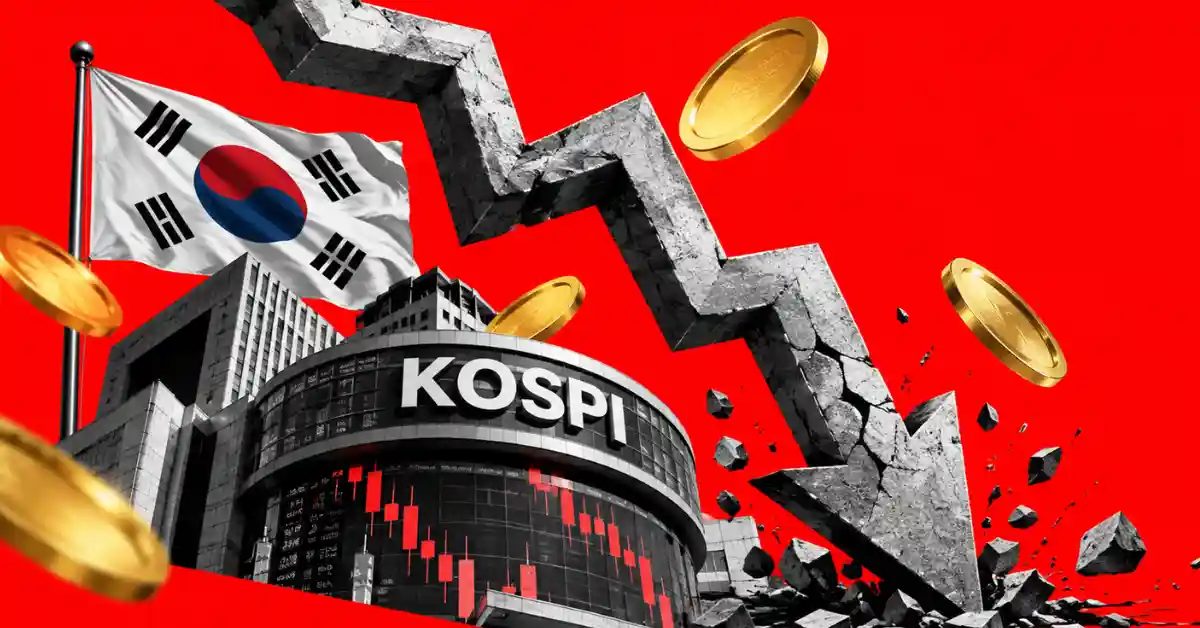


The South Korean stock market is once again in turmoil due to the spread of sell-offs in global artificial intelligence-related stocks across Asia, and investors' concerns about a "Black Monday" are intensifying. The Korea Composite Stock Price Index (KOSPI) tumbled nearly 5% during trading on Monday, following a 5.21% decline on the previous trading day; Samsung Electronics and SK Hynix are under pressure once again. The latest decline reflects growing concerns among markets regarding the valuation of AI, massive technology spending, and the sustainability of the rising semiconductor market trend.
As foreign capital withdraws and authorities prepare emergency stabilization measures, investors are concerned to see whether this round of selling will remain concentrated in tech stocks or if it will spread to a broader market.
KOSPI Downward trend deepens; concerns of a "Black Monday" spread
South Korea's benchmark KOSPI continued to decline on Monday, falling by up to about 5% under the pressure of technology and semiconductor stocks. The index tumbled 5.21% last Friday, closing at 4,869.96 points, below the psychological barrier of 5,000 points, and hit its lowest closing level in about 10 months.
As of late Monday morning, the index stood at 4,659.33 points, a decline of 4.33%, indicating that selling pressure remained heavy after the opening. The latest drop in the KOSPI index has erased most of the previous gains, pushing the benchmark index back to levels near January this year. South Korea's smaller KOSDAQ market also saw a significant decline, with investors reducing their exposure to risk-sensitive stocks.
Samsung and SK Hynix lead the decline; AI stock selling pressure
The semiconductor sector remains at the core of this round of market turmoil, with South Korea's largest technology companies bearing the heaviest selling pressure.
Samsung Electronics and SK Hynix are declining due to investors re-evaluating the demand prospects for AI related chips and the industry's massive capital expenditure cycle. Both companies previously benefited from the AI boom, but their excessive concentration in the semiconductor sector is now magnifying their market losses.
As of later Monday morning:
- Samsung Electronics: Down 4.72%
- SK Hynix: Down 4.13%
- LG Energy Solution: Down 3.26%
- Samsung Biopharmaceuticals: Down 5.61%
Foreign capital also turned to net selling, further increasing the pressure on large-cap stocks and weakening the overall index performance.
Why has the South Korean stock market tumbled sharply?
The latest round of decline in KOSPI is closely related to the selling of tech stocks on Wall Street, which has exacerbated market concerns about whether the valuation of AI has already surpassed earnings expectations.
U.S. stock markets tumbled significantly last Friday. The Nasdaq Composite Index fell by 5.28%, and the S&P 500 Index dropped by 3.7%. Semiconductor stocks faced particularly heavy selling pressure, with the Philadelphia Semiconductor Index plummeting by 10.73%. Investors are increasingly questioning the scale of AI infrastructure spending, the potential returns on data center investments, and whether chip demand can support current valuations.
Concerns over restrictions on semiconductor exports and risks in the tech industry have added another layer of uncertainty. Given that the South Korean stock market is heavily weighted with semiconductor companies, the global sell-off in chip stocks has exerted disproportionate pressure on KOSPI.
Will a global "Black Monday"-style stock market crash occur?
South Korea's latest decline highlights how quickly the AI-driven correction is spreading to global markets. Economies with a high weight of semiconductors are particularly vulnerable, as investors are pulling out of companies that previously drove market gains.
The short-term outlook will depend on whether U.S. tech stocks stabilize, whether the selling pressure from foreign investors eases, and whether market confidence in the investment narrative surrounding AI can be restored.
Currently, concerns regarding "Black Monday" are intensifying in Asia, and South Korea KOSPI has become one of the most evident indicators of pressure on global AI and semiconductor stocks. If chip manufacturers continue to rebound, it may help stabilize the market; however, if selling continues, the correction could further spread to technology stocks.
The South Korean government is preparing to establish a market stabilization fund worth 10.76 trillion Korean won to curb panic selling and market fluctuations.
Source Note
This article is a Chinese translation of the report content from CoinPedia. The original author is Shubham Vishwakarma. The sponsorship, advertising, and disclaimer information attached at the end of the article have been preserved outside of the translation and are not considered part of the main news content.