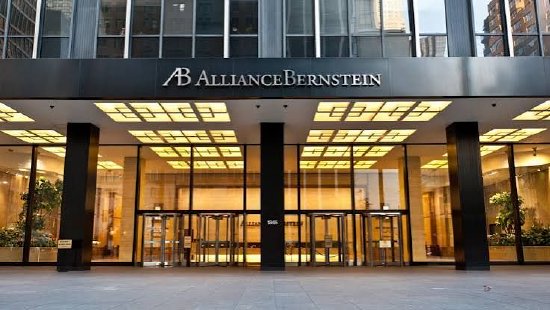
On November 23, Bernstein pointed out in its latest report that even assuming all of Oracle's (Oracle) data center business revenues are zeroed out and that the related hardware assets cannot be liquidated, the value of the company's existing software and cloud computing businesses is still sufficient to support a stock price of $133, which represents a potential increase of about 31.4% compared to the current closing price of $101.19. The firm believes that market concerns regarding the risks associated with Oracle's (AI) infrastructure investments have been partially reflected in the current valuation and reaffirmed its "outperform the market" rating for the stock.
Extreme stress test: AI Data center operations brought to a halt, but Oracle's value remains at $133
Bernstein analyst Mark Muderler ( Mark Moerdler ) and his team conducted extreme scenario stress tests on Oracle, using the following three assumptions:
- AI Data Center Revenue Drops to Zero: Oracle Unable to Continue Generating Revenue from Its Artificial Intelligence Data Center Business.
- Hardware assets cannot be liquidated: Servers, network equipment, and other related hardware assets purchased previously cannot be sold or repurposed to recoup costs.
- The existing debt burden remains unchanged: Oracle still has to bear the debts incurred previously for the construction of the AI data center.
Under the aforementioned assumptions, Bernstein still estimates that Oracle's fair stock price should be $133, which is 31.4% higher than the latest closing price of $101.19.
Bernstein stated that even under this conservative scenario, Oracle's current stock price is still below its theoretical value after the complete failure of its AI business.
Software business valuation is underestimated; databases and enterprise applications possess strong resilience.
Bernstein believes that there may be two reasons for Oracle's current weak stock price performance.
Firstly, the market may assign an overly low valuation multiple to Oracle's traditional software business.
Earlier this year, as the market feared that artificial intelligence might disrupt the traditional software as a service (SaaS) business model, the overall valuation of the software industry came under pressure. Some investors believed that Oracle's software business structure was relatively complex and should therefore be valued at a lower multiple.
However, Bernstein clearly opposes this judgment and believes that Oracle's software business should actually receive a higher valuation.
The institution mainly bases its decision on three reasons:
- Database Business: Oracle databases have a high level of customer loyalty and profit margins, and the cost for enterprise customers to migrate to other systems is relatively high.
- Enterprise application software: Its business areas of Enterprise Resource Planning ( ERP ) and Human Capital Management ( HCM ) have a strong resistance to technological substitution by AI .
- Traditional cloud computing business: Oracle's cloud infrastructure ( OCI ) offers CPU computing services with differentiated competitive advantages, especially in the fields of sovereign clouds and private clouds.
Bernstein believes that even if the AI data center business is completely eliminated, Oracle's existing software and traditional cloud computing business still possess considerable intrinsic value.
$288 billion in data center leasing commitments raise concerns, but annual expenditures remain relatively controllable
Bernstein pointed out that another important reason for Oracle's stock price pressure is that investors have begun to take into account the risk that the AI industry may enter a long-term downturn.
Oracle recently signed data center leasing agreements totaling approximately $288 billion, which has raised concerns in the market regarding its future financial burden.
Some investors believe that if OpenAI and other AI customers fail to fulfill their contractual commitments, Oracle may be forced to bear the rental costs of a large number of idle data centers, thereby continuously depleting its free cash flow.
Bernstein admitted that even if Oracle loses the relevant customers, it may still need to fulfill its lease payment obligations, but he believes that the market has overestimated this risk.
Firstly, the capacity of the relevant data centers will be gradually delivered over the next few years, rather than being put into operation all at once. Therefore, Oracle has more time to find new customers, sublease the facilities, or adjust their use.
Secondly, the term of these lease contracts ranges from 15 to 19 years, and the related costs will be spread over a longer period of time.
Bernstein estimates that Oracle's annual leasing expenses will peak at around $15 billion to $19 billion, with this peak expected to occur around the fiscal year 2030.
The institution believes that as long as the global generative artificial intelligence industry does not fall into a prolonged slump, even if OpenAI and other customers are unable to fulfill their existing contracts, Oracle still has the opportunity to reduce the financial pressure caused by idle assets by using its own data center capacity or subleasing it.
Bernstein therefore believes that the current market's pricing of Oracle's AI capital expenditure and debt risks is overly pessimistic. Even under the extreme assumption of a complete failure of the AI data center business, the valuation of the company's existing business is still higher than the current stock price, providing investors with a potential margin of safety.