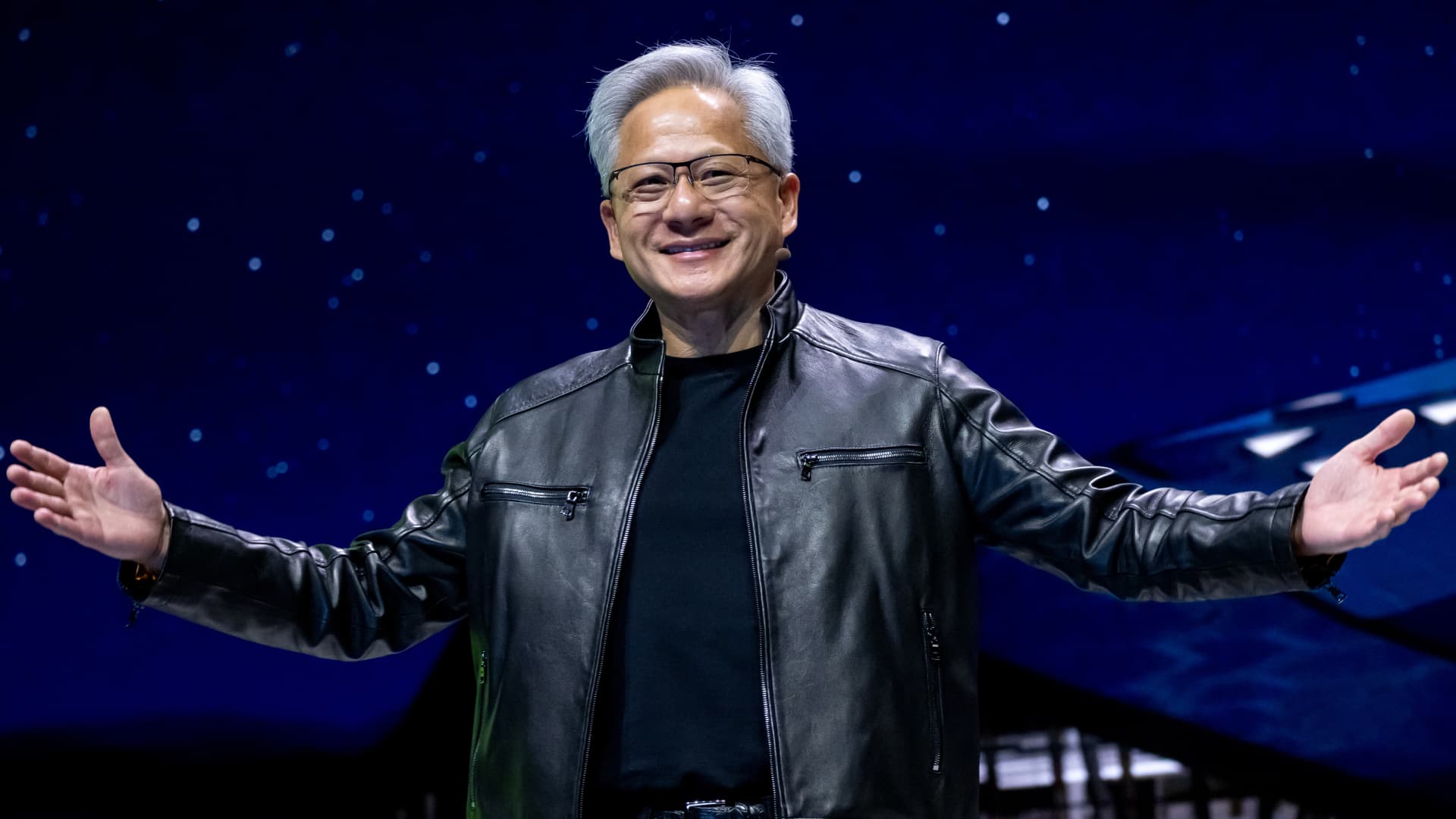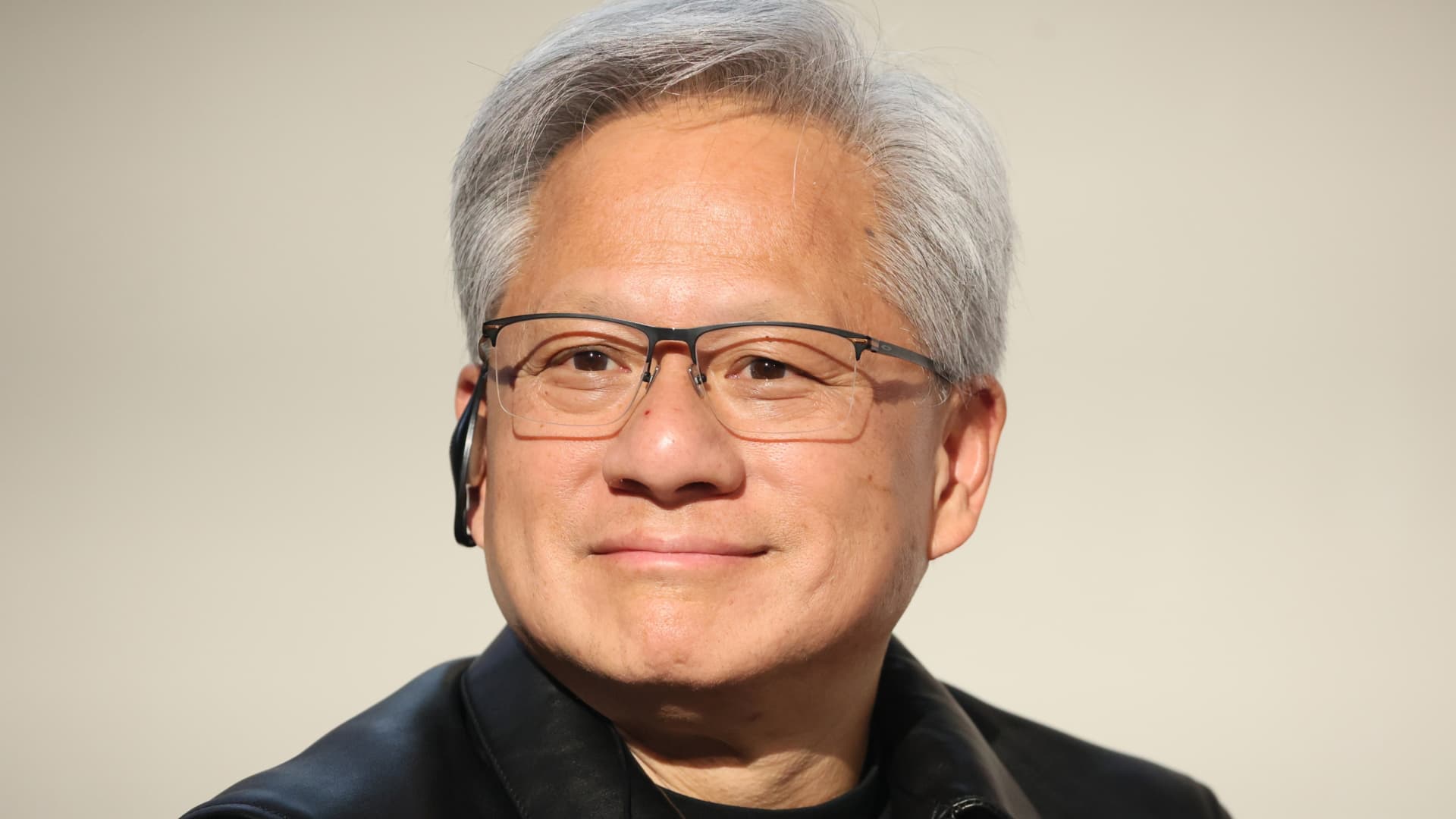













Jensen Huang's return to serve as NVIDIA's CEO may have alleviated concerns about the leadership of this chip manufacturer, but it has also prompted the market to re-examine the company's governance structure and its dependence on its founder.
Industry experts have stated regarding CNBC, that Jensen Huang's sudden resignation and subsequent unexpected reinstatement have exposed deeper vulnerabilities at the core level of NVIDIA, and have also raised questions from the outside world about the board of directors' supervision and succession planning.
The head of Dow Jones Global Risk Insights Consulting, Angela Mancini, stated on Tuesday in the CNBC program “Squawk Box Asia”: “What does it mean if a company is too big to fail, or if a CEO is too big to be fired?”
Mancini also pointed out that Jensen Huang has an exceptionally large number of direct subordinates, which is another indication of NVIDIA's deep dependence on its founder.
She added, "What does it mean when a person has 60 direct subordinates and you actually feel that you cannot fire them?"
For NVIDIA, Jensen Huang's return also provides an opportunity to address some governance issues that were exposed upon his departure.
Opportunities for change
GFT Ventures, a managing partner and former executive at NVIDIA who worked there for nearly 20 years, stated that he sent a letter to the board of directors later last week, calling for Jensen Huang to return.
Herbst said that although he was initially disappointed by the allegations surrounding Jensen Huang, he later viewed this incident as an opportunity for NVIDIA to strengthen corporate governance, succession planning, and overall management.
He said, "Many people see this as a crisis, but what I see is a potential opportunity."
Herbst indicates that as NVIDIA has transformed from a relatively small technology company into one of the largest enterprises in the world, its management and supervisory functions also need to evolve accordingly.
He said, "I believe that corporate governance, succession planning, legal functions, regulatory functions, and political affairs functions must all be expanded simultaneously."
He suggests that NVIDIA should enhance the board of directors' experience by bringing in individuals who have managed large companies, and at the same time, cultivate Jensen Huang's potential successors in a more formal manner.
Succession issue
Jensen Huang's departure also exposes how closely NVIDIA's leadership and long-term strategy are linked to its founder, raising questions from the outside world about how the company will carry out the power transition in the future.
Bernstein Research's Managing Director and Senior Semiconductor Analyst for the United States, Stacy Rasgon, stated that this event has once again drawn attention to a risk that has long been overlooked by investors.
Rasgon to CNBC says: 'We all know that there is a risk of key individuals being involved here. We have all chosen, including myself, to ignore it to some extent.'
He said that the succession planning will be an issue that both Jensen Huang and the board of directors need to address, and one that must be clearly communicated to investors.
He added, "I believe that both Jensen Huang and the board of directors need to think this through clearly, and I think it is important to communicate this clearly to investors as well."
Herbst also pointed out that Jensen Huang himself played a key role in driving technological innovation at NVIDIA, including his willingness to continue investing even before the artificial intelligence and high-performance computing businesses began to turn a profit.
Herbst added that new markets such as autonomous driving systems and robotics will require large-scale investment, as well as a leader with the passion and vision of Jensen Huang.