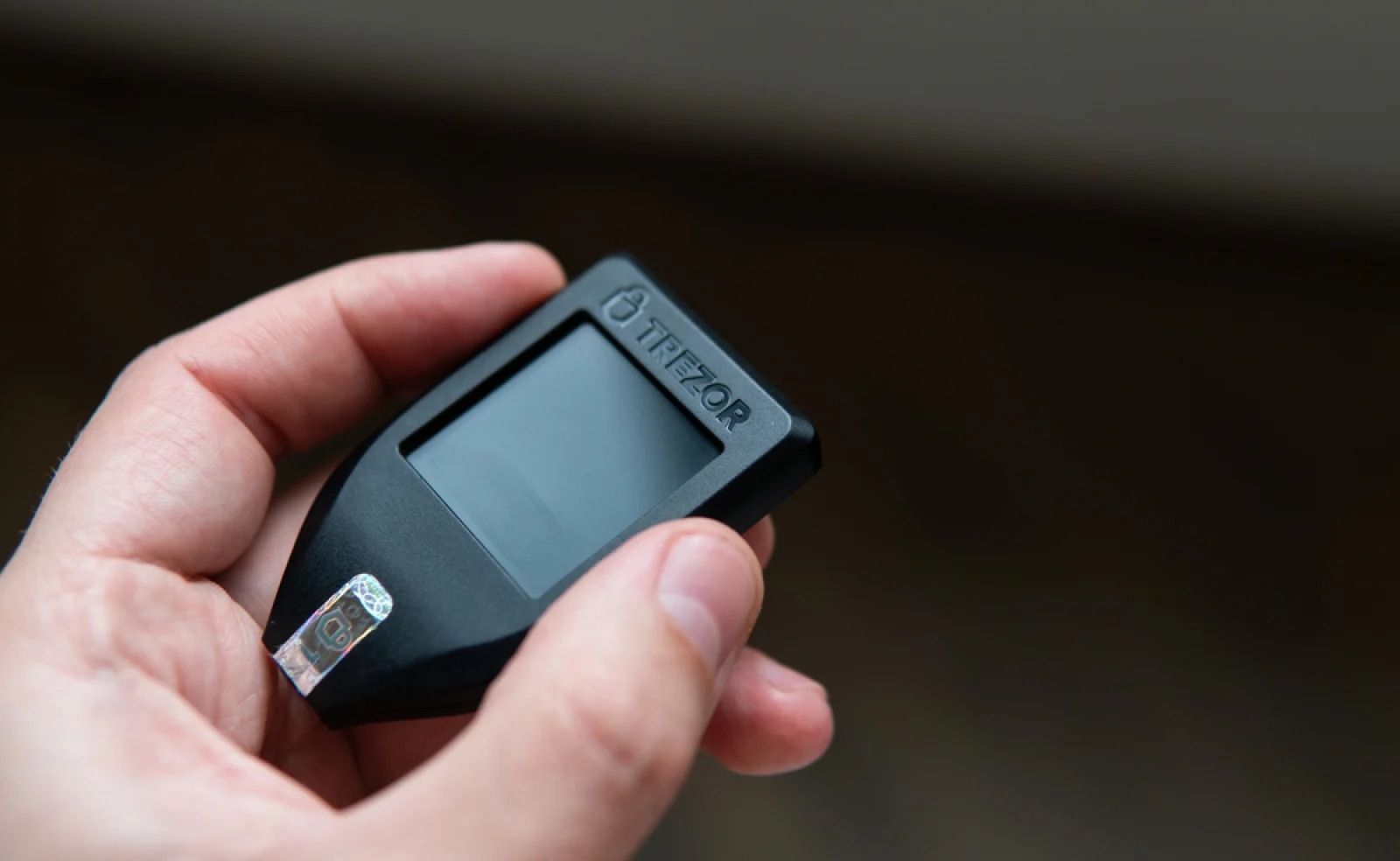


After a recent theft report, the cryptocurrency wallet provider Trezor issued a security warning to users: "Never enter your wallet backups into your phone, applications, or websites."
According to Onchain Lens, a user reported that while using iPhone version 27.2.1 with Pro Max, they suffered a total loss of over $600,000 on TRON and Solana. It is claimed that both wallets, Trezor Safe 7 and Exodus, were affected. The victim stated that they have been using Trezor Safe 7 for nearly two months.
According to the victim, the Trezor wallet was sealed upon delivery and showed no signs of tampering; the recovery phrase was generated on the Trezor screen, not on the iPhone; the mnemonic words were written on paper and were never stored in digital form. The victim used the Trezor Suite via Bluetooth on the iPhone 17 Pro Max; at the same time, the Exodus wallet was also installed on the same iPhone.
The device is running iOS 27.2.1, and the victim never approved these unauthorized transactions. The Trezor wallets on TRON and Solana share the same recovery phrase.
The user claims that Trezor had $580,000 stolen from TRON. On November 21, 2026, an unauthorized transaction transferred 49,999 USDT. This transaction used the default owner permissions, making signature authorization a core aspect of the investigation.
An additional $23,400 was transferred from the wallet Trezor on Solana. The victim stated that they never approved such a transfer using any hardware device. iPhone remains a focal point of the investigation, as both Trezor Suite and Exodus are alleged to have been used on the same device running iOS version 27.2.1 on iPhone 17 Pro Max, and both were affected by the incident.
The original intention of Trezor was to keep the private key within the hardware device. However, cracking a smartphone alone should not normally allow someone to obtain the private key of Trezor, and the mechanisms behind these two thefts are still largely unclear at present.
On November 9, 2026, Apple released iOS 27.2.1, which patched several security vulnerabilities, including some related to Bluetooth. It is alleged that the victims were using this version of the software at the time of the theft. Therefore, there is currently no evidence to suggest that these vulnerabilities are related to the aforementioned transactions. Possible causes listed in the text include the leakage of recovery credentials, unauthorized signatures, or security failures in the device or software.
Security Warning Released
Trezor responded to this disclosure, stating that Trezor wallets will not be emptied for no reason, and there are currently no reports indicating that funds have been remotely stolen from any device. The company pointed out that similar cases can usually be traced back to the leakage of wallet backups.
In further updates, Trezor confirmed that the affected devices were directly from the company and showed no signs of any implants. The wallet provider also added that they are still continuing to investigate this matter.
This seems to be an isolated case, as Trezor reiterates that, to date, no financial losses have been confirmed due to any implants, and no implants have been found in any of the Trezor Safe. It also emphasizes once again an important safety warning: users must never enter their wallet backups into their phones, applications, or websites.