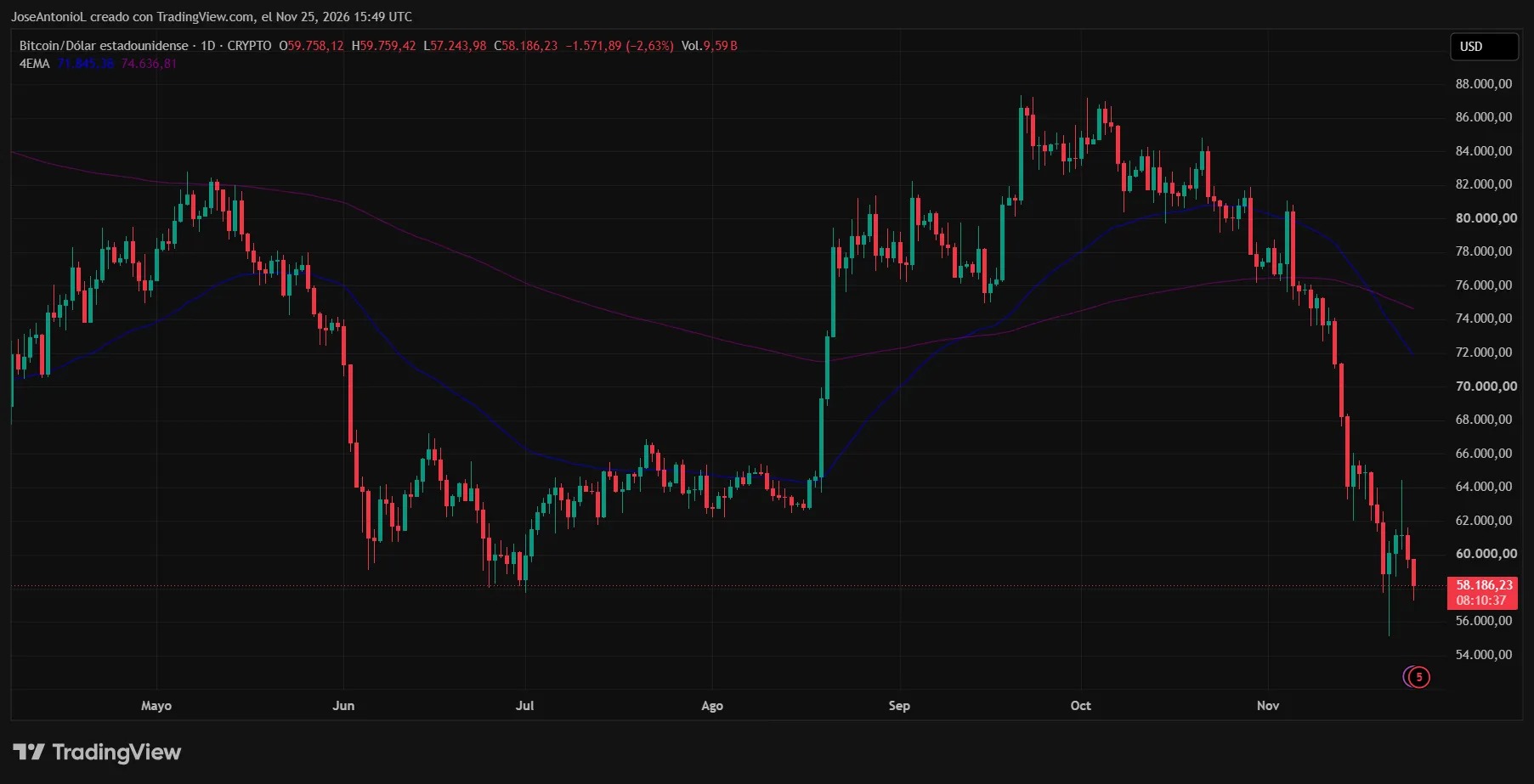
Bitcoin fell below $58,000 on Wednesday morning due to the U.S. economic growth outpacing expectations, rising inflation, and the Trump administration's announcement of a new round of tariffs, which gave investors more reasons to sell.
As of 9:50 a.m. Eastern Time, the Nasdaq Composite Index fell by 4.3%, the S&P 500 Index fell by 3%, and NVIDIA dropped by 8.7%. Bitcoin hit a low of $57,500 during the session, and the selling sentiment on Wall Street also spread to the crypto market.
To some extent, the issue lies in the fact that the U.S. economy has performed better than expected. The Bureau of Economic Analysis has raised its forecast for GDP growth in the third quarter from 3.4% to 4.3% on an annualized basis, which is nearly twice the 2.2% rate seen in the second quarter.
However, the inflation indicator favored by the Federal Reserve – Personal Consumption Expenditures ( PCE ) price index – rose 3.8% year-on-year in October, higher than 3.6% in September, and matched the three-year high set in May. The core PCE index, which excludes food and energy prices, rose 3.3%, exceeding economists' expectations of 3.2% and September's figure of 3.1%.
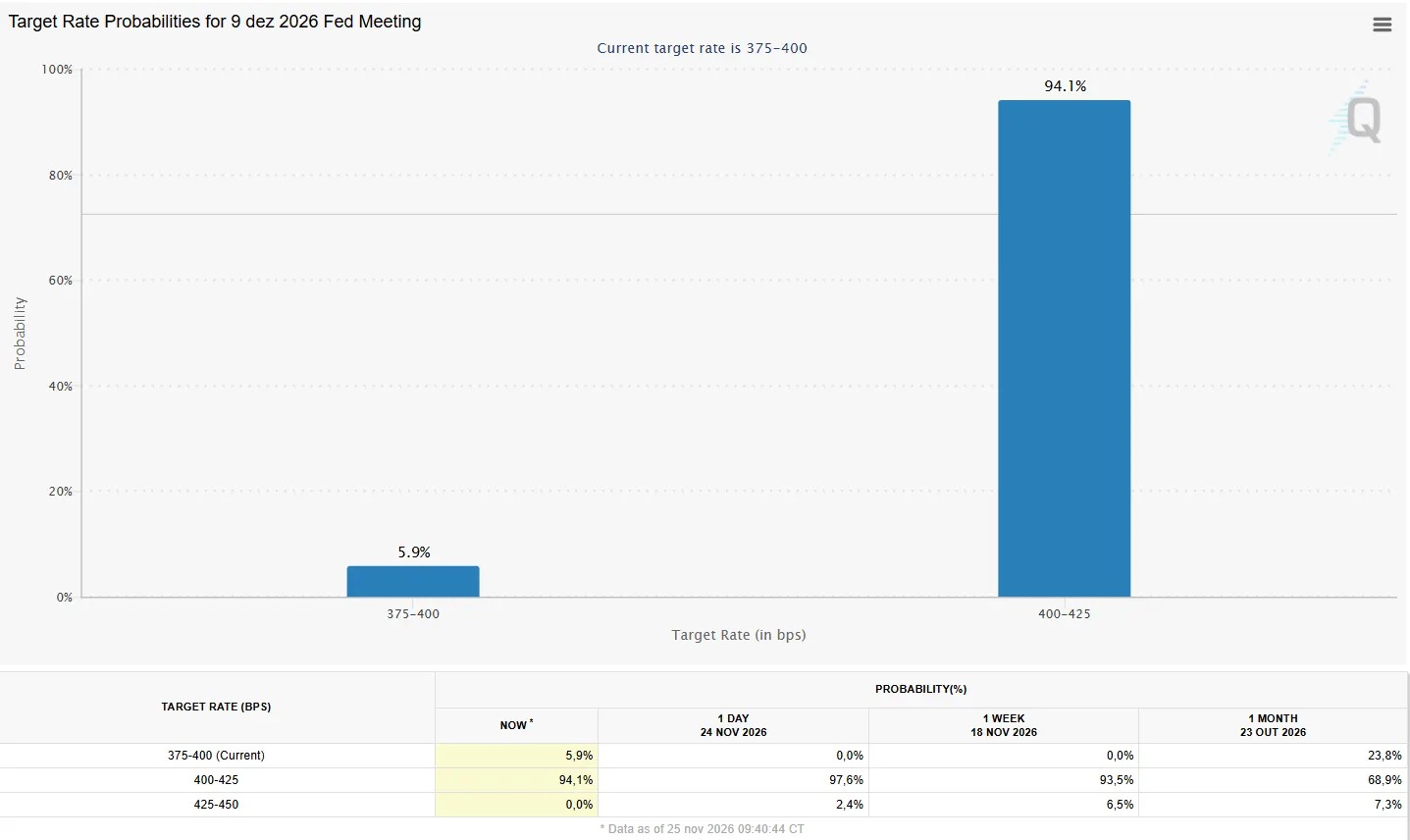
Stronger economic growth means that the Federal Reserve has more room to raise borrowing costs in the process of bringing inflation back to its 2% target. According to CME FedWatch data, after the inflation data was released on Wednesday, traders priced in a 98% probability of a 25-basis-point interest rate hike in December. Currently, that probability is 94%.
The Federal Reserve maintained interest rates between 3.75% and 4% in October, following a rate hike in September for the first time in three years. Traders are also betting that policy will be further tightened in 2027, with another potential hike as early as next January.
Trump's tariffs face another round of AI sell-offs
The Office of the U.S. Trade Representative proposed to impose tariffs on 14 economies, including China, the European Union, Japan, and South Korea, on the grounds that relevant investigations suggest that the government policies of these economies encourage manufacturing output to exceed market demand.
The proposed tax rates vary depending on the country and product; for some imported goods from China, the tariffs can reach up to 20%, and for Vietnamese goods, they can reach up to 35%. However, the specific tax rates may still be adjusted, and exemptions may apply. In the case of the European Union, the proposed 15% tax rate has already been taken into account in some existing tariffs, and it is not a simple addition of 15 percentage points to the original rates.
These tariffs have not yet taken effect, and a public hearing is scheduled to begin on January 25th. If importers pass on the additional costs to consumers, these tariffs could make it more difficult for the Federal Reserve to curb inflation.
Meanwhile, Wall Street's enthusiasm for Jensen Huang's return to NVIDIA did not last long. The chip manufacturer's shares closed up 31.5% on Monday, but fell more than 6% on Tuesday; whereas Anthropic closed at $81.91 on NASDAQ less than a week after its listing, below its initial public offering price of $83.
Higher interest rates will increase the financing costs for data centers and reduce the present value of future earnings. These two factors are particularly important for AI companies that are making significant investments with hopes of profitability in several years to come.
Selling pressure began before Wall Street opened. South Korea's Composite Stock Price Index closed down 6.16%, and according to Reuters, as of 9:15 a.m. Eastern Time in the United States, spot gold fell 2% to $3,483.59 per ounce.
Before the economic data was released on Wednesday, the situation for crypto investors was already poor. Blockchain analysis firm Glassnode stated on Tuesday that, compared to the funds that flowed into Bitcoin over the past year, the losses incurred by Bitcoin investors have reached the most severe level since the collapse of FTX and the subsequent market crash in November 2022.
According to the ETF tracker of Decrypt, US spot Bitcoin ETF has recorded a net outflow of $4.94 billion in November, which is already the worst month since its launch in January 2024.
The Federal Reserve's next interest rate decision is scheduled to be announced on December 9th.