Newsletter
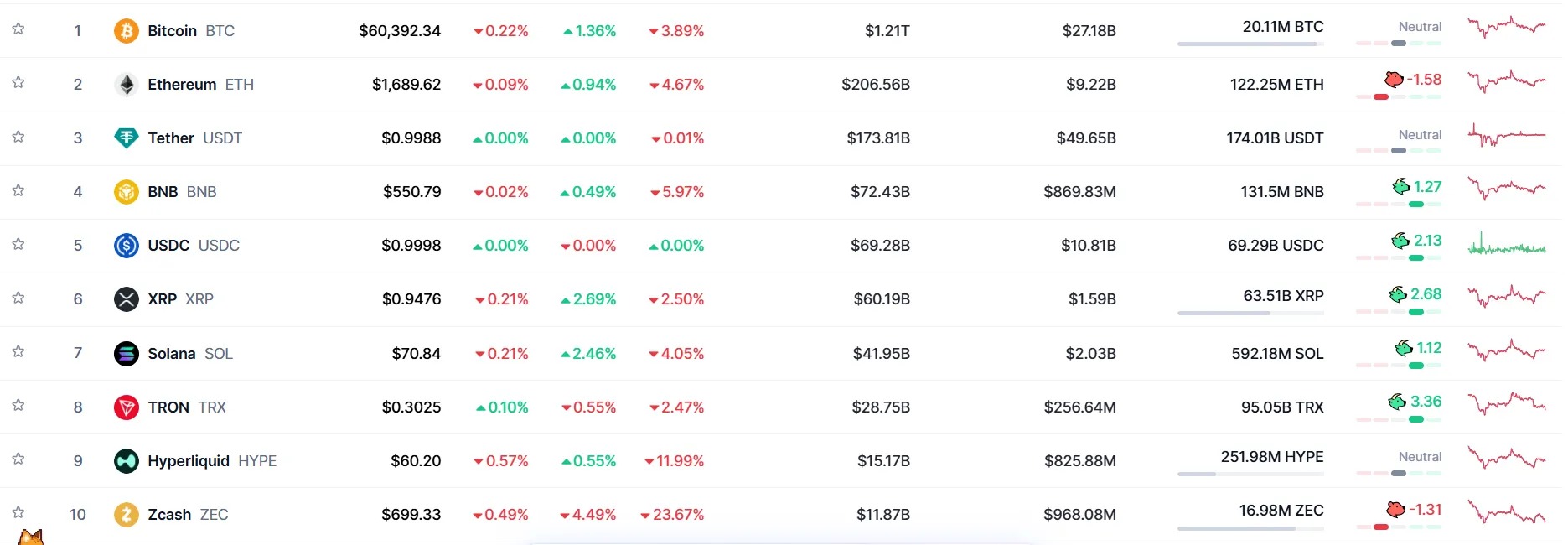
- Bitcoin rose 1.36% in the past 24 hours to $60,392, but still fell nearly 4% in the past week.
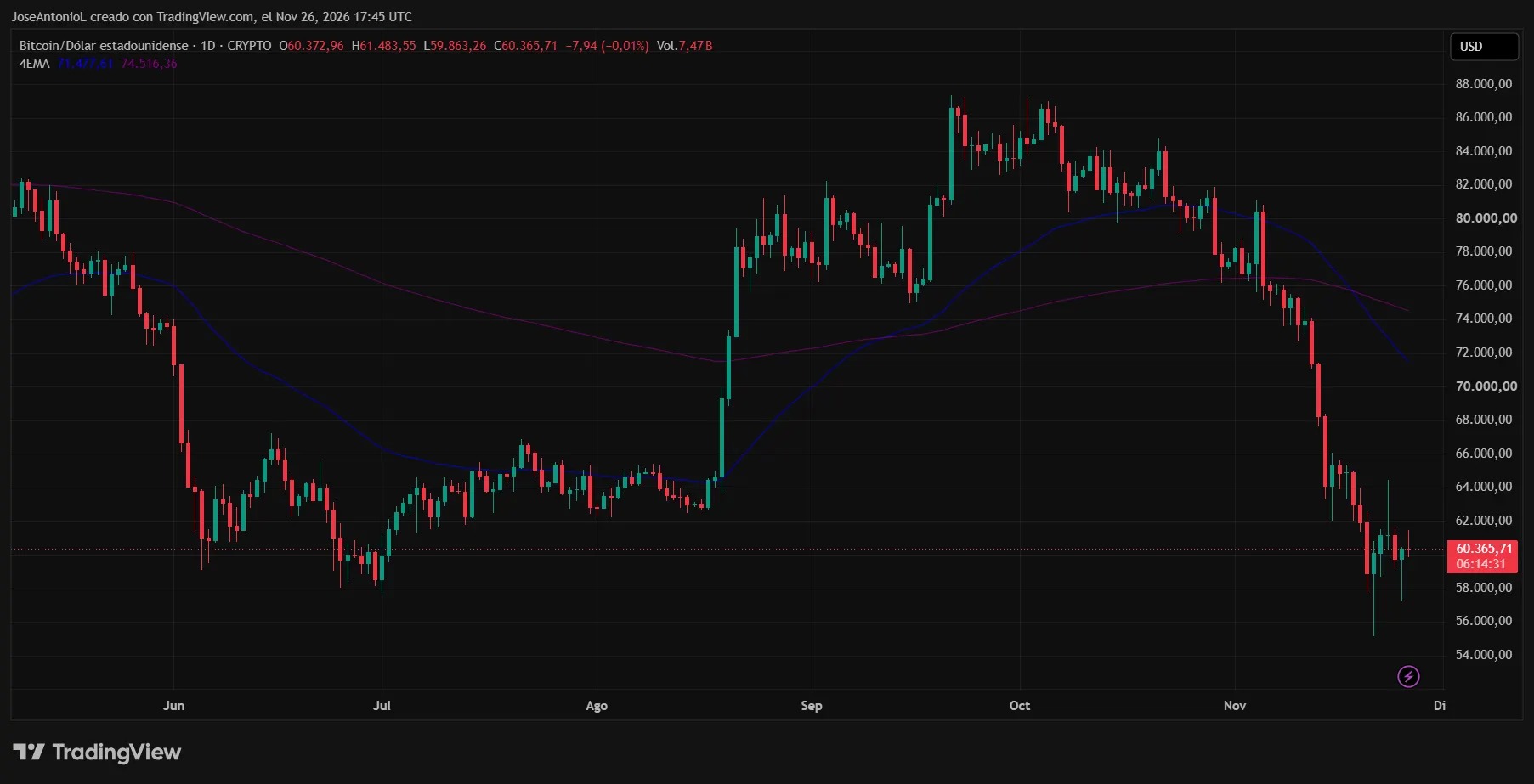
- The 50-day exponential moving average of Bitcoin ( EMA ) has fallen below the 200-day EMA , while the S&P 500 index is still within the “golden cross” range.
- US spot Bitcoin ETF recorded approximately $5.39 billion in outflows in November, and the market is facing the expiration of Bitcoin options worth around $7 billion on Friday.
On Thursday, while the U.S. stock market was closed for Thanksgiving, Bitcoin and most major cryptocurrencies saw a slight increase in value. The previous day, inflation data and new concerns about tariffs had put pressure on the market.
According to the price tracking data from Decrypt, as of just after 1 p.m. Eastern Time, Bitcoin was trading at around $60,560, up 1.39% in the past 24 hours, but down 3.67% over the past week. This largest cryptocurrency has rebounded by about 5% from its low of $57,500 on Wednesday.
Ethereum rose by 0.87% to just below $1,700; XRP and Solana rose by 3.1% and 2.17% respectively.
The Nasdaq Composite Index tumbled 4.6% at one point during trading on Wednesday, but then narrowed its loss to close down 0.62% ultimately. According to TradingView data, derivatives that track the S&P 500 Index—S&P 500 Spread Contracts (CFD) rose 0.67% on Thursday to around 7,226 points. The spot index itself was not traded on that day.
As previously reported by Decrypt, the sell-off on Wednesday was due to a combination of factors, including stronger-than-expected U.S. economic growth, proposed tariff measures, and new concerns in the market regarding AI stocks. The Federal Reserve's preferred inflation indicator, the Personal Consumption Expenditures Price Index ( PCE ), rose 3.8% year-on-year in October, complicating efforts to bring inflation back to the 2% target.
Bitcoin experiences a "death cross," and the stock market is also under pressure
Compared to the charts of the stock market, the daily chart of Bitcoin appears significantly weaker. Its 50-day exponential moving average has fallen below the 200-day exponential moving average, forming a bearish signal known as a "death cross." EMA is used to track the average price over a period of time, giving more weight to recent trading activities.
In contrast, the S&P 500 spread contracts are still within the "golden cross" range, with a 50-day EMA of 7,517, which is higher than the 200-day EMA of 7,372. However, the current price is already below both indicators, and the gap between them is narrowing, indicating that the long-term bullish trend is weakening.
Neither of these cross-patterns can guarantee how prices will move next, but this comparison shows that Bitcoin has suffered much greater technical damage. Bitcoin may face resistance between $62,000 and $64,000; whereas the recent lows around $57,500 to $58,500 could constitute a support area, followed by a low of around $55,000 in November.
Approximately $7 billion worth of Bitcoin options on Deribit will expire on Friday. Compared to October, traders now prefer contracts that provide protection in case of price declines. The U.S. stock market will resume trading on Friday, but the New York Stock Exchange will close early at 1 p.m. Eastern Time.