


Bitcoin once again fell below $60,000, giving back the rebound that began above $62,000 during Thanksgiving, with trading prices on November 28 approaching $59,250.
US spot Bitcoin ETF recorded a net outflow of approximately $5.78 billion in November, while the expiration of options worth $7 billion and the settlement of cryptocurrencies amounting to $478 million also exacerbated market volatility.
Bitcoin's attempts to return above $62,000 have failed, revealing its weakness below its latest rebound. As the world's largest cryptocurrency, Bitcoin gave up on the gains during Thanksgiving. Institutional withdrawals, fluctuations in derivatives, and cautious positions continued to suppress demand. It is noteworthy that during the holiday trading with shortened trading hours, the U.S. stock market rose, while Bitcoin prices moved in the opposite direction.
Despite large holders continuing to increase their holdings during the callback period, their buying has not yet offsetted the ongoing outflow of ETF funds. As BTC falls below $60,000 again, the market is approaching another important technical test.
Bitcoin rebounds by $62,000 as its net outflow reaches $5.78 billion at ETF
Bitcoin once rose to around $62,125 on November 27, before then plummeting sharply to around $58,719. This decline wiped out most of the gains from the Thanksgiving rebound, causing BTC to hover around $59,250 on November 28.
This round of decline occurred after a period of continuous weakness. Bitcoin closed at around $81,255 on October 28 and at around $59,857 on November 27, representing a monthly decline of about 26.3%. Its multiple attempts to rebound failed to attract sustained buying above key resistance levels.
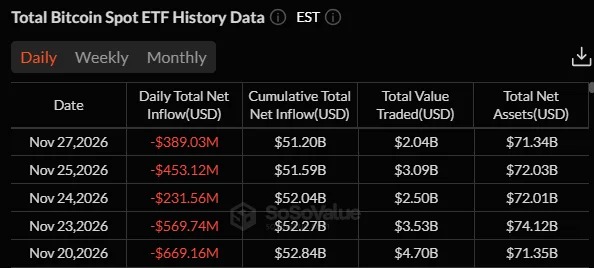
Institutional capital flows remain a major concern. In the United States, spot Bitcoin ETF saw a cumulative net outflow of approximately $5.78 billion during the period ending November 27th. On Friday alone, there was an outflow of $389 million, of which BlackRock's IBIT accounted for $327.2 million.
Derivatives activities have added another layer of pressure. On November 27th, approximately $7 billion in Bitcoin option contracts on Deribit expired, while the total settlement volume for the entire cryptocurrency market was around $478 million. The expiration of these options coincided with a decline in Bitcoin from above $62,000, but this should not be regarded as the sole reason for the drop. A broader perspective indicates that institutional demand has not yet recovered to a level sufficient to support a sustained rebound.
Bitcoin whales continue to increase their holdings as institutional investors withdraw funds
Despite the capital outflow associated with ETF, on-chain data shows a contrary trend among large Bitcoin holders. The data indicates that addresses holding between 1,000 and 10,000 BTC increased their holdings by approximately 121,117 BTC from September 30 to November 21. Their total holdings increased by 4.29%, reaching around 2.95 million BTC, which is the largest increase in the fourth quarter since 2020 in terms of absolute quantity.
During the same period, addresses holding at least 1,000 BTC recorded a net realized loss of approximately $2.1 billion. This indicates that some large holders were buying in, while other investors were exiting their positions with substantial losses.
The divergence between large whales' increased holdings and the outflow of funds related to ETF highlights two different sources of market demand. Large private holders seem willing to increase their exposure at lower prices, while investors trading products on regulated exchanges continue to reduce their holdings.
For Bitcoin to experience a stronger rebound, increased holdings by whales need to be combined with an improvement in spot demand and stable institutional capital flows. Before that, buying orders from large wallets may provide support, but they are not sufficient to reverse the broader downward trend.
Bitcoin Price Analysis: Can BTC Hold the $56,000 Support Level?
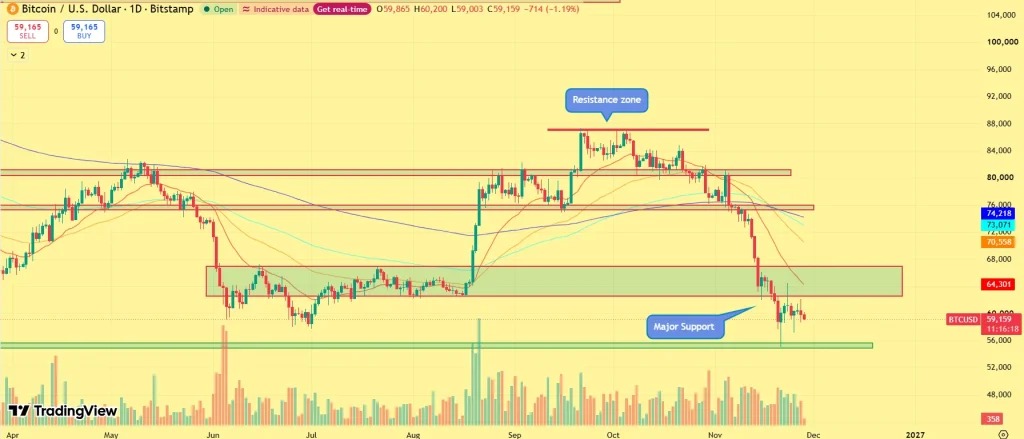
The price chart of Bitcoin shows a deteriorating technical structure. After failing to maintain a rebound above $80,000, BTC has formed a series of lower highs and fallen below several previous support levels. The latest round of declines has pushed the price down to around $59,000, while the main moving averages are still above the current market price.
The current resistance level for a rebound is around $64,000 to $66,000. Charts indicate that this area was previously a consolidation zone and also a supply zone. If a sustained daily close above this range can be achieved, the short-term trend could improve, potentially bringing the $73,000 to $75,000 range back into focus.
On the downside, $56,000 is the main support level indicated on the chart. Whether Bitcoin can hold this position is crucial to preventing another significant break below it. If it clearly falls below this area, the market may face further selling pressure.
Bitcoin's current rebound depends on whether the buying pressure can absorb the continuous outflow of ETF funds and hold the $56,000 range. The increased holdings by large investors (whales) provide a hedge for institutional selling, but a sustained reversal has not yet been formed. If the price rises above $66,000, the rebound logic will strengthen; if it falls below $56,000, the pullback could deepen further.