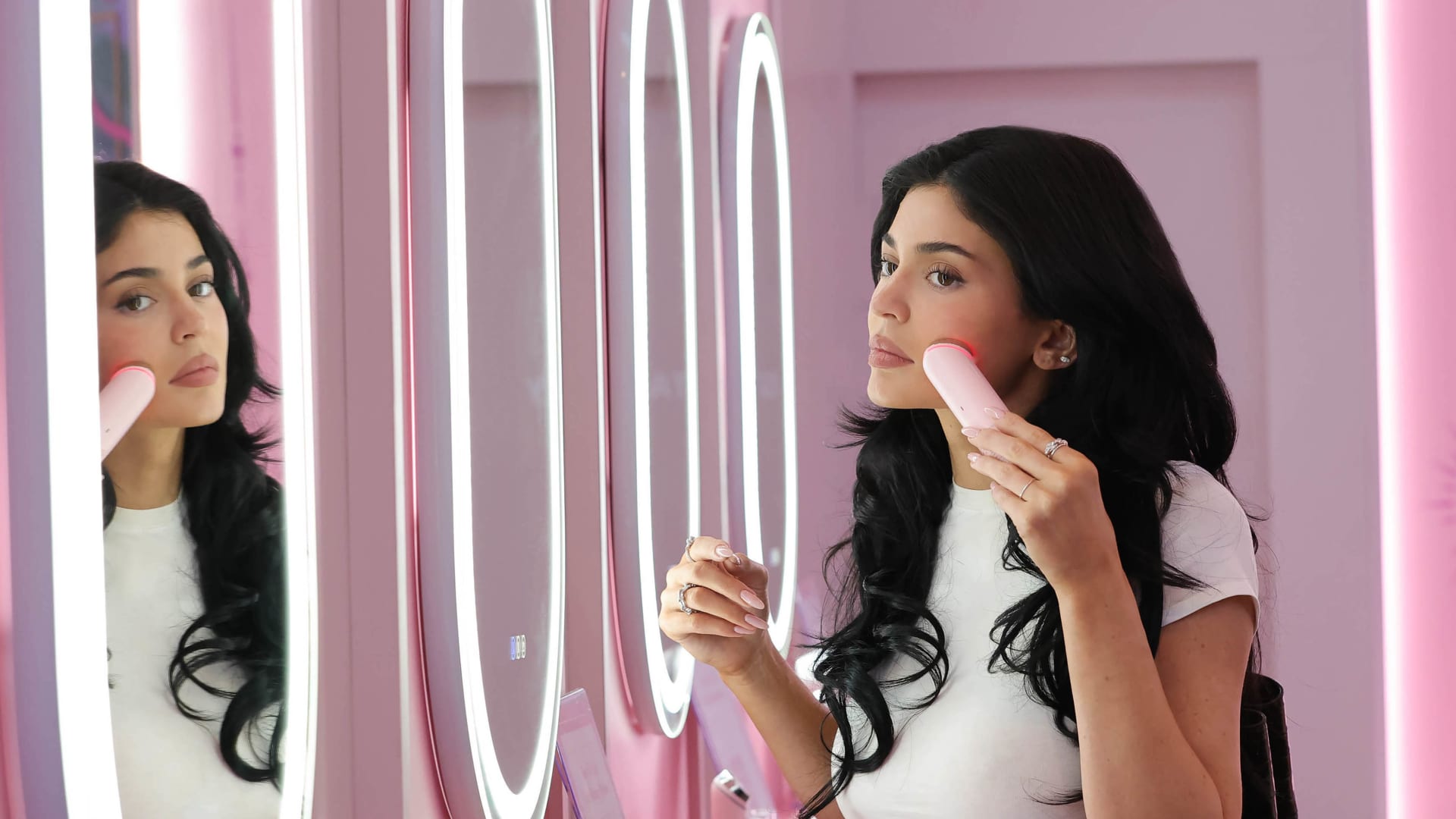


From snail mucus, salmon DNA, to high-tech LED beauty sticks, K-beauty is making its way onto the shelves of American stores, and investors are also starting to assess whether this viral craze is worth betting on.
US fund management company Guinness Atkinson launched what it claims to be the first US K-beauty ETF —– KBTY in November. The fund tracks 25 companies that cover the Korean beauty ecosystem, including the parent companies of popular skincare brands Medicube, APR, Cosmax, Kolmar Korea, Cosmecca Korea, and Amorepacific.
According to data from the US International Trade Commission, the K-beauty craze has helped South Korea come into the spotlight, and by 2025, it is expected to overtake France to become the largest cosmetics exporter to the United States.
A report released in May by Nielsen IQ shows that between 2020 and 2024, exports of K-beauty products to the United States soared by 197%. Globally, sales of K-beauty products increased by 53% year-on-year, representing a 131% growth from two years prior.
With the growth of exports, brands such as Medicube, Laneige, COSRX, and Dr Jart are becoming familiar names to American consumers.
According to the Nielsen IQ report, within the 52 weeks up to March 21st, American consumers spent $2.8 billion on K-beauty products, with sales increasing by 48% year-on-year.
As K-beauty penetrates the US market and continues to gain popularity on social media, investors have begun to question whether this industry can achieve long-term profits amidst the potential obstacles posed by tariff fluctuations and rapidly changing consumer trends.
Analyst Gabriel Debach to CNBC: "Social media has already shown us how quickly consumer trends can spill over into the financial markets."
However, Debach indicates that the viral consumption trend does not always translate into long-term growth for investors. Poppmart, a seller that specializes in collecting dolls Labubu, saw its revenue increase by 245% to 250% year-on-year in the third quarter of 2025. However, in the third quarter of 2026, its revenue decreased by 45% to 50% compared to the same period of the previous year.
Mintel, the Chief Strategy Officer for Beauty and Personal Care, said to CNBC: "What makes K-beauty interesting in the United States right now is that this story is no longer just about social media popularity."
"We see it appearing simultaneously in trade, consumer behavior, and physical retail."
He said, "I think this distinction is very important because viral attention can bring about search volume and TikTok page views, but relying solely on a temporary craze, it is much more difficult to achieve sustained growth in trade flows and retail distribution."
Korean beauty cosmetics stocks
According to the research report of Guinness Atkinson, KBTY ETF includes beauty brands, manufacturers that produce products for them, distributors, retailers, etc.
Guinness Atkinson indicates that: 'The Korean beauty industry relies on a shared industrial system, which is its sustainable competitive advantage.' The company added that Korean beauty brands rent laboratories and factories rather than owning such facilities themselves.
OEM manufacturers maintain a database of ready-made, stable formulas that brands can choose from and customize. They are also responsible for supervision and packaging, and they can accept orders as small as 1,000 units—enough to test an idea without having to risk the entire company.
The largest company in the fund, APR, has a market value of approximately 11.2 trillion Korean won (8.4 billion US dollars), which represents a 30% increase since the beginning of the year. Earlier this year, its stock price soared by nearly 100% before plans to introduce Medicube products into Costco stores in the United States were made. The stock is expected to rise by 362% in 2025.
Cosmetics manufacturer Cosmax has seen a 93% increase in value since the beginning of the year, with a market capitalization of 3.6 trillion Korean won. L'Oréal, the world's largest cosmetics company, announced in September that it will collaborate with Cosmax to conduct research on the next generation of beauty products.
The contract manufacturing company Kolmar Korea that develops and produces cosmetics for other brands has a market value of about 3 trillion Korean won, and its value has increased by 108% since the beginning of the year.
Meanwhile, Amorepacific, which owns popular brands such as COSRX and Laneige and has a market value of nearly 9 trillion Korean won, has seen a 19% increase this year.
Debach indicates that: "The new ETF launched by Guinness provides exposure that is difficult to obtain through traditional Korean stock funds."
He pointed out that the weight of cosmetics stocks in South Korea's benchmark index KOSPI is only about 1%, while KOSPI is mainly dominated by stocks such as Samsung Electronics and SK Hynix.
Meanwhile, iShares, which manages assets worth nearly $20 billion, holds shares in only two of the 25 companies covered by this new fund, accounting for a total weight of 1.07%, Debach added.
According to data organized by Meritz Securities, as of November 25th, with K-beauty products dominating the Amazon skincare bestseller lists in the United States, the United Kingdom, Germany, France, Spain, and Italy, Korean beauty stocks rose on Thursday ahead of Black Friday.
On Friday morning, the K-beauty product also ranked high in Amazon's beauty and personal care category in the United States.
Debach indicates that he expects to see similar products being launched in the United States and Europe, as the ETF issuer has a commercial motive to capitalize on emerging trends by launching more expensive specialized products.
He said, "What I will be watching is whether investors will continue to invest their funds in this fund when stock prices fall and social media attention turns elsewhere."
"Despite Korean music being widely popular around the world, the US-listed K-pop and ETF were still liquidated in 2025. Global consumption patterns do not necessarily guarantee commercial success for ETF."
Tariff Risks
The McDougall from Mintel warns that one of the long-term growth risks for K-beauty is whether the industry will be able to offset the costs of tariffs.
McDougall to CNBC states: "Affordability is also a potential contradiction, as part of the attractiveness of K-beauty lies in its ability to provide consumers with a rare combination of innovation, effectiveness, and affordability."
"If tariffs, logistics, regulatory requirements, or retail markups significantly drive up prices, that could undermine one of the reasons consumers were initially willing to try these brands."
Since 2025, U.S. trade policy has changed several times. A proposal announced by the Trump administration this week indicates that tariffs on Korean goods could rise as high as 15%.
Guinness Atkinson warns that companies may pass on some of the costs to consumers, thereby weakening the price advantage of K-beauty; they may also absorb the costs themselves, which could then hit their profit margins.