Over the years, I’ve tried a lot of strange yet wonderful cycling accessories. Some were indeed useful innovations, while others were just desperate attempts to find solutions to problems. The first time I heard about the TriEye sunglasses, I noticed that they came with a built-in mini rearview mirror that allowed cyclists to see what was happening behind them. At first, I thought they would most likely fall into the latter category.
Seriously, built-in rearview mirrors in sunglasses? That sounds like something you’d see on the last few pages of a cycling magazine from the 1990s, accompanied by X-ray glasses and mail-order hoverboards. Back then, it just seemed like a gimmick.
But in the past few weeks, after riding while wearing two pairs of TriEye glasses from Norway, I had to renege on my earlier statement.
This thing not only really works, but the results are surprisingly good. Now every time I pick up another pair of sunglasses, I feel like something is missing. There’s a reason why I’ve included them in my list of cycling gear that I take with me on every ride.
A simple idea that yields better results than you expect.
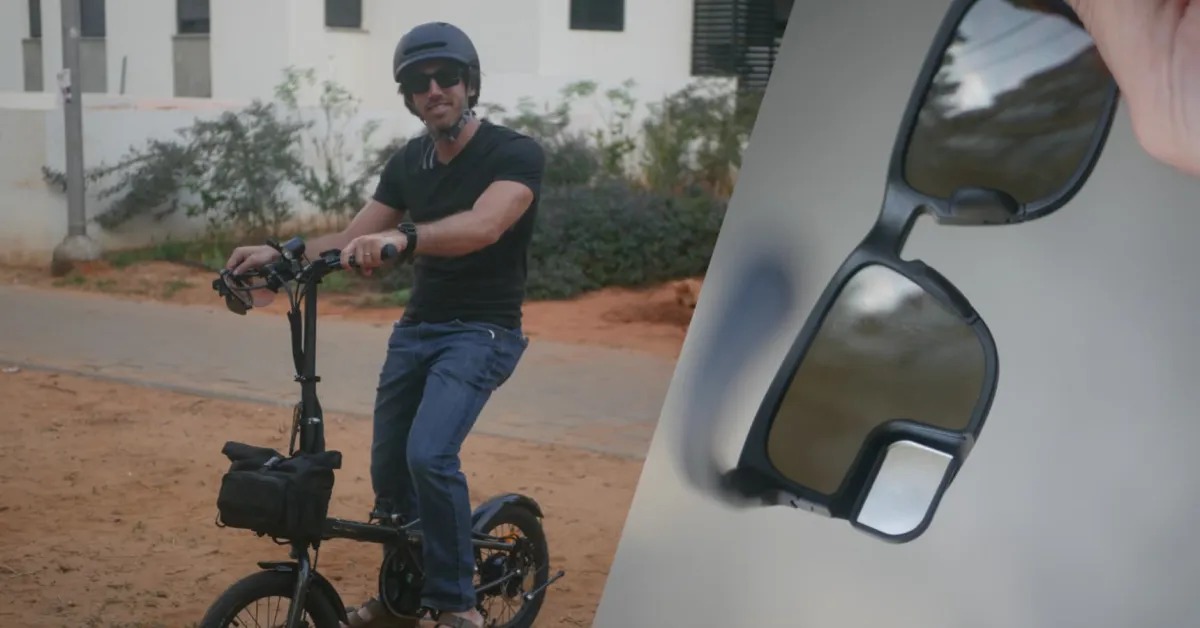
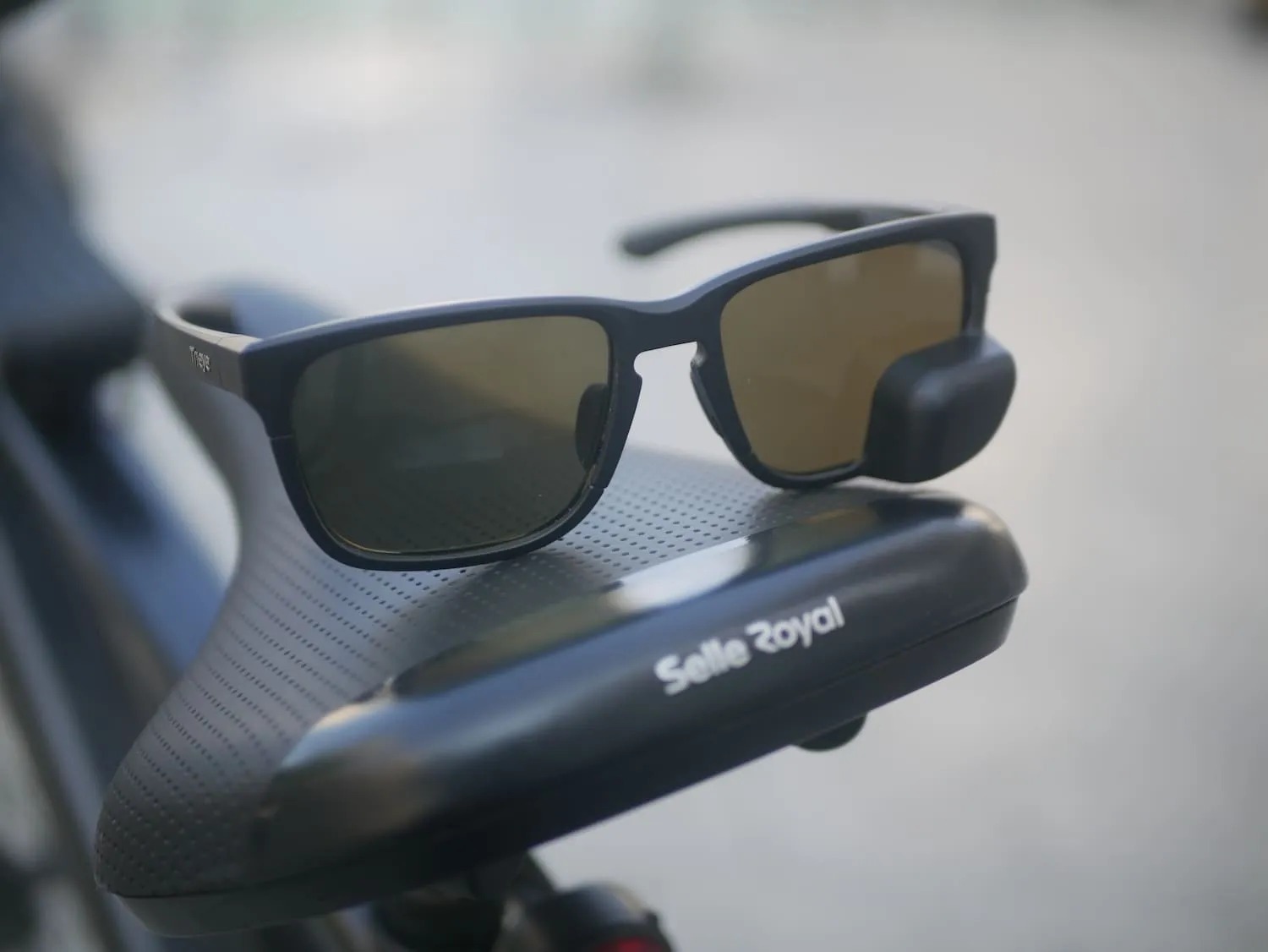
TriEye The concept of these glasses is very straightforward. A small mirror is embedded on the outer edge of the lens, allowing you to see what's happening behind you without having to turn your head completely.
The standard model is equipped with a rearview mirror on the left side, suitable for use in countries where traffic flows on the right; for countries where traffic flows on the left, there is an inverted version available as an option.
I tested two different models: TriEye Classic, which looks like a quite ordinary pair of everyday sunglasses; and the more sporty View, which features a more radical over-the-ear design that made me feel like I was auditioning for a new Terminator movie.
Essentially, both use the same concept of rearview mirrors, and they have left a deep impression on me.
The key is to learn how to use this mirror. It’s not enough to just look straight ahead in order to magically see what’s behind you. On the contrary, you need to turn your head slightly and then take a quick glance at the mirror; that way, you’ll be able to see quite clearly what’s happening behind your shoulders.
For me, this means turning my head about 10 degrees, similar to the action of glancing at the rearview mirror while driving.
It sounds simple, and indeed it is, but there is still a period of adaptation. In the first couple of days, I either turned it too much or not enough. Sometimes I would completely miss the mirror, and other times I needed to adjust it again to see the desired image.
But a few days later, that feeling suddenly came back. Now, with just a quick glance, I can accurately see the reflection in the mirror. I can easily take a look at the mirror to check if there are cars approaching from behind, if another cyclist is catching up, or if the road is clear enough for me to avoid obstacles or other cyclists.
An unexpectedly practical daily cycling tool
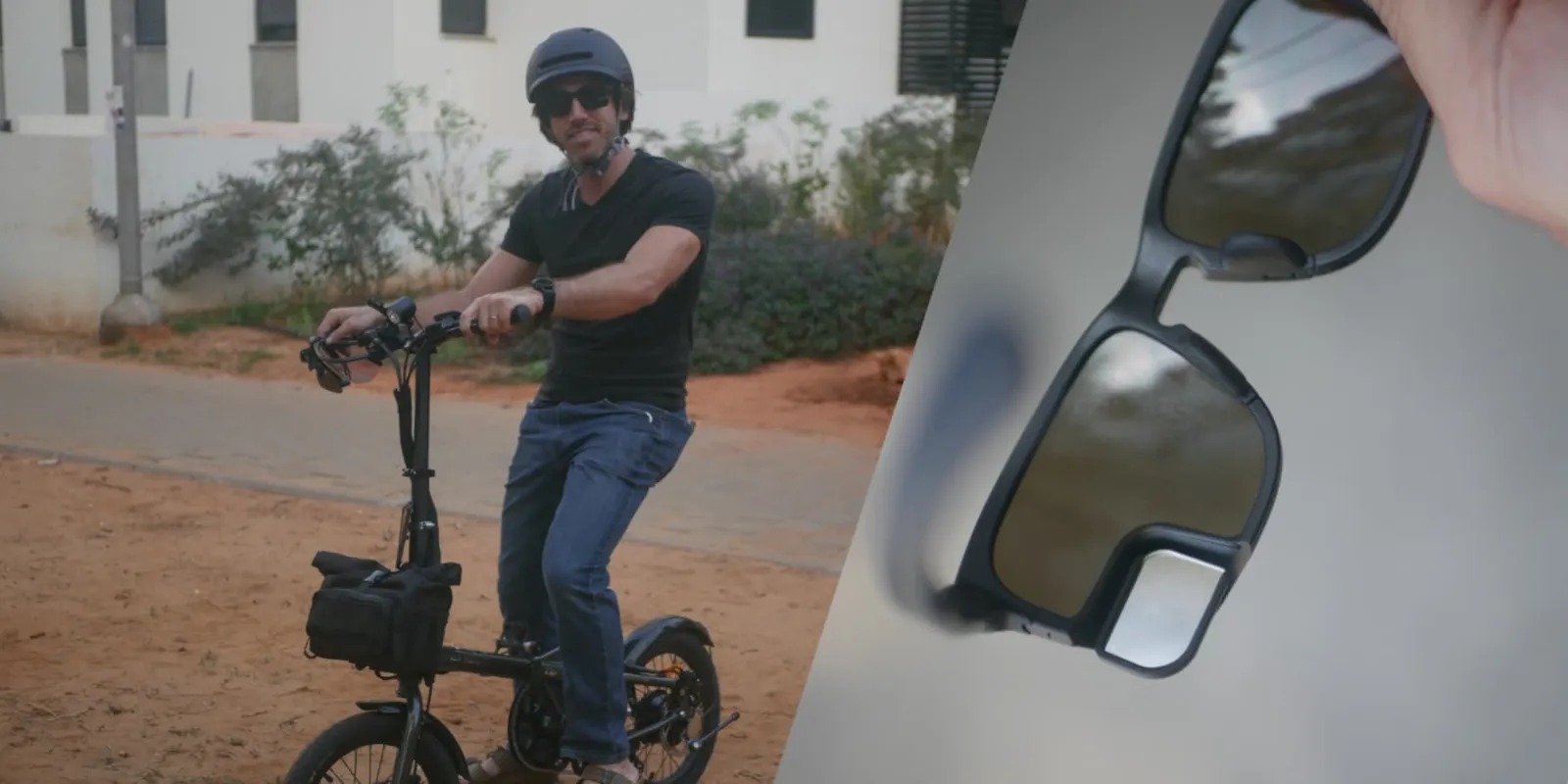
As someone who spends a lot of time riding electric bicycles, and most of that time on urban streets and bike lanes, I constantly pay attention to what's going on around me.
Whether I am preparing to change lanes, bypass a parked car, or simply want to check if anyone is approaching from behind, understanding the surrounding environment is an important part of riding safely.
Usually, this means I need to look back once. This action isn't bad at all, and it's been my preferred method for many years. It's still an important skill that I definitely recommend cyclists practice, but doing it every few seconds isn't always convenient. Sometimes the greatest danger is still ahead, but you also want to know what's happening behind you.
That's precisely what makes TriEye glasses truly outstanding.
It allows me to not have to perform a complete check every time; with just a slight movement of my head, I can immediately know the traffic situation behind me.
Of course, it cannot replace the need for you to look back before taking action, nor can it be considered a substitute for formal safety checks. After all, this mirror can only show a part of what is behind you.
But if it's for maintaining a basic sense of the environment? It's outstanding.
I particularly like the fact that it allows me to determine whether there are vehicles approaching from behind without having to take my eyes off the road ahead for too long.
And unlike the rearview mirrors on bicycles that are mounted on the handlebars, this field of vision moves as your head moves. No matter what type of bike you are riding, you can adjust it slightly to see different areas behind you.
This is especially useful for someone like me who often switches between different electric bicycles. I don't need to install a mirror on each test bike; I just need to wear sunglasses.
Speaking of adjustment, the mirror itself can also be adjusted. I set it so that I can see about 10% of my face in the mirror, which allows me to know that my line of sight is basically extending parallel to my cheeks backward. It's like having a small periscope on my face, except instead of looking up, it looks straight backward.
Classic is my favorite.
Although both pairs of glasses perform well, I still prefer TriEye Classic.
The reason is simple: it looks just like ordinary sunglasses.
Well, it’s almost ordinary. There is still a small protrusion where the rearview mirror is embedded in the lens, but compared to more radical sports models, this protrusion is much less noticeable. Classic Even comes with a “normal” lens, so you can replace the rearview mirror lens if you wish. In actual use, I don’t do that very often; I just accept this small protrusion as part of the design. However, if I need to go somewhere where I don’t want to look too unconventional, I can switch to the normal lens in about 10 seconds, turning it into a pair of sunglasses that look completely normal.
However, in my usual cycling activities, I can wear Classic while riding around the city without feeling as if I've completely turned into a Terminator.
Don’t get me wrong, the more sporty View glasses also have their uses, especially suitable for riders who prefer over-coverage cycling glasses. But I really appreciate how the Classic model doesn’t loudly proclaim “This is professional cycling equipment.”
Classic There are even some interesting color combinations, but I think black frames make it easier to hide the mirror, making it look more like “ordinary” sunglasses.
They are also very lightweight, with flexible frames, and provide UV400 protection. Classic It weighs only 28 grams, so you're not carrying a complex optical device on your face.
TriEye offers a variety of lens options, including polarized and photochromic versions, so you have many combinations to choose from.
What's my biggest regret? Not choosing photochromic lenses.
When choosing the TriEye glasses, there is one thing I wish I could have done differently back then. I should have chosen photochromic lenses. Those lenses automatically adjust their darkness according to the ambient light, becoming darker in bright conditions and lighter in low-light environments.
The reason I regret not choosing them is that I have become so accustomed to being able to see the rearview mirror at any time that when I don’t wear these glasses, I really miss it.
In the evening, I obviously won't be wearing ordinary dark sunglasses anymore. But this also means that I've lost the convenient rear visibility to which I had become accustomed while riding during the day.
It's a strange feeling when you put on a different pair of sunglasses only to realize that you've lost a capability of which you had no idea you'd even want before a few weeks ago.
This is probably the strongest affirmation I can give to this thing.
I started testing them because I was really curious whether this idea was feasible at all. Now, however, I find myself wishing that every pair of sunglasses could come with a small rearview mirror built-in.
TriEye Is the price of these glasses worth it?
The starting price of TriEye Classic is $99, which I think is quite reasonable for a pair of good sunglasses, and it also comes with a truly useful safety feature. You can also use our code EBIKE to get an additional discount of $10, making it even more affordable.
Of course, you can buy cheaper sunglasses. You can also definitely buy cheaper bicycle rearview mirrors.
But combining these two into a product that is both useful, comfortable, and relatively low-key, I think the price is reasonable.
Of course, there are also some precautions to take. It will take you some time to get used to this mirror, and you shouldn't rely on it as the only way to monitor traffic conditions. However, once you develop muscle memory, it becomes a very convenient tool that can enhance your awareness of what's happening behind you.
Perhaps most importantly, this is one of the few cycling accessories that have truly changed my riding habits.
Now I just need to buy a version with photochromic lenses. In that way, when the sun sets, I won't miss my rearview mirror anymore.
FTC: We use automated affiliate links that can generate income. For more information.