

Welcome back to TechCrunch Mobility. Here, we focus on the future of transportation, with a particular emphasis on the role that artificial intelligence plays in it. If you would like to receive this content directly in your email, you can subscribe for free by clicking here – just click TechCrunch Mobility!
Wishing all American readers a happy Thanksgiving. Whether you are traveling by car, plane, train, bus, bicycle, or autonomous vehicle, I hope your journey goes smoothly. Taking advantage of this holiday, this issue will be a bit shorter.
Back to the point. As I mentioned last week, Las Vegas is likely to soon become a real-life A/B testing ground for both manned and autonomous ride-hailing services. This is because Uber has just integrated Zoox, and soon Motional will also join in, all being connected to the local ride-hailing apps.
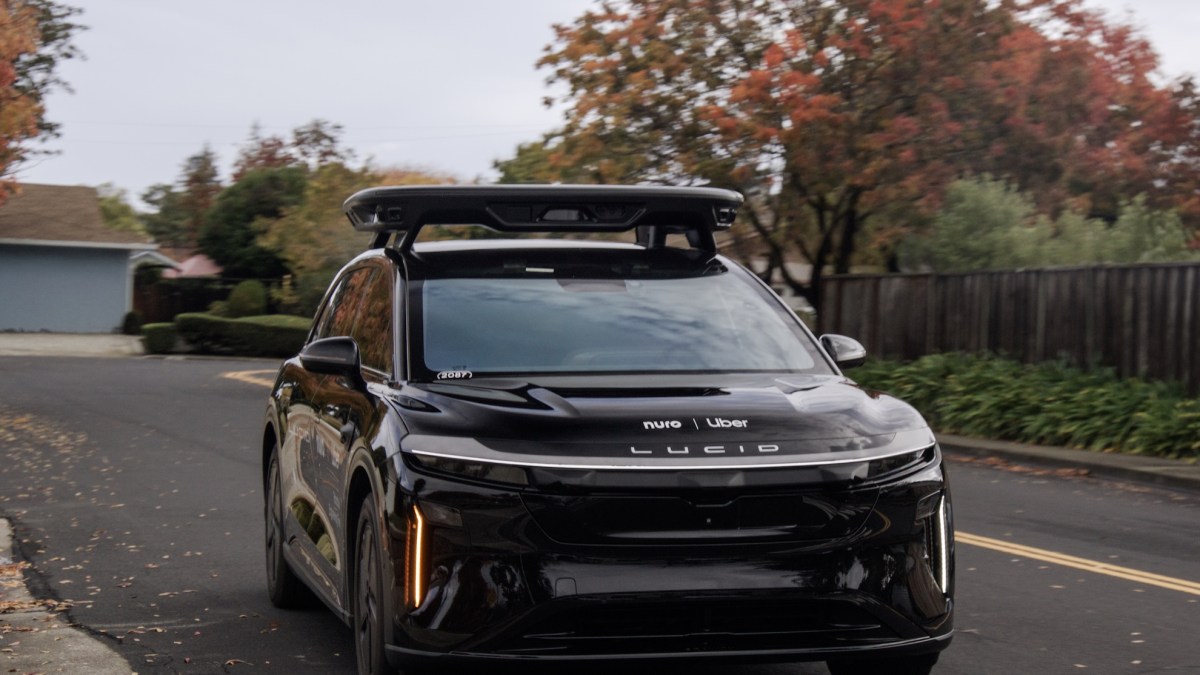
But this doesn't mean that there isn't a lot of activity elsewhere, especially in San Francisco – the "birthplace" city for the research, testing, and commercialization of autonomous vehicles. Activities here will be even more frequent, as Uber and Nuro have already begun testing driverless Lucid Gravity SUV on public roads. Initially, this fleet of driverless Lucid vehicles will consist of dozens of cars, but after the commercial service launches next year, the scale is expected to expand to several hundred vehicles.
Adding more AV to a city that is already filled with autonomous vehicles may test the public's acceptance and willingness to adopt them, especially in the face of ongoing operational issues.
Waymo This month has seen several setbacks, including another software recall that affected over 4,400 autonomous vehicles. The company is trying to take the lead in addressing at least one operational issue: robot taxis that got stranded during the storm. San Francisco Mayor Daniel Lurie stated that after communicating with the city government about the upcoming severe storm and anticipated floods, Waymo suspended services starting from Monday.
By the way, I can be contacted through [ email protected ], or by contacting kkorosec.07 through Signal.
Transaction message!

Ford is making an undisclosed investment in Revolution Space. Revolution Space is a aerospace startup and also a contractor for the U.S. government, producing satellite propulsion systems. Additional background: Revolution Space was formerly known as Accion Systems and was founded in 2014 by engineers from MIT. Currently, the chairman of the company is Daniel Goldin, who previously served as the director of NASA. Its main supporter is Tracker Capital Management, a venture capital firm founded by billionaire Stephen Feinberg; Feinberg also co-founded Cerberus Capital Management and currently serves as the Deputy Secretary of Defense of the United States.
Electric truck startup Harbinger has raised over $100 million in financing, which includes convertible notes provided by Pinegrove Venture Partners, as well as senior debt financing provided by Erebor Bank of Palmer Luckey.
Seattle-based electric boat manufacturer Zin Boats raised $5 million in funding and launched an electric propulsion system division.

The National Highway Traffic Safety Administration (NHTSA) has proposed to give automobile manufacturers an additional two years to meet the mandatory requirements for advanced automatic emergency braking systems in new cars.
According to a study by iSeeCars.com, Tesla Cybertruck is the fastest-selling used truck in the United States. The author also discussed with executive analyst Karl Brauer the factors that drive this trend.
Uber is piloting a new feature in the United States that allows passengers to ride in vehicles driven by drivers whose cars have the company's recording function “Record My Ride” enabled.
Bloomberg reported that a former Volkswagen engineer admitted to trading using insider information related to Volkswagen and its joint venture with Rivian.
Xpeng Motors of China stated that it has begun driverless passenger transportation tests with its robotic taxis in Guangzhou.