

In the past two years, the popularity of prediction markets has soared rapidly. Platforms Kalshi and Polymarket have been challenging traditional betting platforms with their user-friendly applications, allowing users to place bets on a variety of events such as sports, politics, and pop culture. Investment bank Bernstein estimates that at the current growth rate, their transaction volume could reach one trillion dollars by 2030. This growth is not only unsettling for competitors but also puts significant pressure on state governments that rely on revenue from sports betting, which so far have not been able to levy taxes on these emerging prediction market platforms.
The root of the problem lies in the fact that Kalshi and Polymarket believe that they are only regulated by federal agencies and not by state governments. This has forced states such as New York, New Jersey, and Kentucky to find ways to maintain their sources of revenue, as these funds are used for various expenditures ranging from university sports to services for the elderly and gambling treatment programs.
In response, approximately 14 states have filed lawsuits in an attempt to shut down these prediction markets. The outcomes of related appeals court rulings have been mixed, and the cases are rapidly making their way to the Supreme Court. Meanwhile, at least 7 states have also proposed or passed legislation to impose taxes on prediction markets. However, the legal status of these tax arrangements is not clear, and ultimately it will depend on how the Supreme Court defines prediction markets and the boundaries of state government regulatory authority.
Income loss is imminent.
Predictive markets suddenly became popular during the 2024 general elections, when contracts on the victories of President Donald Trump and congressional members on Kalshi and Polymarket provided extremely accurate predictions. At the beginning of 2025, Kalshi launched a sports betting business in the United States, taking advantage of the changing regulatory environment, and subsequently other predictive markets followed suit. Tax analysts from the Tax Foundation, Jacob Macumber to Rosin, stated: "Predictive market activities are likely to erode a portion of the sports betting market share and undermine these revenues."
Some organizations have provided specific figures. The American Gaming Association, which represents the gambling industry, estimates that as of now, the predictive market has replaced approximately $1.7 billion in state sports gambling tax revenue nationwide.
Sports betting taxes themselves do not constitute a large portion of the total tax revenue in most states. Pew Charitable Trusts A senior official from the state's fiscal health program, Mark Robyn, told Fortune: "In most states, this portion is less than 1% of the total tax revenue."
But he added that this revenue is still very important, especially because "in some states, sports betting revenue is specifically earmark allocated to certain services," and these services are relied upon by the community.
New York is a typical example. The state imposes a 51% tax on the gambling revenue from mobile sports betting platforms, with the proceeds mainly used to support public education. A portion of the funds is also allocated to sports programs for disadvantaged youths and treatment for problem gambling. An analysis in June, specifically for the state of New York, estimated that even if sports betting shifted 5% to predictive markets, it could result in a loss of about $66 million in tax revenue for New York each year. Tax Policy Center
Macumber-Rosin said, 'They either need to raise the sports betting tax to make up for it, or they have to impose additional taxes elsewhere.' Several states, including New York, chose the latter option.
New markets, new taxes
According to a report from the meetings of state legislatures across the country ( National Conference of State Legislatures ) in November, at least 15 states have proposed some form of predictive market regulation legislation. Some of these states, such as California and Connecticut, have suggested restricting children's access to these platforms; others, like Ohio, are attempting to limit the use by public officials.
About half of these bills focus on taxation. Kentucky took the lead: in April, the state imposed a 14.25% tax on operator transaction fees, which is expected to come into effect in January. North Carolina followed suit in July by imposing a 6% tax on predicted net transaction fee revenues, which is expected to generate $2 million in revenue in 2027 and increase to $7.7 million by 2030. This money will flow into the state's general fund, which is the main pool of funds used for services such as education, healthcare, and public safety.
Other states are still actively pushing for the passage of similar legislation. In June, legislators in New Jersey advanced a proposal to impose an additional 9% tax on the revenues of predictive market operators; this is less than three months after a federal appeals court sided with Kalshi in a dispute between Kalshi and state regulators.
The financial assessment attached to the bill warns that if these platforms grow at the expense of other gambling and gaming license holders, then the state government's revenue from these licensees will decrease. The assessment also estimates that this additional tax could generate between 10 and 15 million dollars in revenue in the first year.
New York State became the latest advocate on Monday. A state senator announced a proposed 10% surcharge on operators' net transaction handling fees. If approved, the funds generated will be used for the "Early Education Future Fund" to support the widespread provision of preschool education throughout the state.
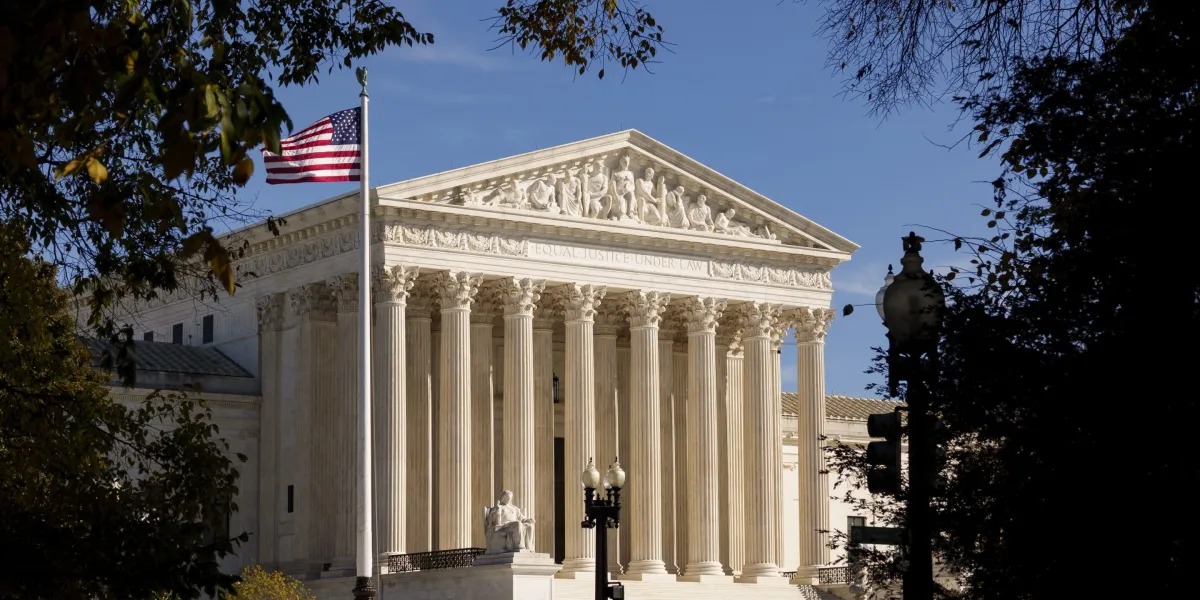
However, getting these tax bills passed by the state legislature is just the first hurdle. Whether they can survive in broader legal disputes depends on whether state governments have the authority to regulate predictive markets, a question that may ultimately be decided by the Supreme Court.
High-risk legal battles
The experience in Illinois highlights the legal challenges faced by various states when taxing platforms such as Polymarket and Kalshi. In June, Governor JB Pritzker signed a budget-related tax plan that requires predictive market operators to obtain state gambling licenses and to pay taxes on each transaction placed through their platforms. The initial tax rate was 1.75% of the bet amount, which increased to 3.5% after the operator had made 5 million bets per year.
Four months later, a judge prevented Illinois from imposing this tax on exchanges that are under federal regulation, on the grounds that federal law was likely to take precedence, thereby overriding state-level licensing requirements. Lauren Ferrante from the Chicago-based state and local tax law firms Kilpatrick Townsend & Stockton explained, "Since the licensing system was deemed invalid in light of market-related issues, this also means that the tax is invalid as well."
In contrast, North Carolina has adopted a different approach. In a bill signed in July, the state explicitly recognized that the Commodity Futures Trading Commission (Commodity Futures Trading Commission) has exclusive regulatory authority over the futures market, but it still imposes a separate tax on the net trading fee income of operators.
State and local tax attorneys from Kilpatrick Townsend and Stockton, also mentioned, stated: "It is clearly operating within its own jurisdiction and has not attempted to regulate or license Kalshi or other predictive markets."
Another feature of North Carolina's legislation is that the targets are relatively modest. Compared to Kentucky's tax rate of 14.25%, North Carolina's tax rate of 6% is considered low; moreover, this rate is particularly low when compared to the 23% tax imposed on revenues from traditional sports betting platforms such as DraftKings.
Nathan Goldman, a professor of accounting at North Carolina State University, said to Fortune: "They are trying to find a way to pass a bill that will satisfy everyone without triggering a large-scale legal battle."
But even so, this approach cannot be guaranteed to be sound. Hughes says: "An independent tax that has nothing to do with regulatory or licensing predictions of the market... may still be sufficient to constitute some form of regulation for the courts, thereby attracting attention."
In Macumber-Rosin, it seems that this uncertainty alone is enough to make states refrain from rushing to collect money for now.
Otherwise, a new source of revenue could become a new budget problem: state governments might collect and spend the money first only to later find themselves having to return it. He said that states that implement these taxes should “set aside this money separately and save it for the possibility of needing to return it in the future.”