November seems set to become the worst month yet for spot Bitcoin ETF in the United States.
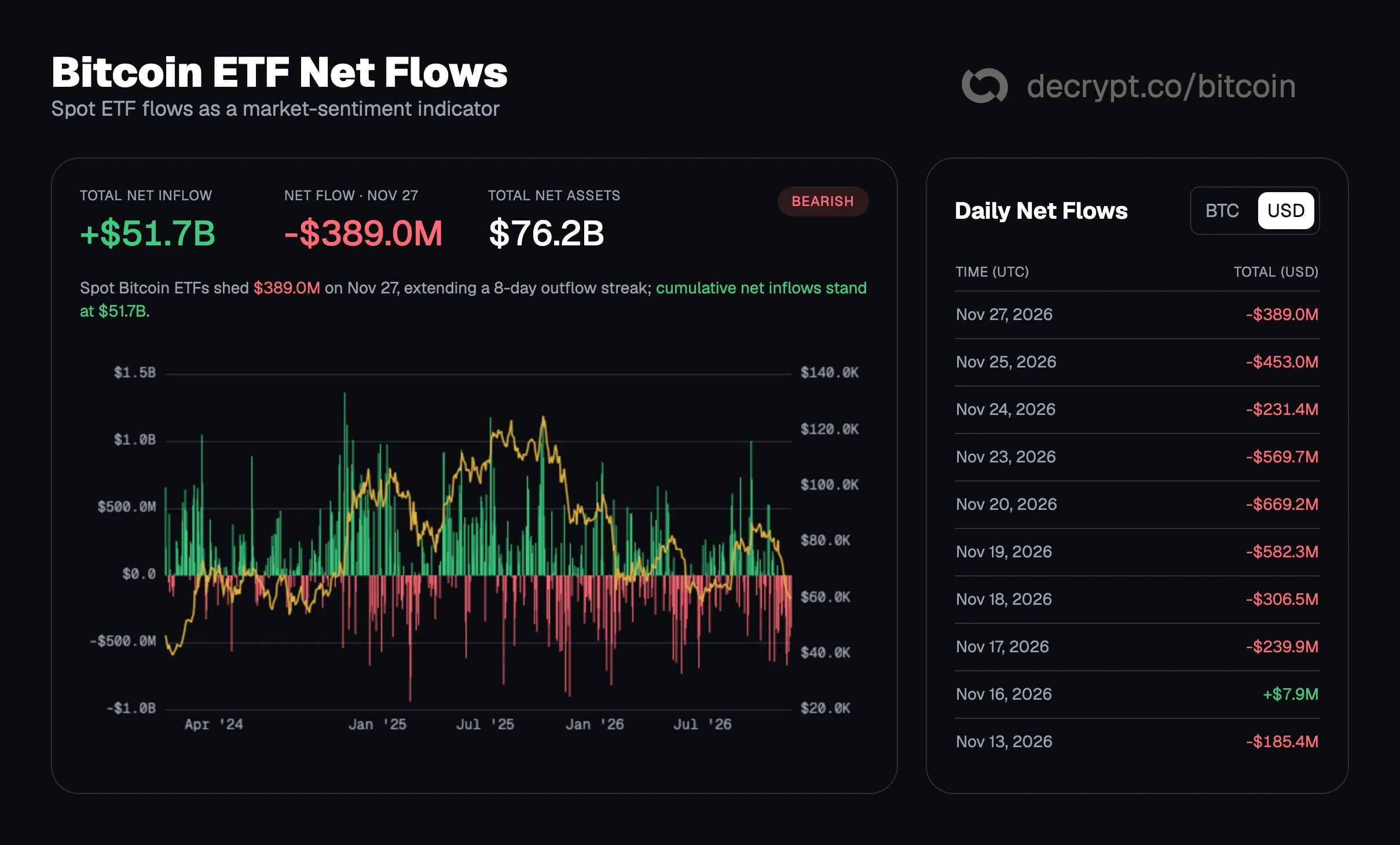
According to the tracking data from ETF of Decrypt, these funds saw a net outflow of $389 million on Friday, marking the eighth consecutive trading day of capital exodus. This has brought the total net outflow for November to approximately $5.5 billion, with only Monday left in this month as a trading day.
This will be the largest monthly net outflow for these funds since their launch in January 2024. According to SoSoValue data, the previous record was $4.51 billion in June 2026. SoSoValue shows that as of November 25th, the net outflow for November had reached $5.39 billion, and Friday's transactions further increased this figure.
The amounts for the subsequent months are $3.56 billion in February 2025 and $3.48 billion in November 2025, respectively.
In just these eight consecutive trading days, approximately $3.44 billion has been withdrawn, with a single-day outflow of $669.2 million on November 20th, which was the largest single-day outflow of the month. Since its launch, the cumulative net inflow has dropped to $51.7 billion, and the total net assets have shrunk to $76.2 billion, which is lower than the over $10 billion in October.
According to the data from SoSoValue, as of November 25th, these funds have seen a cumulative reduction of about 5 billion US dollars in 2026, heading towards their first full year of net outflows. In 2024, they attracted 35.2 billion US dollars in funds, and in 2025, they attracted 21.4 billion US dollars.
Bitcoin hovered around $59,300 over the weekend, according to the price data from Decrypt. Due to the expiration of Bitcoin options worth approximately $6.8 billion on Deribit, Bitcoin fell back below $60,000 on Friday.
Technically, the market remains weak. Multiple charts indicate that this round of decline is different from previous cycles: the price prediction models that traders and investors have relied on for a long time to determine market bottoms are no longer effective.
In addition, this round of selling occurred amidst a broader sentiment of risk aversion. Last week, inflation that exceeded expectations, new Trump tariffs, and the selling of AI stocks put pressure on the market, with both the Fear & Greed Indexes, which measure sentiment in the crypto market and on Wall Street, shifting to "extreme fear."
Even Galaxy Research retracted its judgment last month that the bear market for Bitcoin had ended.