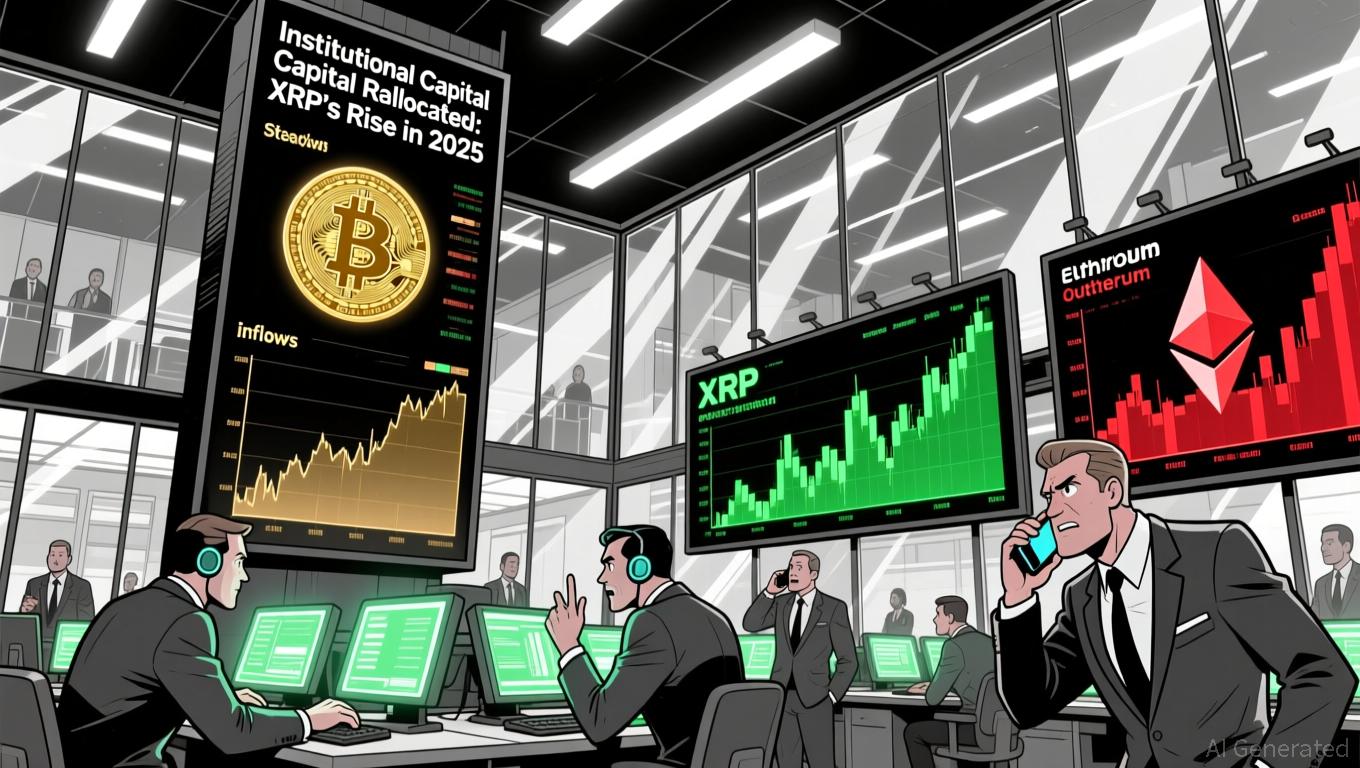
Institutional capital flows in the cryptocurrency market have long been a barometer for macroeconomic sentiment. Yet, in late 2025, a striking divergence emerged:
, the digital asset once dismissed as a speculative altcoin, within weeks-surpassing the combined inflows of (BTC) and (ETH) during the same period. This trend, observed even amid a broader crypto market downturn, suggests a quiet but significant reallocation of institutional capital toward XRP. For investors, this raises a critical question: Is XRP's institutional adoption a contrarian signal, or a fleeting anomaly?The ETF Inflow Paradox
The data tells a compelling story. On December 2, 2025, XRP spot ETFs
, outpacing Bitcoin's $58.5 million and Ethereum's $9.91 million outflow. This inversion of traditional hierarchy-where Bitcoin, the market's bellwether, underperformed a "small-cap" asset-highlights a shift in institutional risk preferences. While Bitcoin ETFs remain robust, XRP's performance indicates a growing appetite for assets with .This shift is not accidental. Ripple's strategic expansion into institutional finance, including the launch of its U.S.-based OTC brokerage and the RLUSD stablecoin
, has created a bridge between traditional finance and blockchain infrastructure. Institutions are increasingly viewing XRP not as a speculative play but as a macro asset with cross-border payment and DeFi use cases .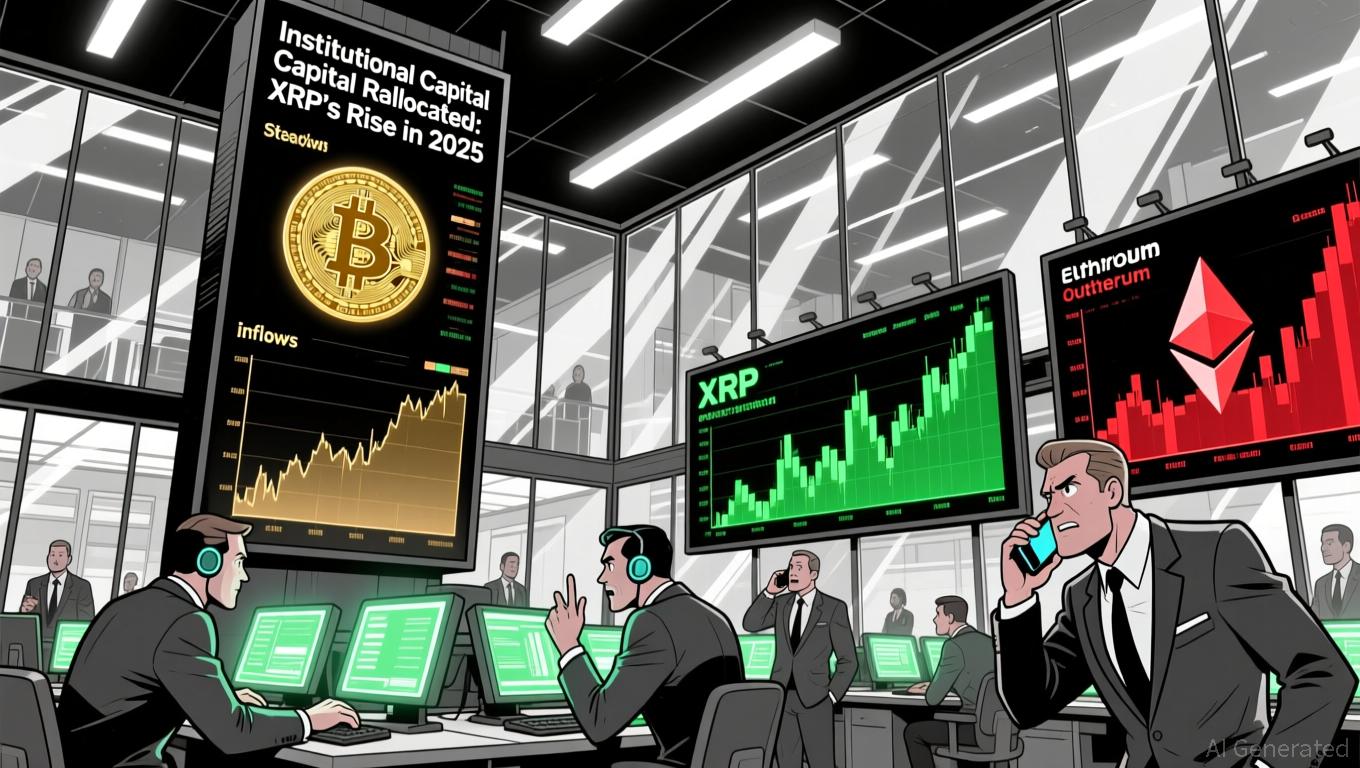
Regulatory Clarity as a Catalyst
Regulatory uncertainty has long been a drag on institutional adoption. However, 2025 marked a turning point for XRP. The approval of
provided a legal framework for institutional participation, reducing counterparty risk and enhancing liquidity. This contrasts with Ethereum, where ongoing debates over its regulatory classification-security versus commodity-have created ambiguity .Meanwhile, Bitcoin's institutional appeal remains tied to its store-of-value narrative, but its slower blockchain infrastructure and energy consumption profile have made it less attractive for high-frequency institutional trading
. XRP's 3-5 second transaction finality and low fees, by comparison, align with the needs of institutional players seeking scalable solutions .Sentiment Divergence in a Downturn
The contrarian case for XRP gains strength during market downturns. While
and typically see outflows during volatility, XRP's ETF inflows . This divergence suggests that institutions are treating XRP as a hedge against crypto market beta, rather than a correlated asset.Consumer sentiment data reinforces this trend. A 2025 survey found that
, citing its utility in cross-border transactions and decentralized finance. This contrasts with Ethereum's temporary outflows, which analysts attribute to a reassessment of exposure amid network upgrades and regulatory uncertainty .Challenges and Risks
XRP's institutional ascent is not without risks. Critics highlight concerns over
, given Ripple's control over XRP's escrow releases. While these issues are valid, institutions are increasingly monitoring market behavior and escrow dynamics to mitigate risks . Additionally, XRP's price volatility remains a hurdle, though its ETF structure provides a buffer against direct market exposure .The Contrarian Thesis
For investors, XRP's institutional adoption presents a compelling contrarian case. While Bitcoin and Ethereum dominate headlines, XRP's ETF-driven inflows, regulatory progress, and functional utility position it as a unique asset class. Institutions are betting on XRP's ability to serve as a bridge between traditional finance and blockchain innovation, a role that BTC and ETH may struggle to replicate in their current forms
.In a market where sentiment often drives short-term outcomes, XRP's institutional traction suggests a longer-term reallocation is underway. For those willing to look beyond the noise, this could be the early signal of a new era in crypto investing.