The South Korean government says it will not intervene in the market for the time being, but the stock market crash has sparked accountability questions.
Wallstreetcn
7h ago
Ai Focus
The South Korean government has announced that it will not activate the stock market stabilization fund for the time being, sparking strong dissatisfaction among retail investors after the South Korean stock market triggered circuit breakers for two consecutive days.
Helpful
No.Help

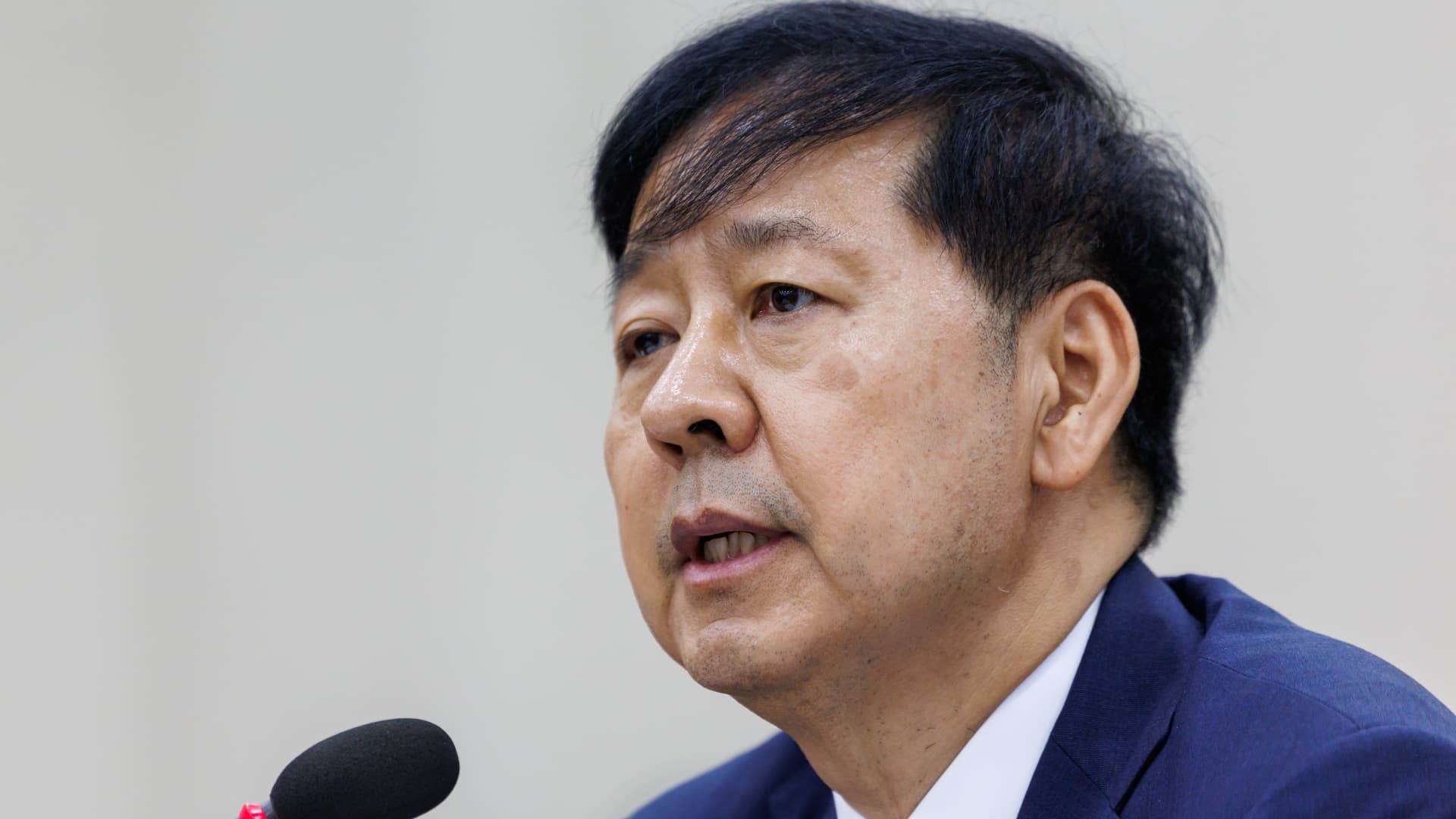
The South Korean government stated that it is not yet time to activate the stock market stabilization fund. Kim Yong-beom, Chief of Staff for Policy at the Blue House, said the government is closely monitoring the market, and the more important task at present is to determine the structural factors behind this decline.
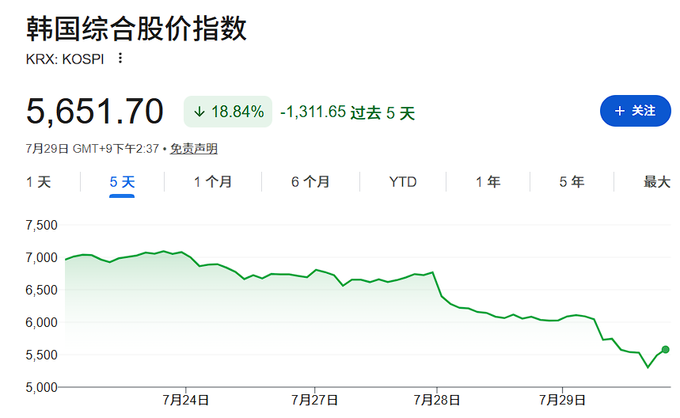
The market is still searching for equilibrium.

Kim Yong-beom, speaking in São Paulo, Brazil, said that this downturn is more like a reassessment of market expectations for AI and semiconductors, rather than a crisis requiring immediate policy intervention. He also mentioned that factors such as the expansion of production capacity by Chinese memory chip companies and whether AI investments can be converted into revenue are amplifying market volatility.

High volatility stems from structural problems

He attributed the high volatility in the South Korean stock market to active retail trading, the large scale of derivatives, and the excessive weighting of Samsung Electronics and SK Hynix. Kim Yong-beom said that market volatility cannot be entirely attributed to leveraged ETFs, and the relevant regulations will continue to be reviewed.

Retail investor rebound heats up rapidly

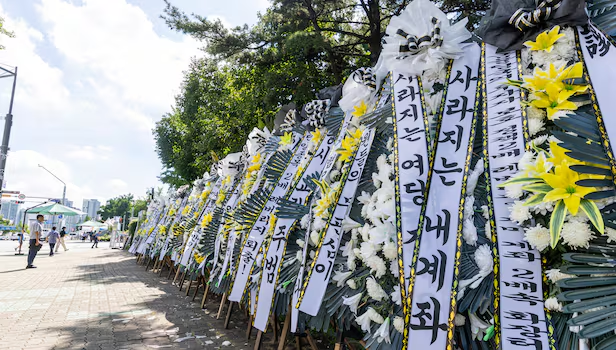
This statement quickly sparked discontent among South Korean investors. Critics argued that the government, which had previously made high-profile pronouncements about targets like the "KOSPI 5000," was now emphasizing self-regulation in the face of a market crash, effectively shifting responsibility back to the market. As losses widened, the debate over whether the government should intervene to stabilize the market continued.

Tip
$0
Like
0
Save
0
Views 640
HQYC reminds readers to view blockchain rationally, stay aware of risks, and beware of virtual token issuance and speculation. All content on this site represents market information or related viewpoints only and does not constitute any form of investment advice. If you find sensitive content, please click“Report”,and we will handle it promptly。
Submit
Comment 0
Hot
Latest
No comments yet. Be the first!
Related
The sharp decline in South Korean single-stock leveraged ETFs has sparked discussions about tightening regulations.
South Korea's single-stock leveraged ETFs plummeted amid a correction in chip stocks, prompting the finance minister to apologize and regulators to consider tightening restrictions on retail investor access.
CNBC
·2026-07-29 15:34:35
523
South Korea held an emergency meeting to discuss measures to stabilize the stock market.
The South Korean stock market plummeted and triggered a circuit breaker, prompting the government to hold an emergency meeting to discuss measures to stabilize the market. Chip stocks and AI investment sentiment became the focus.
金十数据
·2026-07-29 17:03:49
527
South Korean retail investors protest against leveraged single-stock ETFs; regulators plan to tighten trading thresholds.
Following a sharp drop in the South Korean stock market, retail investors protested against leveraged ETFs based on single stocks, prompting regulators to initiate tightening measures.
Wallstreetcn
·2026-07-29 18:44:15
599
Web3: South Korean single-stock leveraged ETFs plunge, retail investors suffer widening losses.
Overheated trading in South Korean single-stock leveraged ETFs has led to increased losses for retail investors, prompting regulators to consider further tightening investment thresholds.
Wallstreetcn
·2026-07-28 16:21:35
140
Web3: Asian stock markets plunged, with South Korea, Japan, and Taiwan losing over $950 billion in market capitalization combined.
Asian stocks fell sharply due to interest rate expectations and a pullback in the AI sector, with the combined market capitalization of South Korea, Japan, and Taiwan wiping out more than $950 billion.
Coinpedia
·2026-07-29 15:34:36
856