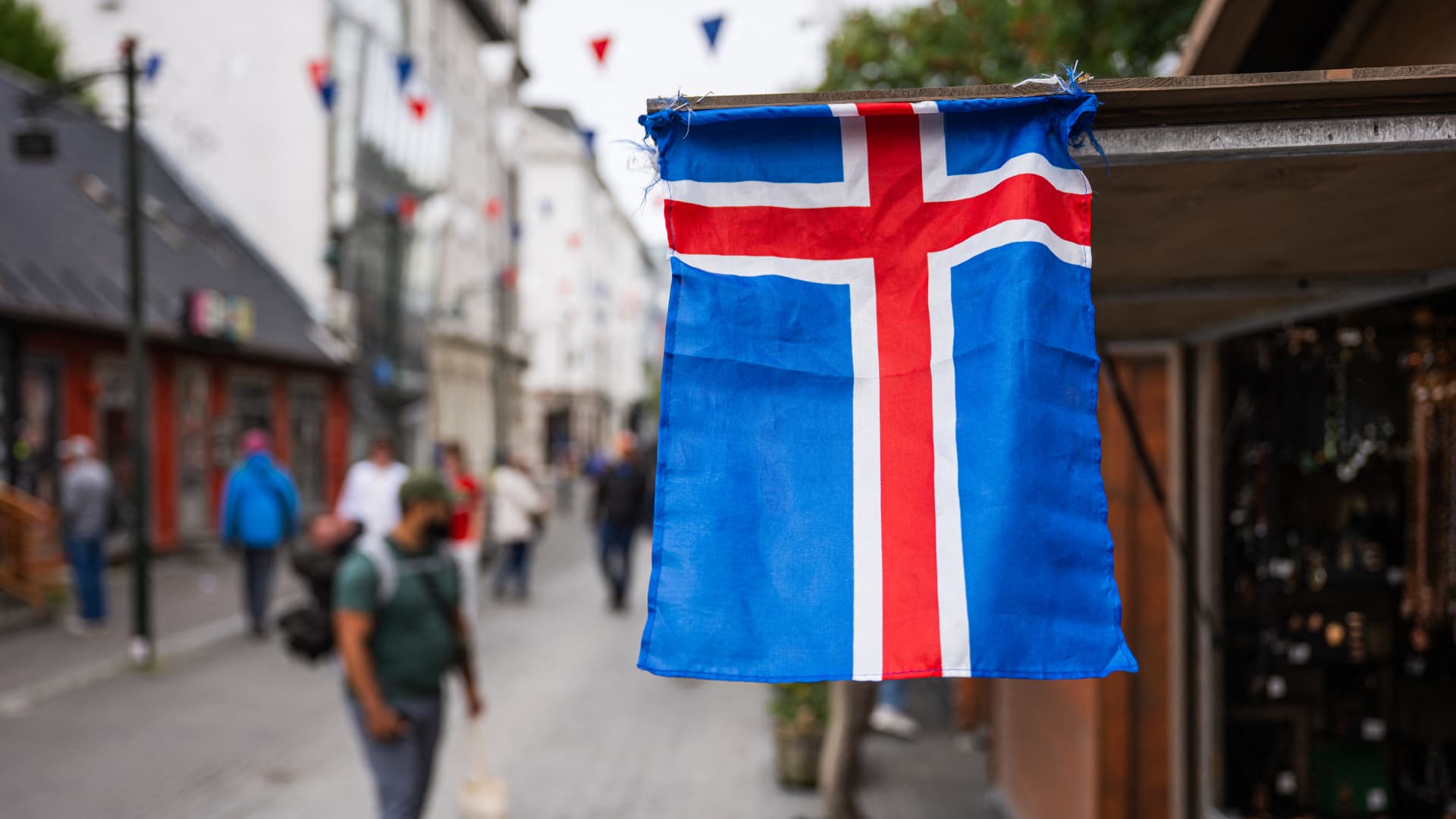


Iceland will hold a referendum on Saturday to decide whether to restart negotiations to join the European Union. Multiple polls show that the gap between supporters and opponents is very small. This discussion, which originally revolved around economics, sovereignty, and fisheries, has recently heated up due to the security situation in the Arctic.
Referendum results or restart of the membership process
The question of this vote is very straightforward: whether Iceland should resume negotiations to join the European Union. If a majority of voters cast their votes in favor, Iceland will restart talks to join the EU. If the negotiations are completed, the final agreement will still need to be put to a national referendum to decide whether to accept it or not.
Iceland applied to join the European Union after the global financial crisis in 2009, but negotiations were suspended in 2013 following the formation of a pro-EU coalition government. Now, this issue has once again come to the center of political attention.
Trump and the Greenland factor bring security pressures
With the increasing importance of the Arctic routes, key minerals, and regional security, Trump has once again pushed for the United States to acquire Greenland, which has also sparked more discussions about security dependence within Iceland.
Eir í kur Bergmann, a professor of politics at Bifröst University in Iceland, stated that the various security reasons put forward by the U.S. President to control Greenland are, to some extent, also applicable to Iceland. The difference is that Iceland is a formally independent country.
He also pointed out that Iceland's security has long relied on its membership in NATO, as well as the bilateral defense agreements signed with the United States since 1951. Today, some voters are beginning to re-evaluate whether these security arrangements are still solid.
Economy and sovereignty remain the main focus of the vote.
Despite the intensification of geopolitical factors, analysts believe that domestic issues, particularly those related to the economy, sovereignty, and fisheries, are still the real determinants of voting decisions.
One of the main reasons supporting the resumption of negotiations is that the Icelandic króna, as a freely floating currency, has long faced significant fluctuations. Supporters believe that re-discussing relations with the European Union will help provide more options for economic stability.
Opponents argue that Iceland already maintains close economic ties with the European Union and there is no need to further pursue membership. The former Prime Minister Katr ín Jakobsd ó ttir stated that Iceland has been working closely with the 27 countries of the EU, and the standard of living of its citizens is also relatively high; therefore, she does not see the necessity of joining the EU.
Iceland has deeply integrated into the European system.
Although Iceland has not yet joined the European Union, it participates in the European Single Market through the European Economic Area and is also a member of the Schengen Zone, allowing for passport-free travel with other participating countries.
For the EU, if the Icelandic referendum passes, it could also become a symbolic expansion of membership following Brexit. Analysts believe that if the pro-EU camp wins, Iceland may reach a negotiation agreement with the EU faster than expected, as Iceland's next general elections are not due until at least August 2028.