

This round of rebound for Bitcoin is not only reflected in its price but also in its correlation with traditional assets. Research by Grayscale shows that the 90-day correlation between Bitcoin and gold has risen to over 50%, while the correlation with the NASDAQ 100 index has dropped to around 33%.
This means that recently, the market has tended to view Bitcoin more as a scarce macro asset rather than a high-volatility alternative to tech stocks. However, whether this change will continue remains to be seen depending on subsequent price data, as rolling correlations can change as the sample is updated.
Synchronous changes occur during the rebound phase.
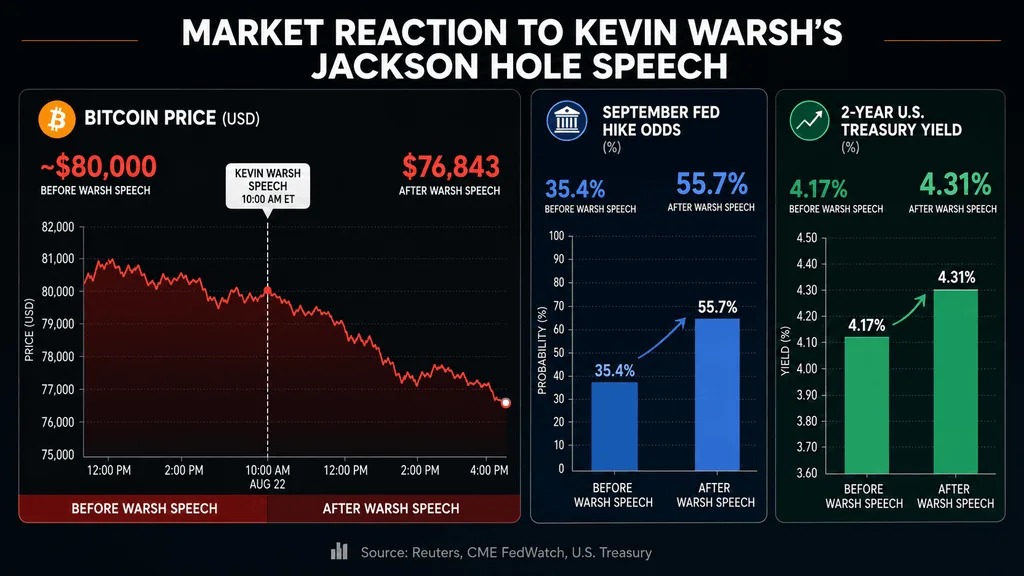
Relevance switching occurred during a period of strong upward movement for Bitcoin within the year. From August 17th to August 21st, BTC rose from around $62,679 to $79,500, with a gain of about 27% in just 4 days.
Factors driving this round of gains include adjustments to U.S. Treasury bond repurchase operations, a weakening dollar, short sellers closing their positions, and a rebound in institutional demand. After market liquidity improved, the pressure on long-term yields was alleviated, which also provided support for alternative assets.
ETF Funds continue to flow in
The capital flow of spot Bitcoin ETF has also strengthened this round of rebound. Coinpaper cites data indicating that as of August 27, the daily net inflow of spot Bitcoin ETF in the United States was $242.3 million, marking a ninth consecutive trading day of net inflow.
- On August 27, there was a single-day net inflow of $242.3 million.
- Net inflows recorded for 9 consecutive trading days
- The cumulative net inflow for this round is approximately $3.04 billion.
Even earlier, the weekly net inflow once reached approximately $1.9 billion, indicating that institutional buying continues.

U.S. debt exceeds $40 trillion
At a macro level, fiscal pressures in the United States are also reinforcing the narrative around "trading of scarce assets." The total debt of the U.S. federal government exceeded $40 trillion on August 18 and rose to approximately $40.10 trillion by August 25.
The US Congressional Budget Office estimates that the federal deficit for fiscal year 2026 will be approximately $1.9 trillion. The continuous expansion of debt and deficit often raises concerns about the purchasing power of fiat currency in the market, which in turn drives some funds to assets with limited supply.
Gold remains a more mature defensive asset, while Bitcoin's volatility and the unique risks associated with the crypto market are still higher. What is more worth observing next is whether Bitcoin will continue to maintain a higher degree of synchronization with gold in a more pronounced risk-aversion environment.