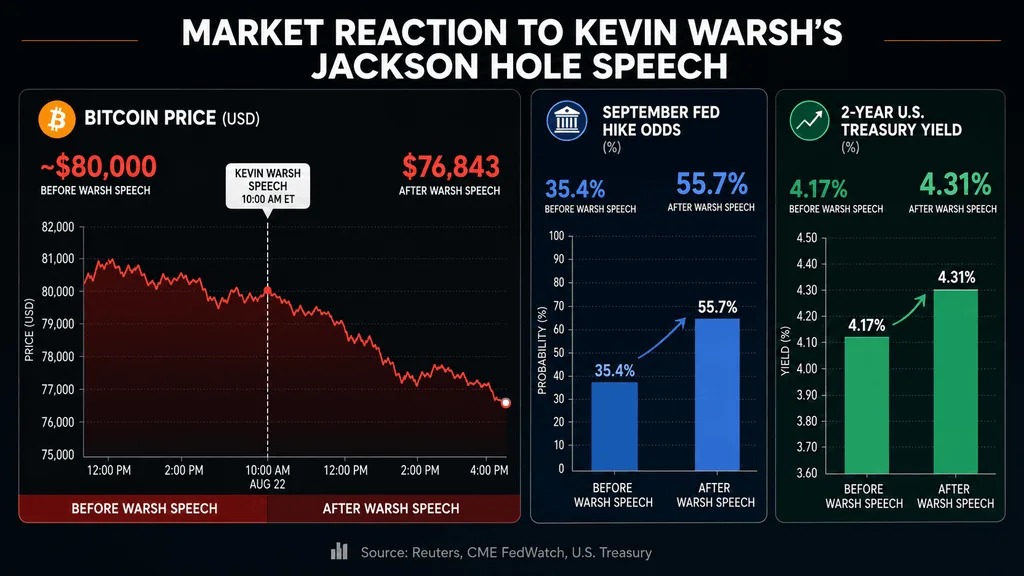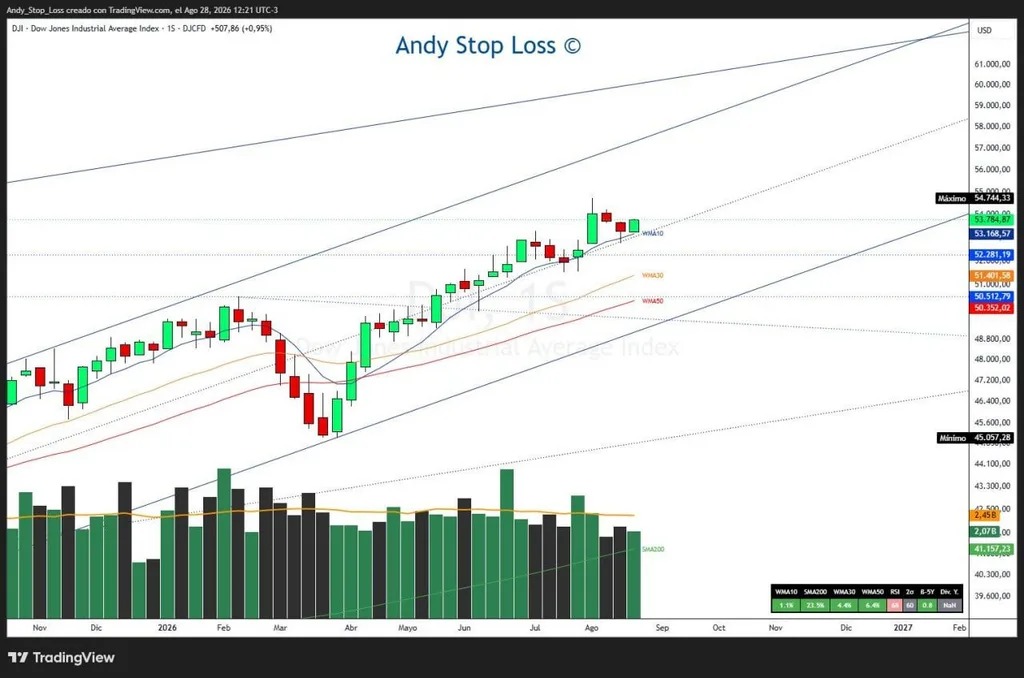


U.S. stocks turned higher during trading on Friday as investors digested the first speech by Federal Reserve Chairman Kevin Warsh at the Jackson Hole Symposium. Despite a noticeable rise in short-term U.S. Treasury yields, the S&P 500 index and the Nasdaq Composite Index still rose by about 0.4% during trading, and the Dow Jones Industrial Average also moved higher in tandem.
Probability of interest rate hike increased in September
Warsh indicates that if inflation cannot return to the 2% target "clearly and quickly," the Federal Reserve still has work to do. This statement does not directly signal an impending interest rate hike, but it reinforces the Fed's stance of continuing to curb inflation. Following the speech, market expectations for a rate hike in September rose to around 50%, up from about 35% before the speech.
Affected by this, the increase in short-term U.S. Treasury yields was even more significant. The yield on two-year U.S. Treasuries rose by 9.5 basis points to 4.325%, reaching a level not seen in about a month; the yield on 10-year U.S. Treasuries rose by 2.8 basis points to 4.70%.
The three major stock indices rebounded during the session.
U.S. stocks were once close to flat in the morning session. As of 10:07 a.m. Eastern Time, the Dow Jones Industrial Average rose 0.07% to 53,606.27 points; the S&P 500 index fell 0.07% to 7,725.81 points; the Nasdaq Composite Index fell 0.22% to 26,483.33 points. Subsequently, both the S&P 500 and the Nasdaq Composite Index turned higher, indicating that investors temporarily accepted a more hawkish interest rate outlook.
From the performance of the sectors, tech stocks driven by the AI theme on the previous trading day have cooled down. NVIDIA fell by about 1.3% in the morning session, giving back some of the gains from the previous day; Marvell Technology declined by about 7.2%, as there are still doubts about the timing of revenue realization from its collaboration with Google's AI chips. In terms of individual stocks, PayPal fell by 11.5%, while Gap rose by about 15% after raising its full-year profit forecast.
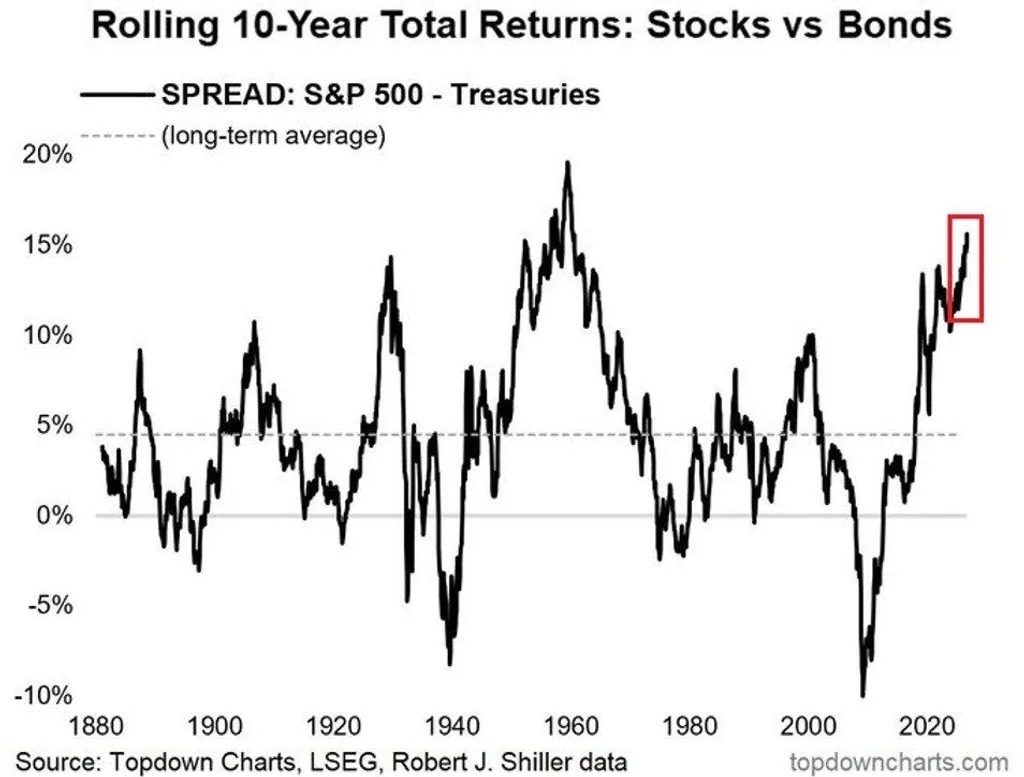
The gap between stock and bond returns remains large.
Another set of market data cited in the article indicates that the gap between the actual returns of the U.S. stock market and U.S. Treasury bonds over the past 10 years remains at a historical high. Calculated as a rolling 10-year total return adjusted for inflation, the return advantage of the S&P 500 over U.S. Treasuries is nearly 15 percentage points, which is significantly higher than the long-term average of about 5 percentage points.
Kobeissi Letter According to this, this gap is the largest since the late 1950s. Based on the data they cited, the average annual real return on U.S. Treasury bonds during that period was approximately -3%, while the average annual real return on the S&P 500 was about 12%. This set of data reflects more of the divergence in asset performance over the past decade and also indicates that the stock market has maintained strong resilience in an environment of high interest rates.
Next, the market's focus will shift to whether the continued rise in short-term yields will suppress stock valuations. Looking at Friday's market performance, investors are still weighing the relationship between higher interest rate expectations, the resilience of corporate earnings, and the overall upward trend of the stock market.