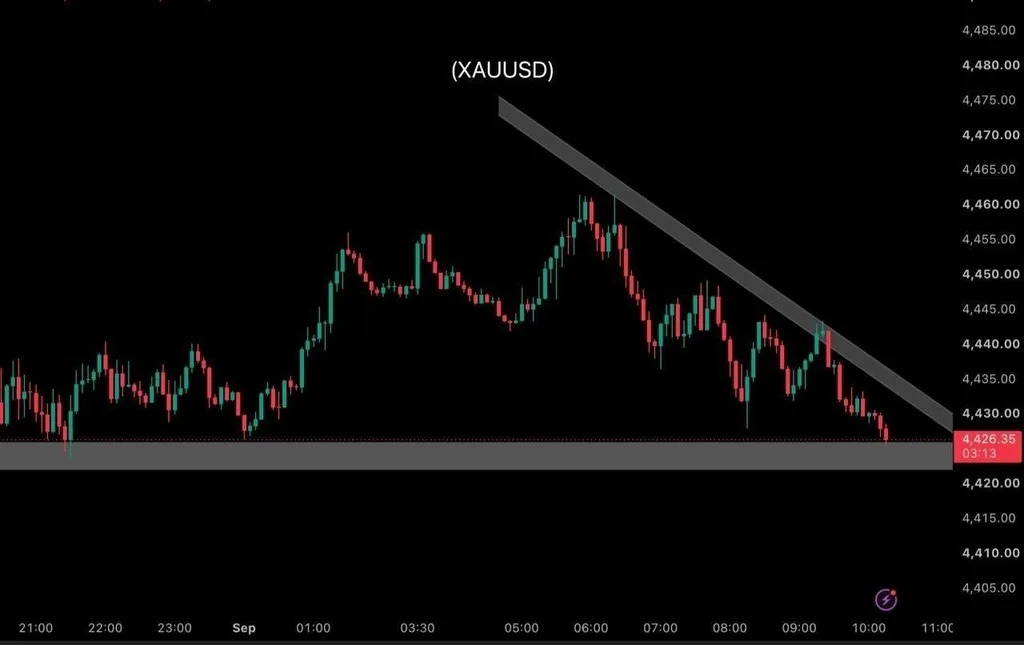


Spot gold fell on Tuesday, dropping to around $4,428 per ounce during the session. Market bets on the Federal Reserve continuing to raise interest rates this year have increased, putting pressure on gold prices. At the same time, renewed tensions in the Middle East and a weaker trend in the US dollar have provided some support for gold.
The article mentions that the market currently expects a 66% probability of the Federal Reserve raising interest rates in September, and a probability of at least one rate hike by December of around 89%. Against this backdrop, investors are awaiting new data on the U.S. labor market to determine whether the interest rate path will tighten further.
$4,420 level becomes a short-term focus
The current market regards the range of $4,420 to $4,426 as a key short-term support level for gold. If the gold price can stabilize in this area and once again reach $4,440 to $4,445, the short-term trend is expected to improve, and market attention will shift back to the $4,450 to $4,460 range.
On the contrary, if the gold price continues to fall below $4,420, the pressure for a pullback could increase further. The report suggests that the short-term structure of gold remains weak before it can re-establish itself above the downward trend line.
The weakness of the US dollar limits the decline in gold prices.
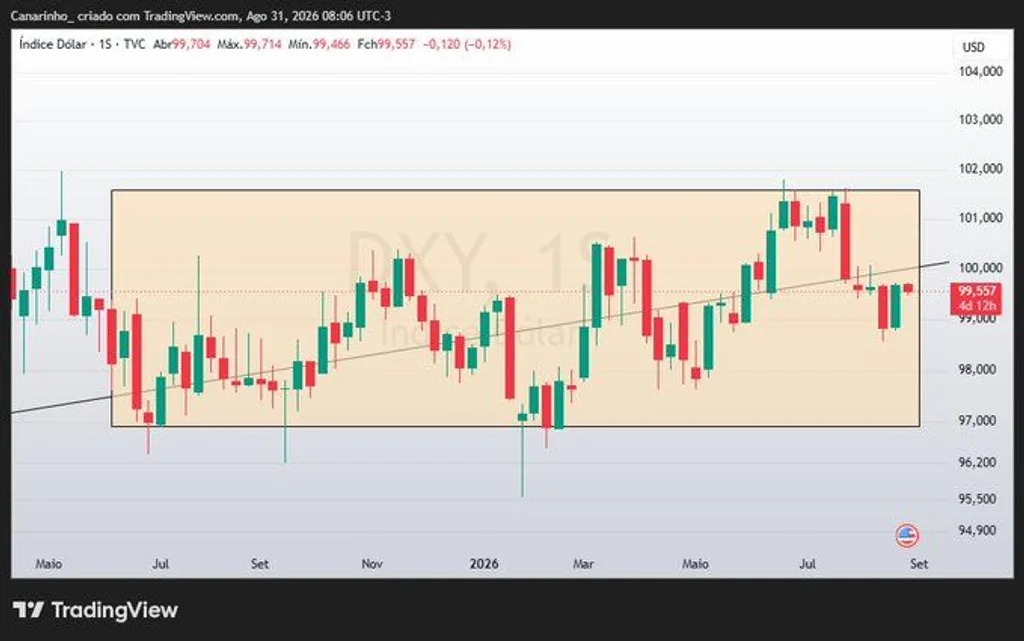
Although an increase in U.S. Treasury yields usually suppresses gold prices, the dollar did not experience a significant safe-haven rally this time. The Dollar Index remains within a range seen over the past few months, currently around 99.6, with the lower boundary of the range at around 97 and the upper resistance at 101 to 102.
The lack of sustained upward momentum in the US dollar provides a certain cushion for gold. For those who hold assets other than US dollars, a weaker dollar typically means a lower cost of buying gold, which helps to stabilize demand.
Goldman Sachs still targets $4,900
On August 28, Goldman Sachs' research department stated that it expects the price of gold to rise to $4,900 per ounce by the end of 2026. The main reasons given by the institution are that central banks around the world continue to buy gold, and the demand for diversifying reserve assets continues.
Calculated at the spot price of Tuesday, this target price is still about $470 higher. The report suggests that for gold to move towards this target again, it first needs to stabilize from the current pullback and regain the recent highs.
Next, the market will focus on the U.S. July job vacancies and labor mobility survey data. This data could affect the market's judgment regarding the Federal Reserve's September meeting and further influence the trends in U.S. Treasury yields and gold prices.