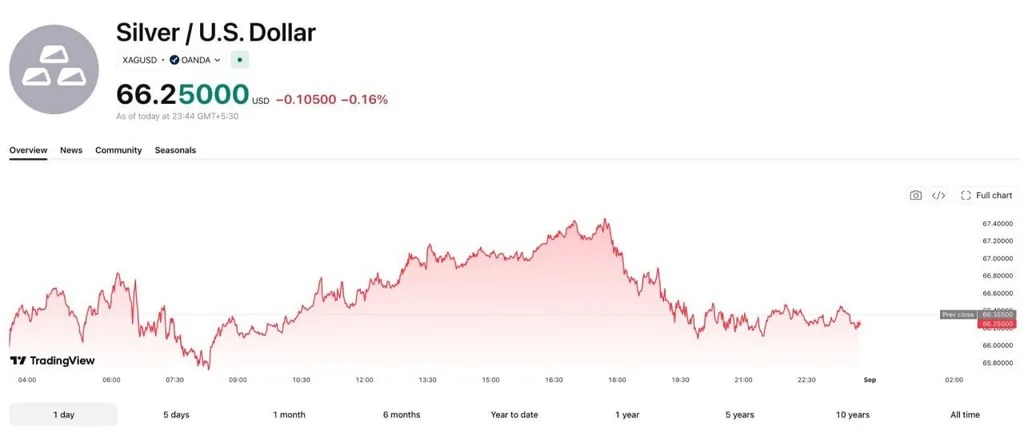


Silver prices remained around $66 per ounce this week, as the market digests the rise in U.S. Treasury yields while awaiting this week's U.S. employment data. Spot silver once fell to $66.42, a 0.2% decline from the previous trading day, with short-term focus on whether the $66 level can continue to provide support.
$66 becomes a short-term observation level
Silver previously fell from above $67.40 and has recently entered a sideways consolidation phase. The market generally regards the area around $66 as the first support level at present. If this level is lost, the pullback could further expand; however, if the price manages to rebound back into the $66.80 to $67 range, short-term pressure is expected to ease.
Some market analysts believe that the current range is more of a consolidation after a decline, rather than a clear reversal. Just holding above $66 is not sufficient to indicate that buying pressure has regained dominance; it will still be necessary to observe whether prices can recover to the vicinity of previous highs in the future.
Rising yields are putting pressure on precious metals
The variable that currently has the greatest impact on silver is still interest rate expectations. The market expects a 66% probability of the Federal Reserve raising interest rates in September, and this probability increases to 89% by December. Against this backdrop, precious metals that do not generate interest income face higher holding costs.
Meanwhile, on Tuesday, the yield of 10-year U.S. Treasury bonds rose to around 4.78%, reaching a high since early 2025. Tensions in the Middle East have intensified again, pushing oil prices above $90 per barrel and also increasing market concerns about inflation. The simultaneous rise in yields and energy prices is putting pressure on silver.
- Job vacancy data for July released on Tuesday
- Friday release of the August non-farm payroll report
If the data continues to be strong, market expectations for the Federal Reserve to maintain a hawkish stance may further increase.
The gold-silver ratio and supply-demand situation still provide support.
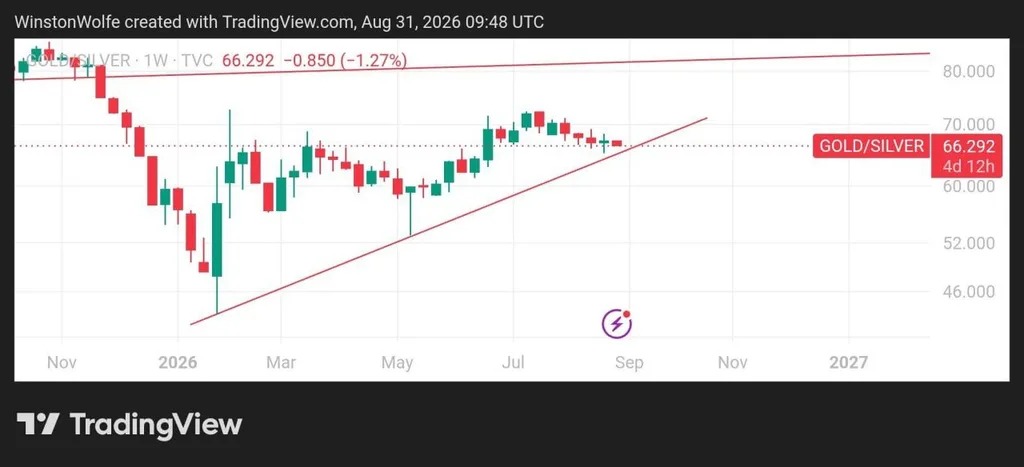
In terms of relative performance, silver has not significantly lagged behind gold. Based on Reuters' spot prices on Tuesday, the gold-silver ratio is around 66.7, which is close to the 66.3 level shown on some market charts. A lower gold-silver ratio usually indicates that silver still maintains a certain strength relative to gold.
Fundamentally speaking, the medium to long-term support for silver has not yet disappeared. The Silver Institute predicts in its '2026 World Silver Survey' that the global silver market will experience a supply deficit for the sixth consecutive year, with the deficit amounting to approximately 46.3 million ounces. The total annual demand is estimated at around 1.11 billion ounces, while mine production is roughly unchanged.
In terms of demand structure, the consumption of silver in the photovoltaic industry is expected to decline by about 3%, but industrial demand related to AI infrastructure, automotive, and power grid investments continues to provide support. The investment demand for silver coins and bars is expected to grow by 18% this year.