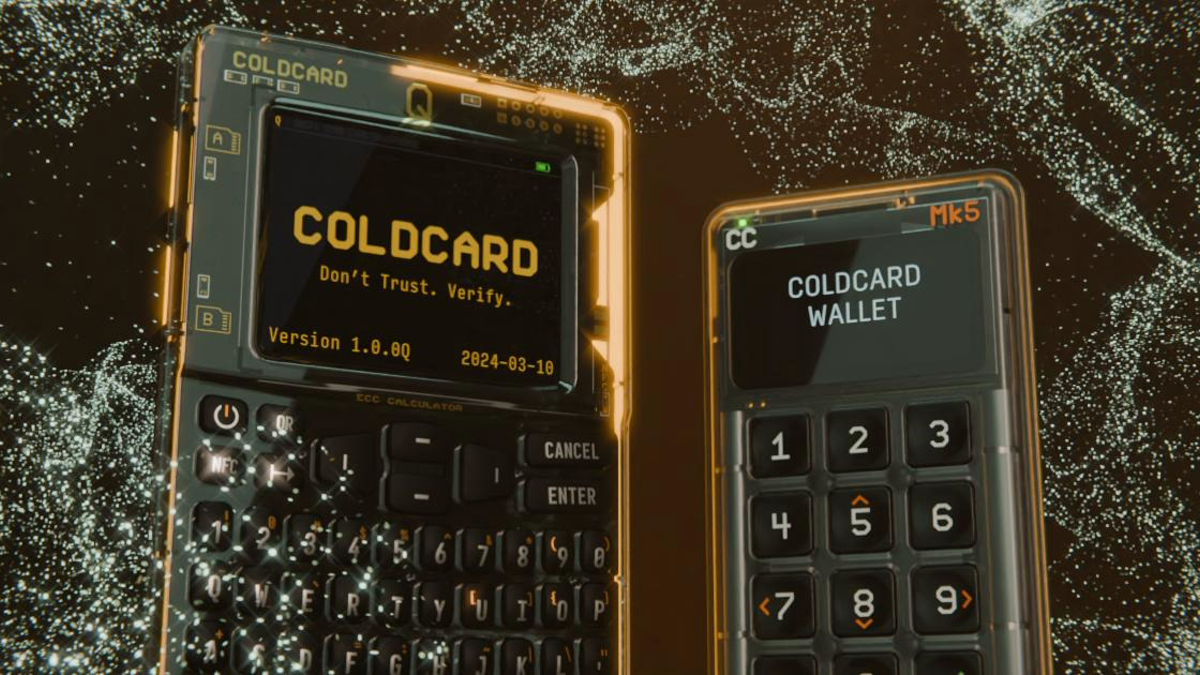


Storing encrypted assets in a hardware wallet is generally considered the last line of defense for offline security. However, a security interview published by the Solana Foundation on September 19 pointed out that an incident involving Coldcard wallets this summer stemmed from the very initial step of generating private keys. Since July 30, attackers are said to have transferred approximately $116 million in Bitcoin from over 5,200 wallets without even touching the devices; they merely needed to deduce mnemonic phrases with insufficient strength.
Solana The new Chief Information Security Officer of the foundation, Michael Coates, referred to this incident as an example of a failed auditing method in an interview. In 2021, the relevant code replaced the hardware random number source with a software pseudo-random source; the verification logic only confirmed whether a certain value existed, but did not ensure that it came from a correct and secure random source. Although the audit observed that the checks were being performed, it did not continue to verify the actual quality of the entropy. According to an official article, the entropy of the mnemonic phrases was reduced from 128 bits to about 40 bits, which falls within the range that allows for offline brute-force searches.
Vulnerability has lurked for over four years; reminding users that their devices are not connected to the internet is not sufficient as a proof of security. The security of private keys depends on the entire process of generation, storage, signing, and recovery of the blockchain. If any step in this process can be predicted, subsequent security measures such as secure chips, PIN codes, or offline isolation will not be able to remedy the issue. Attackers do not need to steal wallets; they can simply enumerate possible seeds and check balances on the blockchain to carry out attacks from a distance.
It should be noted that the Solana article is a review of the views from Coates and external events, and not a complete accident investigation by the Coldcard manufacturer. Figures such as $116 million, over 5,200 wallets, and entropy levels are from third-party materials cited in the article. The final losses, affected versions, and technical causes should still be based on subsequent reports from device manufacturers, investigative agencies, and evidence obtained from the blockchain. Phase-based reports should not imply that all Coldcard devices have the same issue.
Errors that are not caught during a single code audit may, AI, assist both defenders and attackers at the same time.
Traditional auditing easily verifies whether "checks have been conducted," but it overlooks whether the objects of those checks are truly secure. The issue with random numbers is particularly insidious: function names, types, and tests may all appear normal, and the output may also seem chaotic. Only statistical analysis, dependency tracing, and threat modeling can reveal degradation in entropy sources. If the scope of the audit only covers current changes and does not trace mnemonic generation back to the hardware interface, critical assumptions may go unnoticed.
AI Code proxies are adept at large-scale searches. The defense can have multiple models check random numbers, boundary conditions, dependency changes, and historical submissions from different perspectives, and hand over suspicious points for manual verification; attackers can also perform the same searches on public repositories, firmware, and dependencies, and then automatically generate exploit scripts. What used to require a professional team to screen over several weeks may now be completed in just a few hours. The increase in speed does not naturally favor the defense; whoever gets the models connected to the correct data, verification chain, and response processes first will have the advantage.
The core recommendation of Coates is not to rely on a single review process. Code reviews, formal checks, fuzz testing, hardware entropy testing, reproducible builds, and external audits should be independent of each other. AI suggests increasing the number of reviews, but it cannot consider five checks using the same prompts and the same model as five layers of defense; related errors may reappear within the same family of models. True diversity comes from different tools, different teams, different assumptions, and the presence of clear opposing viewpoints.
Hardware wallet manufacturers also need to incorporate their supply chains and update mechanisms into their threat models. If the security code is replaced during the construction, signing, or distribution process, the audit reports may still not correspond to the firmware in the users' hands. Users should verify the official versions, update instructions, and the authenticity of their devices to avoid downloading firmware from search ads or private message links. Any web page that requires entering a mnemonic phrase to "check for impact" or "migrate assets" should be considered high-risk.
Cryptographic security cannot rely solely on self-hosting; it is also necessary to provide verifiable and recoverable engineering processes.
Self-hosting removes the risks associated with exchanges, while also shifting the responsibility for key generation and backup to the devices, software, and users themselves. The industry often considers "your keys, your coins" as a final principle, but in reality, it is very difficult for users to independently verify random numbers, firmware compilation, and the supply chain. Manufacturers must disclose the scope of affected users, the methods of repair, and verifiable evidence, and provide clear migration paths in the event of serious incidents, rather than leaving it to each coin holder to guess through social media.
Migration also carries operational risks. If the old seed phrase is guessed, simply updating the firmware will not make the old private key random again. Users typically need to generate a new seed phrase in a trusted environment and transfer their assets accordingly. Large account holders should also consider multi-signature or threshold schemes to distribute failure points across different devices and implementations. Multi-signature is not absolutely secure, but it can prevent a single random number flaw from directly controlling all funds.
For Solana and other public chain ecosystems, although this incident occurred in a Bitcoin wallet, it has common implications. The wallet is the entry point for users to access the on-chain system, and no matter how stable the underlying chain is, the leaked private keys cannot be recovered. Foundations, applications, and custodians need to establish cross-project mechanisms for vulnerability reporting, fund tracking, and emergency response, so that high-risk issues can be communicated to users before the scale of the attack expands.
AI Security tools are worth investing in, but the most dangerous misconception is the claim that "the model has already performed automatic audits, so the contracts or devices are secure." While models can expand coverage, detect anomalies, and reduce response times, the final conclusion still requires reproducible evidence, human confirmation, and actual repairs. The real lesson from this incident is not to distrust hardware wallets, but rather not to rely on any single piece of hardware, a single audit, or a single AI agent as a complete security system.