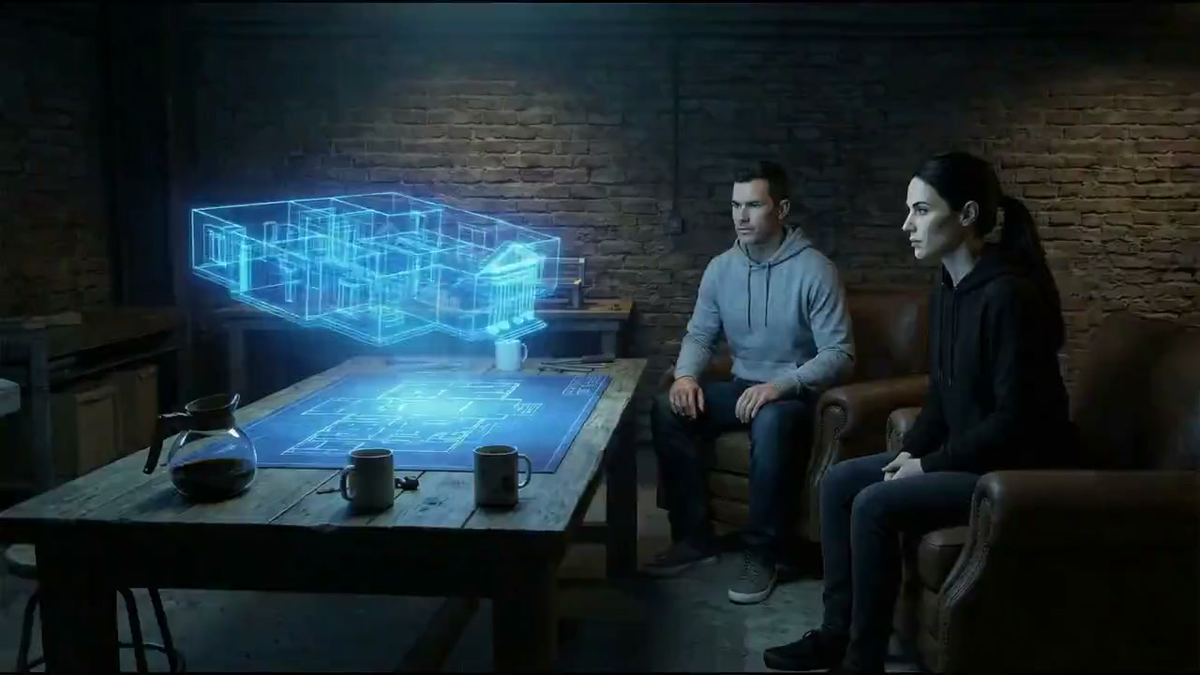


Short-video generation is increasingly becoming a mature skill: with just a description as input, models can quickly produce several seconds of beautiful footage. However, if the same character appears again after ten different shots, whether their clothing, position, and objects in hand still match remains a question. A research team from Google presented work on September 24th that focuses on this often overlooked issue in demonstration videos. They are not announcing a “ten-minute one-click movie” product that everyone can use; instead, they are employing multiple research systems to handle creative coordination, continuity of shot sequencing, long-duration generation, and image error correction separately.
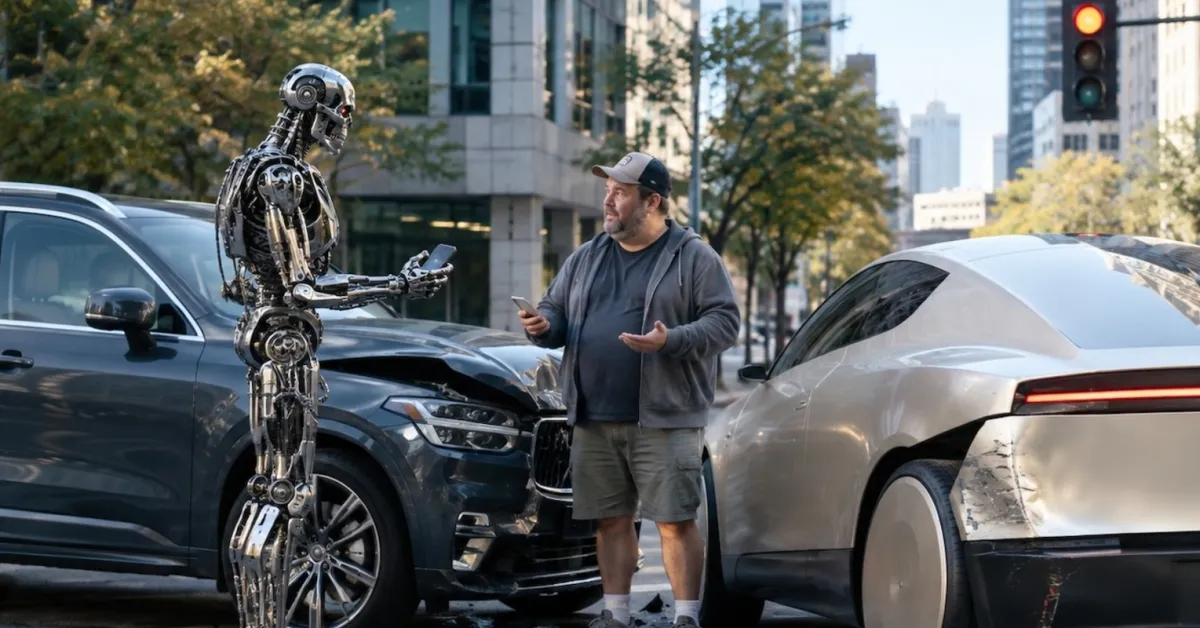
The reason this is worth watching is not because the production time is made to seem longer, but rather because the video is viewed as a story with a progression of states. In the past, the common process was to write a script first, then generate each shot individually, and finally piece them together. Each step may be excellent on its own, but when put together, mistakes are likely to be evident: a character's hat disappears, the layout of a room changes, or a prop that was damaged in one scene is suddenly intact in the next. Such errors often stem from initial settings and can propagate along the entire sequence of shots, ultimately requiring manual rework to fix them.
Four-system division of labor: first determine the story state, then let the camera continue.
Google describes the overall solution as an orchestration layer built on foundational models such as Gemini, Veo, etc. AI, video, and co-director are responsible for higher-level creative configurations: how narrative strategies, structures, and visual styles are combined, how preliminary agents produce storyboards and key visual materials, and how production agents then assemble key frames, actions, and sounds together. The "director" in this context is not a person who can independently bear aesthetic responsibility, but rather a mechanism that aims to have multiple generation steps serve the same goal as much as possible. The research team also uses multimodal models to evaluate the final products and sends feedback back to the front-end configuration for adjustments in the next round.
CANVAS addresses a very specific issue: when the story returns to an old scene, does the system remember how it looked there? It maintains a structured visual state for characters, locations, and objects; when generating new shots, it first searches for existing visual anchors and creates new ones only when necessary. Google presented a case study of multi-shot comparisons from a museum theft, where the focus was not on whether a single frame was particularly exquisite, but rather on whether the characters' costumes, the space of the exhibition hall, and props such as jewels remained consistent across shots taken at different distances. This approach is closer to the scriptwriting work done in film and television production than simply continuously adding cue words.
A² RD takes a longer time axis into consideration. It generates videos in segments, while using multimodal memory to track the events that have occurred, switching between 'extrapolation' and 'interpolation' as needed: extrapolation continues the story forward, while interpolation re-anchors the camera on existing characters and environments. Google released a research demonstration of about ten minutes, aiming to prove that this method can maintain narrative and visual continuity over longer time intervals. The demonstration shows that the method has potential, but it cannot directly imply that it can stably deliver content for any subject or duration, nor can the research prototype be considered an already available commercial service.
The final step, VQQA, transforms error correction from a "quick glance and scoring" process into an actionable task. The system generates visual issues on the image, and a visual language model identifies where the requirements are not met. Based on this, it rewrites the prompts and regenerates the content. Instead of making direct alterations to the original pixels, it uses natural language feedback to guide the next sampling process. To prevent fixing one part from worsening the overall quality, the research also retains previous candidate versions, allowing a global evaluator to select the final result according to the initial requirements. Examples cited by Google include balloons with mismatched shapes and materials, as well as continuity errors where performers switch instruments across shots.
From research and demonstration to production tools, what other hurdles remain?
The real industry issues are cost, control, and reproducibility. The more shots there are, the more complex the relationships between them become; modifying a character's clothing in one shot can potentially affect dozens of subsequent shots. Although multiple rounds of generation and model evaluation can reduce the burden of manual frame-by-frame checking, it also means longer waiting times and greater computational demands. For advertising, film, and brand teams, what is ultimately needed is not just to achieve an “on average better look”; they also need to know which specific steps can be rolled back, which assets can be locked in, and how to precisely implement review opinions into the shots, rather than having to start from scratch each time like opening a blind box.
Several projects announced by Google are still in the context of papers and research presentations. The team has proposed specific benchmarks to measure marketing constraints, spatial continuity, and long-term visual performance, which is important because general video rankings tend to highlight the best short films and may not reveal errors that occur every few seconds. However, these benchmarks still have limitations in sample selection, review methods, and topic coverage; in addition to publicly available materials, issues such as character authorization, brand safety, music copyright, and post-production editability that creators are concerned about cannot be resolved solely by continuity scores.
The signal sent out by this release is quite clear: in the next phase of video generation competition, it won't be about who can create more stunning visuals in a few seconds, but rather about who can maintain a credible and modifiable story world. For ordinary users, such systems should still be regarded as tools for auxiliary storyboarding, concept development, and some aspects of shot production in the short term. For production agencies, the key indicators to follow are whether identities across different scenes are stable, whether modifications are controllable, and how much time is required for a complete production, rather than equating a ten-minute demo with the ability to produce a finished video in ten minutes. Google has taken a step forward in research, but there is still a way to go before reaching an industrialized process that needs to be verified through real projects.