

Disclaimer:The views expressed by the author represent only their own opinions and do not reflect the stance of U.Today. The financial and market information provided by U.Today is for reference only. U.Today is not responsible for any financial losses resulting from cryptocurrency transactions. Before making any investment decisions, please conduct your own research and consult financial professionals. The media stated that they believe all content was accurate at the time of publication, but some of the quotes or discounts mentioned in the article may no longer be valid.
Since the beginning of August, Bitcoin has seen a significant rise, climbing from around $63,000 to a recent high of around $87,000, before slightly falling back to a current trading price of about $84,600. Due to its stable trend and with most interruptions being minor, Bitcoin is now clearly above its short-term and long-term moving averages.
The market is stabilizing.
During the comparable time period, the US Dollar Index also strengthened, rising from a low of around 98.40 at the beginning of September to the current level above 101.00. This trend indicates a reversal in the US Dollar Index, which had been on a downward trajectory for most of the summer, falling from a high of around 101.6 in July.
In the past few trading days, the US dollar has continued to strengthen, which coincides with Bitcoin continuing to push towards its own interim highs. This simultaneous strengthening is worth noting, as Bitcoin and gold are typically seen as tools to hedge against a weak US dollar, especially when markets expect monetary policy to be eased or there are concerns about fiscal policy.
High-risk positions in the market
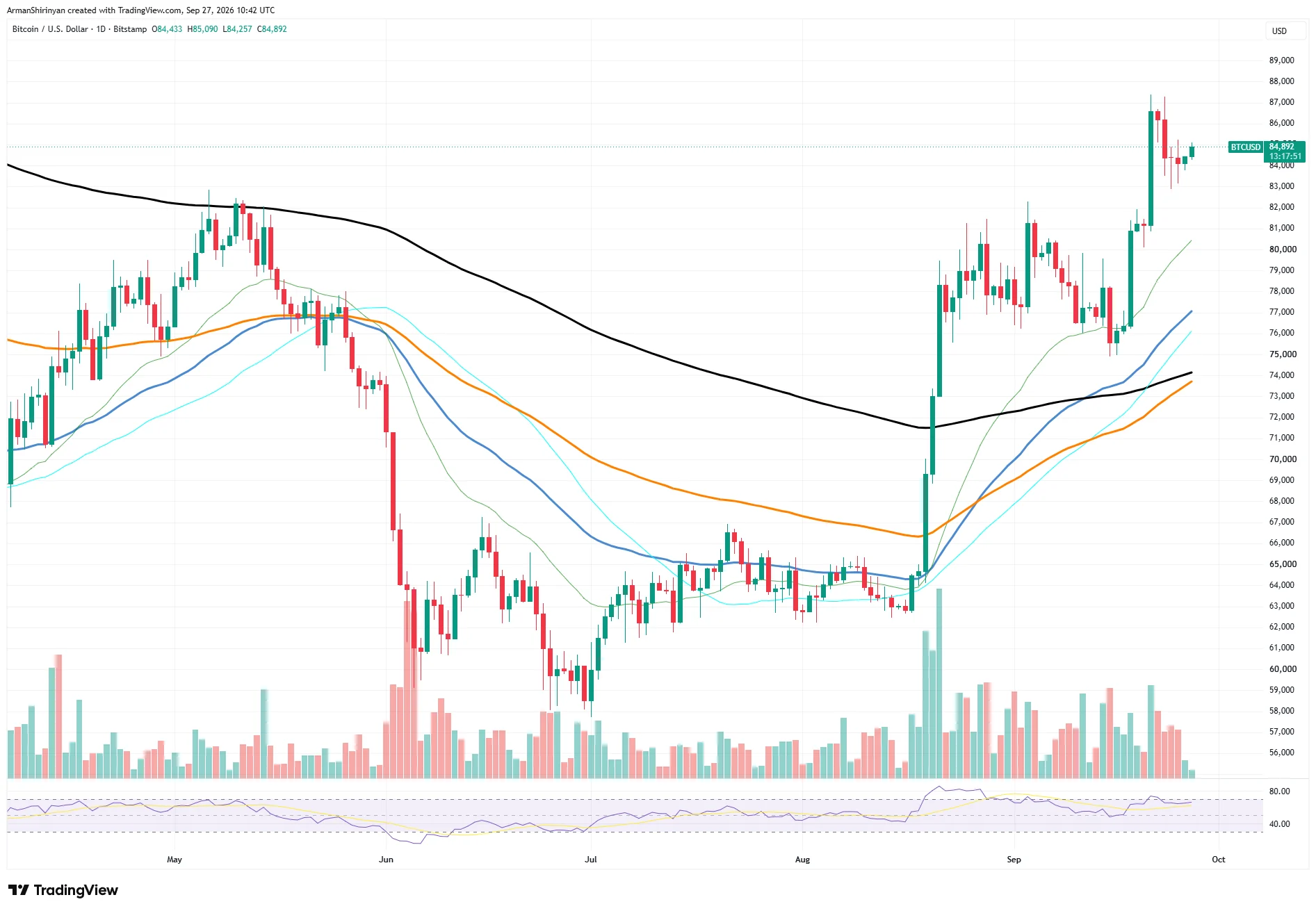
The article argues that when both types of assets rise simultaneously, the traditional influence of the US dollar on the pricing of cryptocurrencies may be overshadowed by other factors, such as increased risk appetite, inflow of institutional funds, or unique catalysts inherent to Bitcoin itself. However, a simultaneous increase does not necessarily imply that there has been a structural change in their correlation.
Over multi-year cycles, the relationship between BTC and DXY has always fluctuated between weakening and re-strengthening. There have been brief periods of positive correlation in the past, but these periods did not alter the overall inverse relationship pattern.
If this synchronous trend continues in the coming weeks, especially as the US dollar continues to rise and Bitcoin either holds onto its gains or experiences a pullback, that would be a signal worth paying more attention to. So far, BTC and DXY have both strengthened at the same time, which seems more like a temporary decoupling rather than a long-term shift in mechanism.
The article states that in order to determine whether this round of Bitcoin's rise can continue without relying on the trend of the US dollar, or whether the historical inverse relationship will reappear as in previous cycles, traders paying attention to this development may focus on upcoming macroeconomic catalysts, such as comments from the Federal Reserve, inflation data, and changes in risk sentiment.