

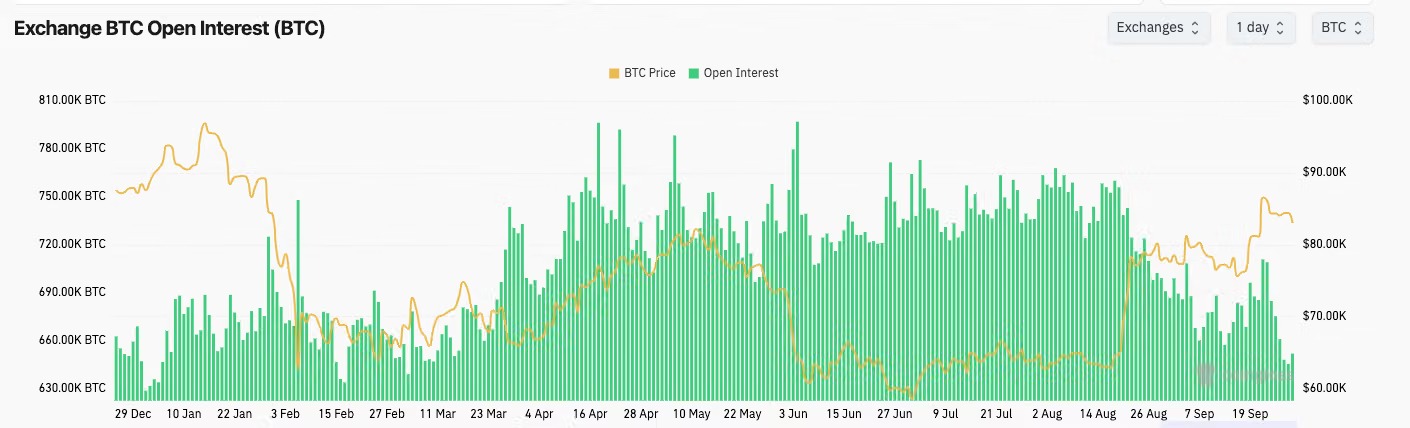
Overall, the demand for leverage exposure remains weak, as evidenced by the continuous decline in open futures contracts. The funds still remaining in the market seem to be more inclined towards bearish positions.
Bitcoin is currently trading at around $82,800, having fallen by more than 2% in the past 24 hours.
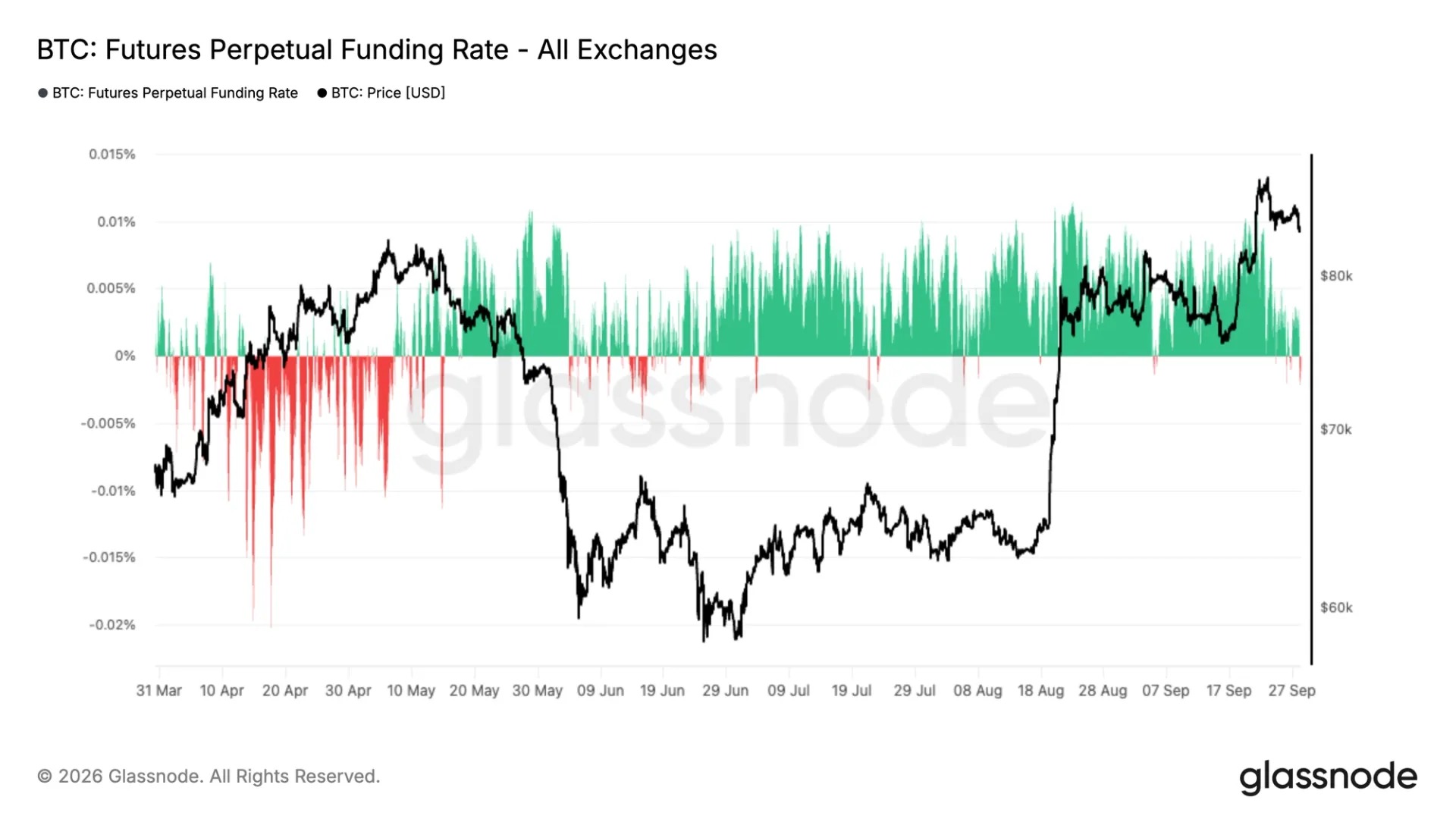
The funding rate for perpetual contracts has turned negative, and the number of open contracts has dropped to 652,000 BTC. It appears that as sentiment weakens, traders are closing their positions.
Gold fell to around $4,150 per ounce, while the US dollar index rose above 101.
Capital is flowing out of the Bitcoin futures market at $82,742.29, while traders still remaining in the market are willing to pay to maintain their short positions.
This is the information conveyed by key indicators such as open positions and the annualized perpetual fund rate.
Open interest, which refers to the number of active futures bets, stood at 652,000 BTC as of press time, one of the lowest levels this year. According to data from provider Coinglass, this figure reached a peak of 800,000 BTC at the beginning of the year.
This decline reflects capital outflows; that is, despite Bitcoin rising by 40% in the third quarter, traders are still avoiding leveraged trading.
In addition, the funding rate for perpetual contracts has turned negative again, with an average level of around -0.3% on major exchanges. Although every long position corresponds to a short position, the willingness of both parties to engage in this transaction is not the same. This is where the funding rate comes into play. A negative funding rate indicates that short sellers are actively pursuing this transaction and are willing to pay a cost to long holders or bulls in order to maintain their short bets.
This occurred after the price of Bitcoin fell 2% to $82,800 within 24 hours. Previously, U.S. President Donald Trump refused to rule out the possibility of further strikes against Iran before the U.S. mid-term elections.
However, Bitcoin is still more than $20,000 above its summer cycle low point and remains the best-performing asset in the third quarter.
As the US dollar strengthens, gold comes under pressure.
Bitcoin is not the only asset under pressure.
Gold also fell by 3% in the past 24 hours, trading at around $4,150 per ounce. The ratio of Bitcoin to gold measures how many ounces of gold one Bitcoin can purchase, and it is currently approaching 20, with a turnaround within the year seemingly just around the corner.
Meanwhile, the DXY index, which measures the performance of the US dollar against a basket of major currencies, has risen above 101 due to the continuous climb in US Treasury yields. The yield on 10-year Treasuries has surpassed 5.2%, and the yield on 30-year Treasuries has exceeded 5.51%.
The U.S. economy has shown resilience, which may have supported both the dollar and interest rates at the same time; however, persistent concerns about inflation could also be driving up borrowing costs. Higher interest rates mean lower bond prices: the value of ETF TLT holding long-term U.S. bonds has fallen to around $79, a record low.
Rising yields also make interest-bearing assets more attractive compared to Bitcoin and gold, which do not generate returns.