

Bitcoin failed to break through $85,000 again as sellers held their positions above the current level, while the surge in U.S. Treasury yields dragged down the stock market and precious metals.
Key Points
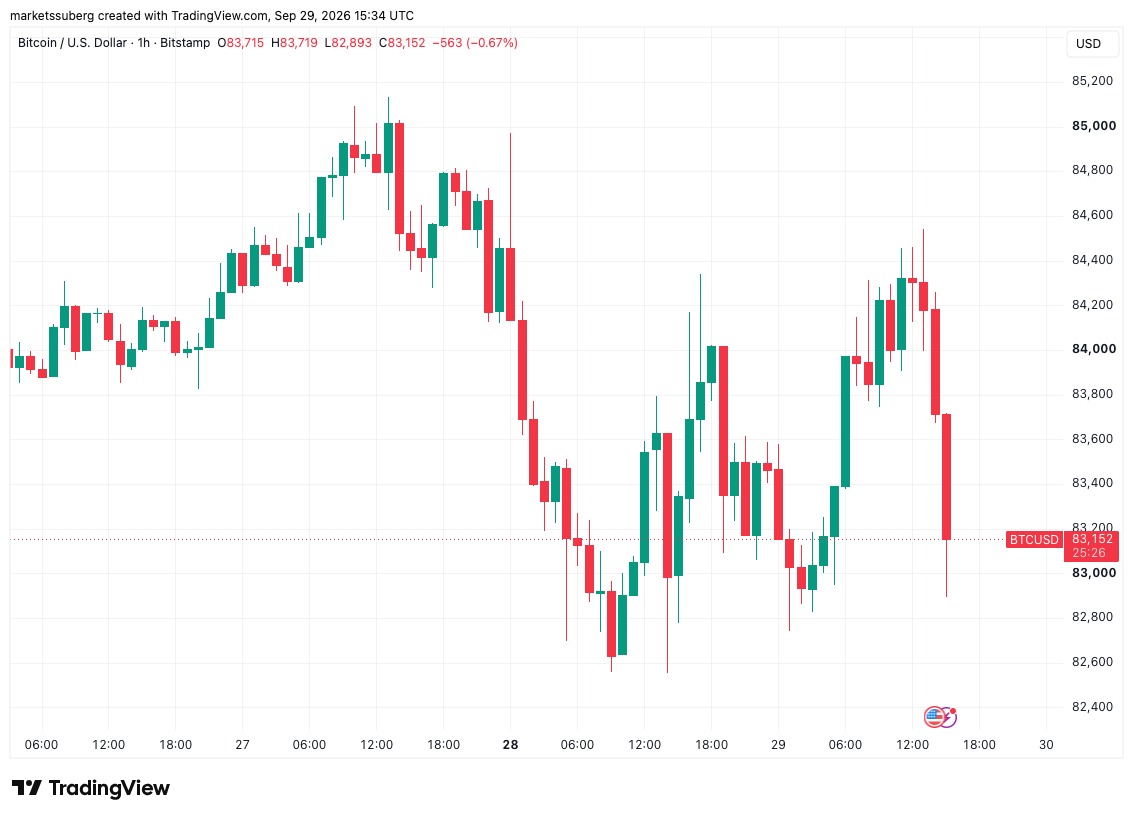
- After reaching $84,450, Bitcoin gave up on a rebound in the shorter time frame and fell back below $83,000.
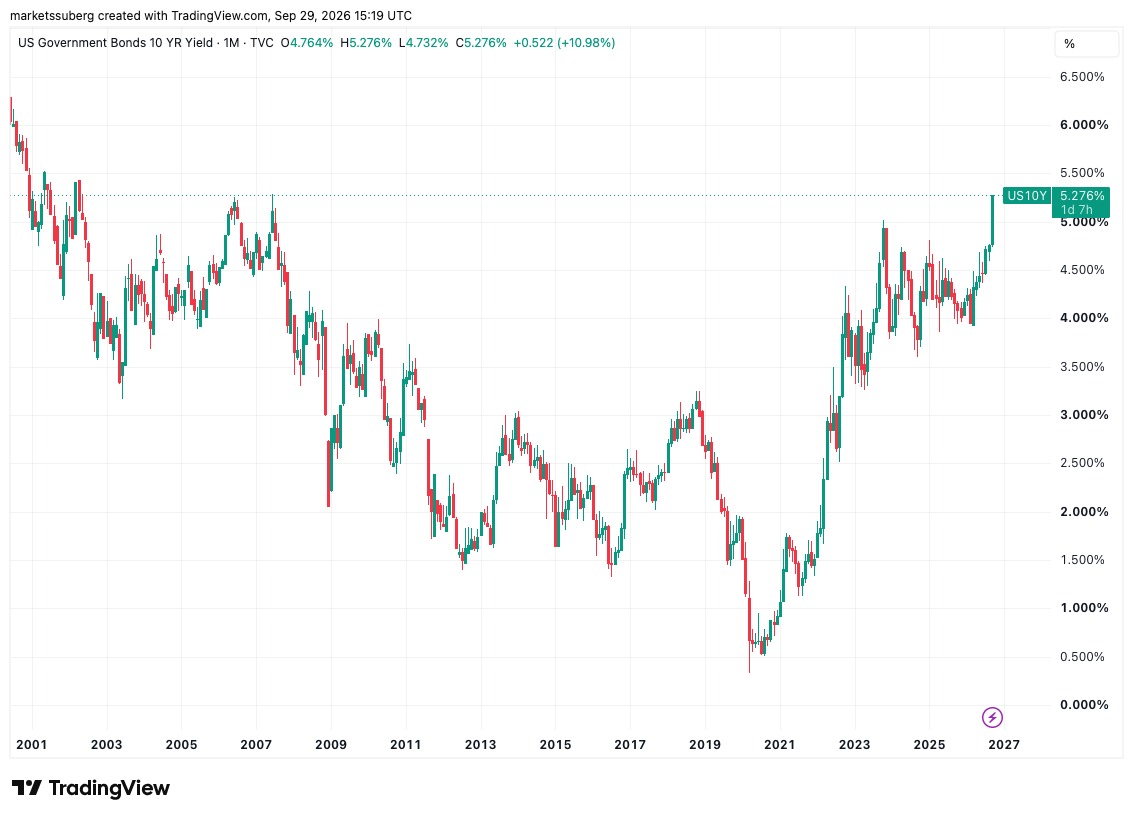
- On Tuesday, U.S. Treasury yields hit new highs in decades, while gold tried to recover from a level of $4,115 per ounce, a decline of 3.6%.
- On the exchange order book, the liquidity of sell orders continues to be concentrated around $85,000 above the spot price.
Bitcoin encounters resistance around $85,000, while bond yields continue to rise.
TradingView data shows that as the US trading session began, BTC / USD rebounded to $84,540 for a while, but then stagnated and fell back below the opening price of the day at around $83,600.
The U.S. bond market showed no signs of cooling down on that day; the yield on 30-year Treasury bonds rose above 5.60%, hitting a 24-year high; the yield on 10-year Treasury bonds climbed to 5.26%, approaching the peak in June 2007 and reaching levels not seen since April 2002.
Geopolitical uncertainties, the war between the United States and Iran, high oil prices, and ongoing inflation have kept investors cautious, while soaring bond yields have also put pressure on precious metals. Gold fell 3.6% on Monday to $4,115 per ounce, but then rebounded, and as of press time was trading at $4,166.
Market commentator The Kobeissi Letter described the trend of gold as "very unusual."
"Rising yields are causing unusual disruption in the precious metals market," the institution wrote in a post on X.
Although there have been no significant fluctuations in the U.S. stock market, the latest analysis from trading resource Mosaic Asset Company suggests that the market could still rebound despite being in a state of "extreme oversold" conditions.
"Calculated from the beginning of the year to now, the proportion of stocks in a short-term upward trend was only lower than it is now in late March, when the S&P 500 approached its correction zone. Many other breadth indicators show oversold conditions, and bearish sentiment among investors has risen significantly over the past two weeks," the company wrote on Tuesday.
Mosaic added that strong economic data, including higher-than-expected new job creations in August, could support further gains in the stock market, despite the Federal Reserve's interest rate hikes. Cointelegraph Previous reports indicated that markets expected the Federal Reserve to raise interest rates by 0.25 percentage points at its October meeting.
Long-term holders provide support to strengthen the upper resistance level.
In shorter time frames, Bitcoin is still affected by changes in the liquidity of exchange order books.
CoinGlass data shows that the resistance above $85,000 on that day further strengthened, leading to a decline in prices, which is exactly the same trend that appeared at the beginning of this week.
The on-chain analysis platform Glassnode added that the amount of coins held by long-term holders ( LTH ) – that is, wallets that have not sold a certain UTXO for at least six months – is concentrated around $85,000, which increases the likelihood of profit-taking when Bitcoin attempts to break through that level.
The platform told its followers on X: “$ BTC has stagnated below the thickest supply accumulation area. The number of coins held by long-term holders in the $84,000 to $85,000 range is larger than at any other price on the chart. The price needs to break through and stabilize at this level for a rebound to be possible.”
Related topics
- Peter Brandt claims that Bitcoin could rise to $600,000 by 2029, and calls XRP a "shit coin"
- U.S. crypto ETF capital inflows cooled down after a week of $3.3 billion, but the upward trend continues
- Strategy purchased 1,665 bitcoins for $143 million, and BTC's holdings increased to 847,666 bitcoins.