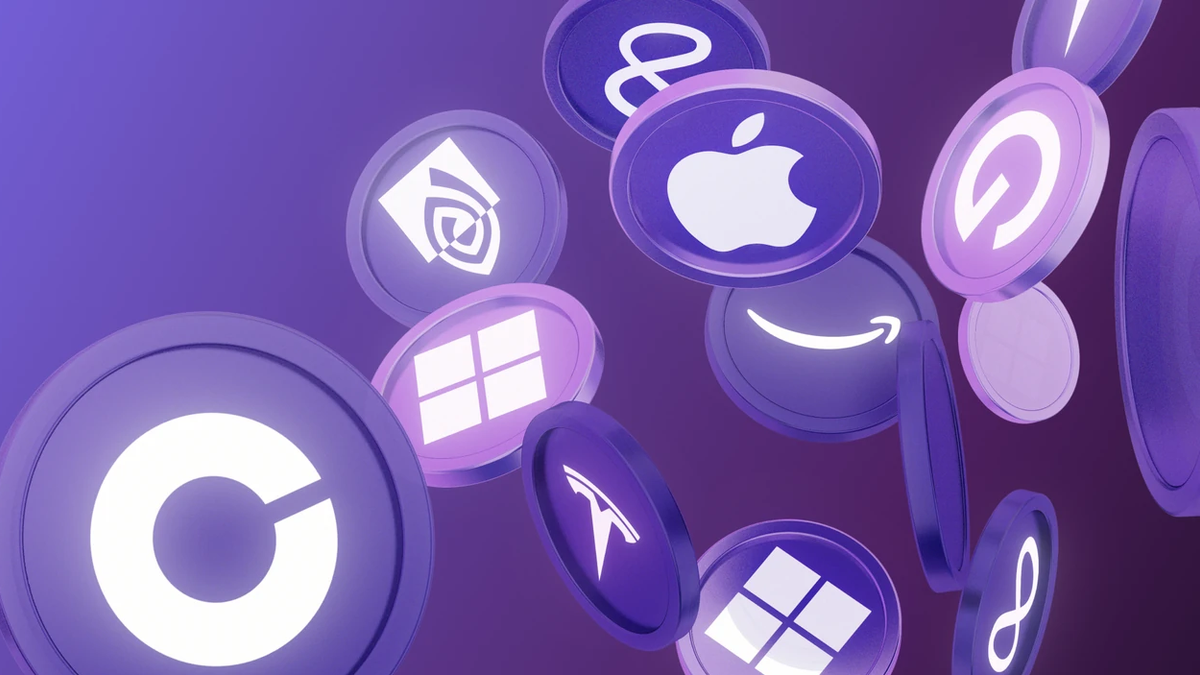


Tokenized stocks are now not only used for holding and trading but also integrated into on-chain credit systems. On September 25th, Aave Labs announced that the stock market on Base allowed eligible users to deposit seven types of tokenized U.S. tech stocks as collateral to borrow USDC. The list includes tokens for Apple, Amazon, Google's parent company Alphabet, Meta, Microsoft, NVIDIA, and Tesla, with codes AAPLc, AMZNc, GOOGLc, METAc, MSFTc, NVDAc, and TSLAc. This product is available to qualified users in regions outside of the United States and is not intended for all global investors with regular U.S. stock financing accounts.
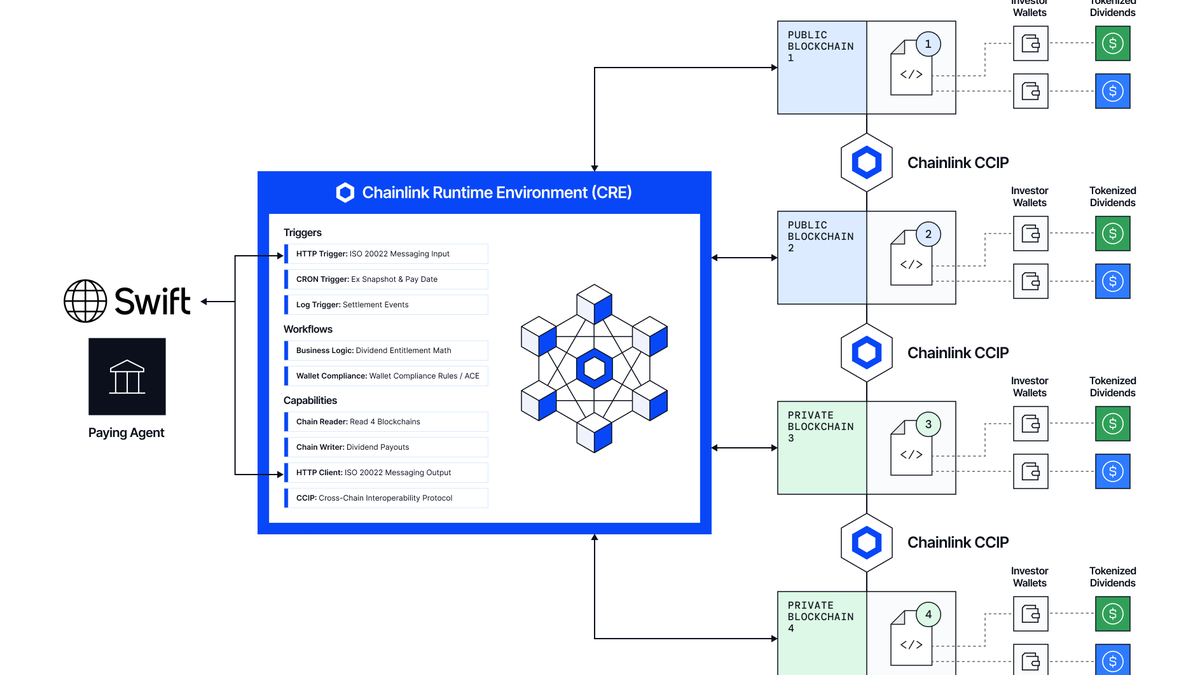
This matter is often oversimplified by the statement, “After US stocks are listed on the blockchain, borrowing money is possible at any time.” The Aave market allows for deposits, loans, repayments, and redemptions throughout the day, yet the underlying prices of securities are still related to the trading hours of traditional markets. According to official statements, Chainlink provides price data for these tokens five days a week, with updates from 8 PM on Sundays to 8 PM on Fridays (Eastern Time); during weekends and US market holidays, the last quoted price is used. The system running 24 hours a day does not equate to the underlying prices changing 24 hours a day; these are two different things.
What is mortgaged are tokens with a chain of securities rights, not arbitrarily minted price symbols.
According to Aave, each Coinbase Tokenized Stock represents a certificate issued by Coinbase Onchain SPV Ltd. The underlying stocks are held in a segregated custodial account under the issuer's name by the US-registered brokerage firm Alpaca Securities LLC. Aave further clarifies that the custodian is not permitted to lend these stocks or use them for its own business, nor does it have any lien rights on the stocks; instead, the issuer holds the assets for the holders through a trust arrangement. These arrangements aim to link the economic rights of the tokens on the chain to the actual stocks, rather than relying solely on a synthetic contract that tracks the stock price.
This does not mean that token holders have the same rights as those who hold stocks in a regular brokerage account. Tokens provide economic exposure through certificates and trust arrangements; investor qualifications, transfer rules, and company actions are all determined by the issuance documents. Officials state that cash dividends will be reinvested after deducting fees and withholding taxes, and the equity corresponding to each token will be increased by issuing additional underlying stocks; stock splits are also reflected through adjustments to the multiplier. It is more akin to an instrument for cumulative returns, and its price may gradually diverge from the original stock price before dividends were paid. Therefore, just because the code contains familiar placeholders such as AAPL or NVDA, it cannot be assumed to represent the same stock as in a securities account.
Equities Hub places USDC within a shared liquidity reserve, and the relevant lending markets accept combinations of these seven tokens as collateral. Each asset has its own collateral parameters. The announcement clearly states that during the launch phase, they can only be used as collateral; users cannot borrow these stock tokens back, nor can they borrow between different stock tokens. Collateralizing to obtain USDC is not a risk-free way to cash out: a decline in stock prices, the accumulation of borrowing interest, or changes in the collateral ratio can all reduce the health of an account and trigger liquidation. The amount that can be collateralized is determined by the parameters and real-time risks, rather than allowing a one-to-one conversion of the market value of held stocks into stablecoins.
The market is open throughout the day, and during periods when prices are not updated, it is even more important to pay attention to the risk boundaries.
The special aspect of weekends is that pricing temporarily does not update in line with new trades in the spot stock market. Aave points out that during this period, the valuation of collateral usually remains at the last quoted price, and the health of accounts may still decline due to the accumulation of borrowing interest. Users should not infer from this that "they will never be liquidated on weekends," nor should they regard the prices that are updated again on Sunday night as part of a continuous and smooth process. If major events occur outside of the market, and the base stock price gaps when the market reopens, the collateral positions on the chain may experience significant changes at once. This is the real misalignment that needs to be managed between the traditional market clock and the 24/7 operation of the blockchain.
Company actions can also lead to exceptions to the “24/7 operability” policy. In the event of a token split, Aave states that the affected asset reserves will be suspended until the new token multiplier is fully implemented. This suspension does not mean that the entire protocol will be taken offline; rather, it is to avoid conflicts between the old quantities and the new rights at the same time. For borrowers, it is important to understand when the asset prices, shares, and collateral parameters will be updated, and to set aside a safety margin in advance; one should not assume that they can exit under the original conditions at any time just because the interface claims to be available 24/7.
The official expects to add more Coinbase tokenized stocks in the future and may list GHO as a lendable asset, but each addition will have to go through governance and risk review. The supply and lending limits will also be adjusted according to changes in token supply and trading volume. The term "expects" here is not a commitment to launch; the future market scope should be distinguished from the actual availability of the seven stocks today. Even if the protocol is willing to scale up, the liquidity of the tokens in the secondary market, legal compliance, and the ability to execute liquidations will limit the speed of expansion.
The change in this news is to include on-chain certificates supported by underlying stocks in mortgage loans, rather than "all US stocks entering DeFi" comprehensively. It provides eligible users with an additional tool for capital turnover and also combines the risks of custody, market timing, oracles, settlement, and jurisdiction in a single transaction. Readers who want to assess whether this product is mature should consider the actual amount deposited, mortgage parameters, performance of price sources, and the company's handling records during the product's operation; they should not ignore differences in investment eligibility and asset structure based solely on seven familiar stock codes.