IT News on October 3rd: On the 1st local time, Tesla launched a "Emergency Escape" feature in the United States. In case of danger, even if the vehicle is still plugged into a supercharger, the driver can directly shift to gear D to escape.
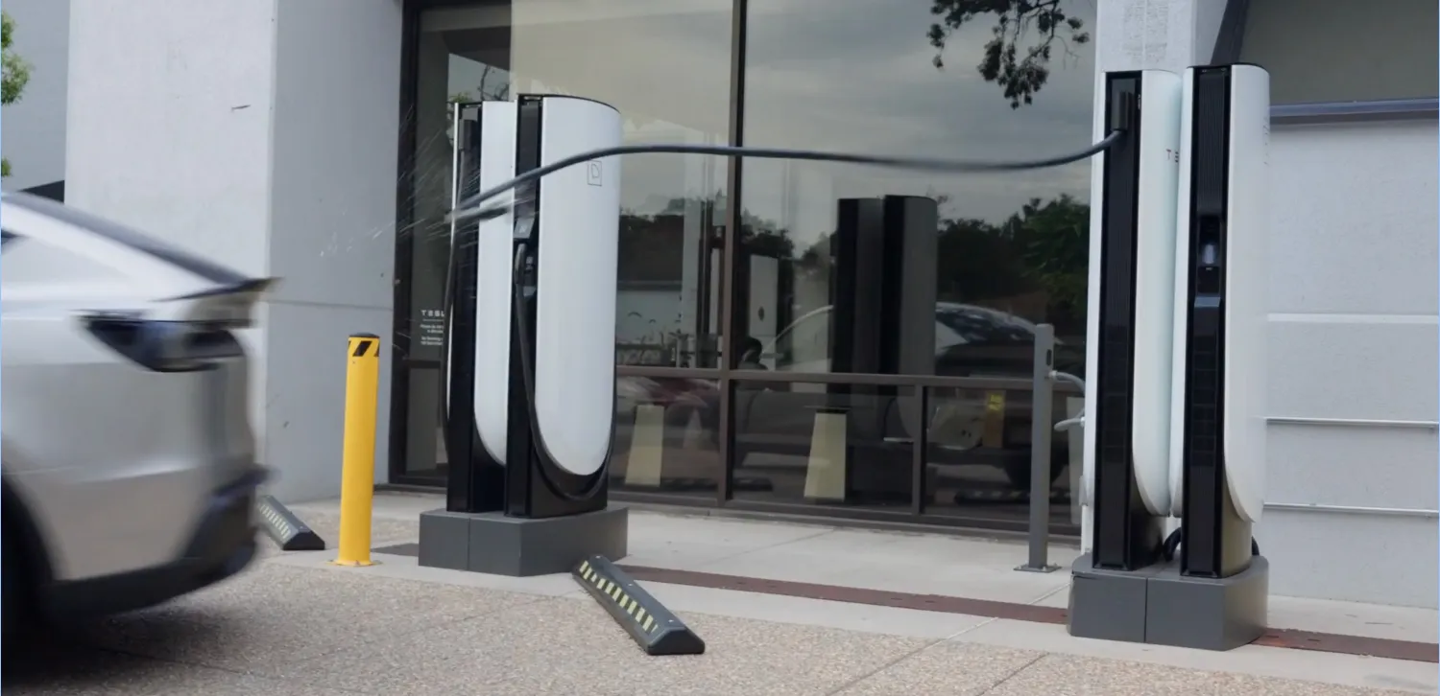
When Tesla released this feature, it clearly stated that emergency departure could "damage the vehicle and the supercharger," but it did not specify how significant the potential losses could be.
According to reports by foreign media electrek, Tesla only provided specific figures after a car owner asked about the potential damage to the vehicle and charging pile, as well as the cost of repairs. Once this feature is enabled, it could cause up to $25,000 (Note from IT: Current exchange rate is approximately 168,000 RMB) in damage to the supercharging piles. The actual loss will depend on the specific conditions of the charging pile, and the vehicle must also be sent for repair afterwards.
Tesla mentioned that the repairs involve "electrical and civil engineering" work, and the extent of damage is not limited to the vehicle, charging gun, or charging cable itself. After using the "emergency exit" option, the vehicle must be taken to a service center for inspection of the charging port. However, the cost of such repairs has not been disclosed.
Post-event cleanup is also necessary at the charging station sites. A car owner noticed that in Tesla's demonstration videos, liquid was spraying out from the charging piles and asked what it was. Tesla explained that the liquid sprayed out was a glycol-based coolant found inside the cables, which would be cleaned during mandatory maintenance at the Supercharger stations.
According to the commercial fast charging station configurator, a site equipped with 8 V4 fast chargers alone would cost $500,000 in hardware (which is approximately 3.357 million RMB at current exchange rates), averaging $62,500 per charger (about 420,000 RMB at current rates), not including installation costs.
Multiple car owners asked: "If a driver indeed encounters an emergency and has to use 'emergency departure,' does the repair cost of the fast-charging station still have to be borne by the driver?" Tesla did not respond.
Their account is still actively answering other questions within the same discussion thread, including confirming support for "emergency departure" from super charging stations V2, V3, and V4, but no support is provided for home charging stations.
Tesla has given a definite answer regarding whether there will be penalties for abusing functions. The post announcing the release of the function also stated that intentional abuse "will incur additional penalties," but the specific penalty measures and what circumstances will be considered abuse are not yet known.