

Western Digital ( WDC ) and Seagate ( STX ), two leading data storage manufacturers, saw their stock prices fall by 11% on Friday afternoon. Previously, there were reports that Japanese technology giant Toshiba planned to invest approximately $380 million in the Philippines to double the production capacity of its hard disk drives ( HDD ) in order to meet the demand of AI data centers.
In response to this, Morgan Stanley ( MS ) refuted the concerns of investors. The firm pointed out that by 2028, the supply-demand gap in the HDD market will be larger than what Toshiba's potential new production capacity can absorb. Therefore, this investment bank stated that it would "be willing to buy STX / WDC during this correction."
Why are stored shares receiving attention?
HDD is a traditional magnetic storage device used for permanently storing digital data on computers and servers. Even in the event of a power outage, the data within the device will not be lost.
Compared to solid-state drives, HDD is much cheaper in terms of storing large amounts of data. Therefore, they play a key role in the AI craze.
According to estimates, Western Digital and Seagate each control over 40% of the HDD market in terms of total terabytes shipped. However, Toshiba is also an important participant, accounting for about 10% of the market share.
It is worth noting that strong demand and tight supply have been driving the growth of these companies. Investors are concerned that additional production capacity may weaken the pricing power of manufacturers.
Morgan Stanley refers to investors' concerns as a "conditioned reflex reaction"
In the latest report, Morgan Stanley described the selling off of Western Digital and Seagate as a “knee-jerk reaction”, which is a type of reaction that is not well thought-out and predictable.
Morgan Stanley points out that, under normal circumstances, an upward cycle, which is a period of rising demand and prices and good industry performance, is often brought to an end by supply shocks rather than demand shocks. In other words, it is a surge in supply that terminates the upward cycle, not a sudden decline in demand.
However, the firm believes that by 2028, the supply-demand gap in the HDD market is expected to remain larger than the additional production capacity that Toshiba may be able to achieve. The firm also pointed out that Toshiba lacks leading process production capacity as well as technology for heat-assisted magnetic recording ( HAMR ).
HAMR is a hard drive technology that allows manufacturers to store more data on each platter by briefly heating small areas on the platter during writing.
Morgan Stanley maintains a "buy" rating for both Western Digital and Seagate.
Which storage stock is more worth buying?
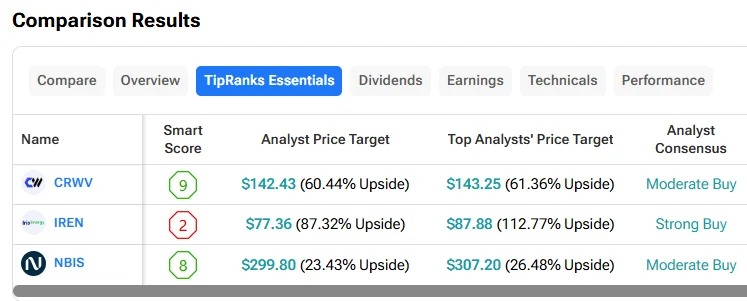
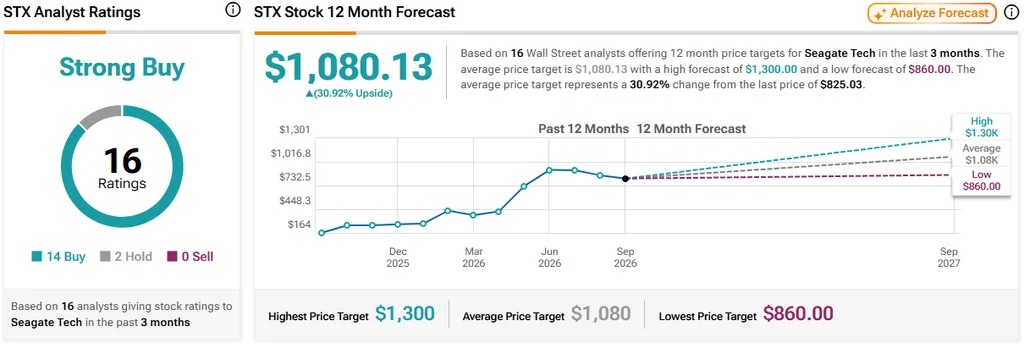
According to the stock comparison tool TipRanks, both Western Digital ( WDC ) and Seagate ( STX ) have received a "strong buy" rating unanimously from analysts.