IT News on October 6th: According to Bloomberg, Seagate Technology Holdings and Toshiba are competing for TDK's hard drive head business. Both competitors hope to take advantage of this to keep up with the strong demand for AI data center storage devices.
According to informed sources, Toshiba took the lead in initiating acquisition talks with TDK this spring; subsequently, Seagate made a higher bid in the summer. As the negotiations are still in a confidential phase, the sources requested to remain anonymous and indicated that the value of this acquisition could reach several billion dollars.
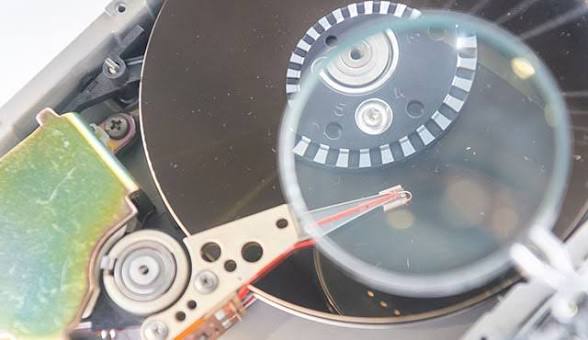
If one party successfully bids for this business, they will gain control of a key link in the hard drive supply chain. Currently, the mechanical hard drive market is dominated by three manufacturers, and the existence of independent head suppliers is crucial for maintaining the competitive landscape of the industry. TDK is the only manufacturer in the world that independently produces hard drive magnetic recording heads; the heads are the components within the hard drive that actually perform data reading and writing. TDK supplies to both bidding parties as well as Western Digital.
Although Seagate and Western Digital are able to produce some of their own read/write heads, they still rely on TDK for supply whenever market demand surges. Toshiba, on the other hand, is completely dependent on this Japanese company for this critical component; Toshiba plans to mass-produce large-capacity hard drives using thermal assisted magnetic recording (HAMR) in order to narrow the gap with its competitors. The realization of this plan is inseparable from the relevant technical support provided by TDK.
If this acquisition is successful, it will stir up the increasingly important storage niche market within the AI data center sector. As more and more general computing tasks are entrusted to AI, the market demands large quantities of low-cost storage media that can store data over the long term, leading to a surge in sales of mechanical hard drives. In this bidding war for the hard drive business, the company that emerges victorious will gain stronger pricing power and will also have the ability to limit its competitors' capacity to increase hard drive production.
Insiders said that both bidding parties are very concerned that if this acquisition fails, they will lose this independent source of magnetic head supply. It is reported that last Wednesday, executives from the two companies met in Tokyo to discuss how to ensure a continuous supply of this key component, and the possibility of establishing a joint venture was also explored. The negotiations are still in their preliminary stages, and there is still a possibility that the deal could fall through.
Regardless of which party ultimately completes the acquisition, the transaction will have to undergo anti-monopoly scrutiny by regulatory authorities; nowadays, regulatory bodies increasingly regard data center storage capacity as an important component of economic security. According to data from JIBON Research ( TrendForce ), if hard drive market share is measured by storage capacity, Seagate and Western Digital each account for approximately 45%, while Toshiba accounts for about 10%.
The overall demand for AI-related hardware has skyrocketed, benefiting TDK. However, this company, headquartered in Tokyo, is considering selling its hard drive head business; this segment of the business has long had low profitability and also requires continuous investment in research and development to keep up with the advancements in magnetic recording technology.
Insiders say that TDK is deploying more internal resources to solidify its leading position in the battery, passive components, and sensor businesses; the company is optimistic about the growth in AI-related demand brought about by wearable devices such as smart glasses. If it were to sell its hard drive head business now, TDK would be able to recoup a substantial amount of cash, which in turn could accelerate investment in these emerging business areas.