Report: Apple Cuts iPhone by 18, Pro Orders; Weak Demand Outpaces Expectations After Price Hike
Wallstreetcn
1h ago
Ai Focus
According to Nikkei Asia, which cited informed sources, Apple has become more conservative in its shipment forecasts since early September. In October, orders for components from iPhone, Pro, and Pro Max were cut by at least 15% compared to the original plans, due to weaker market demand than expected. UBS analysts noted that the delivery lead times in over 30 markets are shortening, and they are concerned about the risk of demand elasticity caused by price increases.
Helpful
No.Help

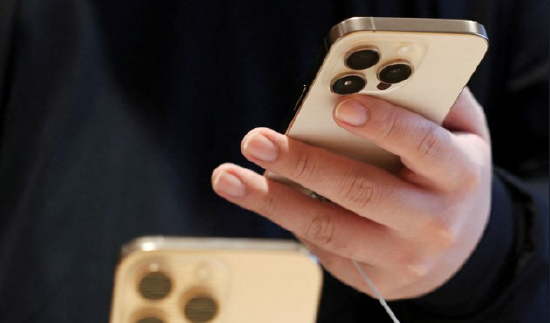
Apple is facing the pressure of demand for its flagship new products falling short of expectations after their release.

According to Nikkei Asia on Friday, which cited multiple sources familiar with the matter, Apple has become more cautious about its shipment expectations since early September. Two of these sources stated that compared to the original plan, component orders for iPhone, Pro, and Pro Max in October have been cut by at least 15% due to weaker market demand than expected. A senior executive source revealed that in October, the order cuts for Apple's high-end models ranged between 15% and 20%.

Meanwhile, UBS analysts pointed out in a research report this week that the delivery lead times for iPhone and Pro in over 30 markets are shortening. UBS stated, "With stable supply, the decrease in lead times, combined with the risk of demand elasticity brought about by recent price increases, makes us increasingly concerned." As a result, there is more uncertainty surrounding whether the first foldable screen models iPhone and Duo will be able to achieve strong sales after their launch on October 23rd.

Price increase of 100 yuan puts pressure on demand for high-end models

Apple released a new generation of its flagship on September 9th. The starting price for the Pro is $1,199, and for the iPhone it is $1,299; both models have seen a price increase of $100 compared to last year, and they went on sale officially on September 18th. The first foldable phone, the iPhone, with a 256GB base version, has a starting price of as high as $1,999 and will be launched in 70 countries and regions on October 23rd.

People familiar with the matter told Nikkei Asia that price is the key factor in suppressing demand. “For a smartphone, this price is simply too high,” said a person with direct knowledge of the situation. The source also noted that, given the market performance of iPhone, Pro, and Pro Max, it is expected that iPhone and Duo will face a similar fate shortly after their launch.

Despite the pressure on shipment volumes, the impact on Apple's revenue remains relatively limited for now, as the price of all models has increased by at least 10% compared to last year, providing a certain offset between volume and price. Apple's supply chain also has extensive experience in flexibly adjusting production capacity in response to market changes.

Another person familiar with the situation pointed out that from late August to October, sales demand was weaker than in the same period of previous years, but this was also partly due to Apple's adjustment of its release schedule this year. This year, Apple prioritized the launch of three high-end models, postponing the release of the standard version iPhone 18 and the new generations of iPhone and Air to next spring. "The boost to sales from the standard version iPhone 18 this year will not be reflected until the end of the year," said a supply chain management expert.

The industry continues to face headwinds, but Apple still has the potential to increase its market share.

The current weak demand for high-end models reflects the structural difficulties faced by the entire smartphone industry. The global smartphone market is encountering an unprecedented shortage of memory chips, as well as rising costs for components and raw materials. IDC predicts that in 2026, global smartphone shipments will see the largest year-on-year decline on record, with a decrease of 16.7%, and this sluggish trend is expected to continue into 2027. However, IDC also points out that driven by the surge in material costs for complete devices, various smartphone manufacturers have raised prices, with average selling prices this year increasing by 27.6% compared to last year.

In comparison, Apple is expected to face less impact in the first half of 2026 than Android manufacturers, which have significantly lowered their shipment forecasts. Analyst Yang Wang from research firm Counterpoint predicts that Apple, focusing on the high-end market, and Samsung will benefit from the pressure faced by manufacturers of lower-priced models, with both companies' market shares expected to rise from less than 20% in 2025 to over 22% in 2026.

Tip
$0
Like
0
Save
0
Views 23
HQYC reminds readers to view blockchain rationally, stay aware of risks, and beware of virtual token issuance and speculation. All content on this site represents market information or related viewpoints only and does not constitute any form of investment advice. If you find sensitive content, please click“Report”,and we will handle it promptly。
Submit
Comment 0
Hot
Latest
No comments yet. Be the first!
Related
Apple reportedly cuts orders for iPhone 18% to 20% of Pro series components; rising prices of memory chips drag down demand for new devices
Insiders say that Apple has informed some suppliers to cut the production of iPhone by 18%, Pro by 18%, and iPhone by 18%. The order volume in October has decreased by 15% to 20% compared to the original plan. Reports indicate that rising prices of components such as storage chips have pushed up the selling prices of new devices, and coupled with demand falling short of expectations, this has prompted Apple to lower its shipment forecasts. Additionally, the competition in the AI industry for storage capacity may continue to put pressure on the costs of consumer electronics until 2027.
The Block
·2026-10-09 15:52:01
14
Liquid AI Open-source d1 Series Decision Models: Single Judgment Takes Only 8 Milliseconds, Supports Image Input
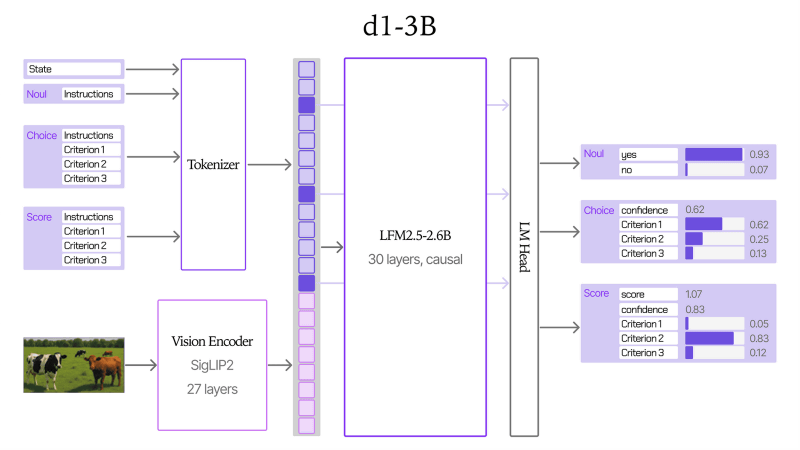
Liquid AI announced on October 7 the launch of two open-weight decision-making models, d1-3B and d1-omni-600M, which support text and image input, as well as text, image, and voice input respectively. The company claims that d1-3B leads all models under 10B in the public test set, and achieves an inference speed of 8 milliseconds for a single question on RTX 4090.
The Block
·2026-10-09 15:51:59
12
Chainlink Launches CCIP Vault Adapters: Cross-chain Deposits into the Treasury, with Challenges Beyond Just "One Click"
DeFi Typically, vaults store assets and strategies on a single main chain, but users may be spread across dozens of different chains. In the past, to deposit funds onto another chain, users had to bridge networks themselves, switch networks, authorize tokens, and then complete the deposit process, with each step involving fees and the risk of errors. Chainlink On October 8th, it was announced that CCIP Vault Adapters would go live, aiming to streamline this entire process into a single cross-chain deposit procedure. Officials stated that a vault on a single network could accept deposits from over 80 supported chains, eliminating the need to redeploy a vault for each individual chain. This represents an update in cross-chain distribution capabilities, but it does not guarantee the earnings or security of all vaults.
币界网
·2026-10-09 15:45:53
17
LegalOn Reduces Development Costs with Three Models: The Key to Saving Money Isn't "Replacing All with Smaller Models"
After enterprises implement the AI programming assistant within their R&D teams, the billing process typically becomes much more complex than during the demonstration phase. The same development task can result in varying usage of the model depending on factors such as the clarity of requirements, the size of the codebase, and whether architectural decisions are necessary. In a case study published on October 8th by OpenAI, this legal technology company demonstrates how it manages Codex costs while maintaining development speed: they select models based on the complexity of the tasks, limit the default use of the fast mode, and set different budgets for various business areas. According to the case study, the estimated daily cost has decreased by about 65% compared to the previous method of usage. This figure is quite impressive, but it cannot be taken out of context...
CoinMeta
·2026-10-09 15:45:44
14
Cryptography companies turn to Anthropic AI to find security vulnerabilities
Cryptocurrency companies, including Ethereum developer Nethermind and Bitcoin wallet ZEUS, have applied to use Anthropic's newly launched AI security scanning service. Anthropic indicates that this tool uses Claude Mythos to automatically identify software vulnerabilities and sends reports directly, without going through manual review.
crypto.news
·2026-10-09 15:41:19
13
View More