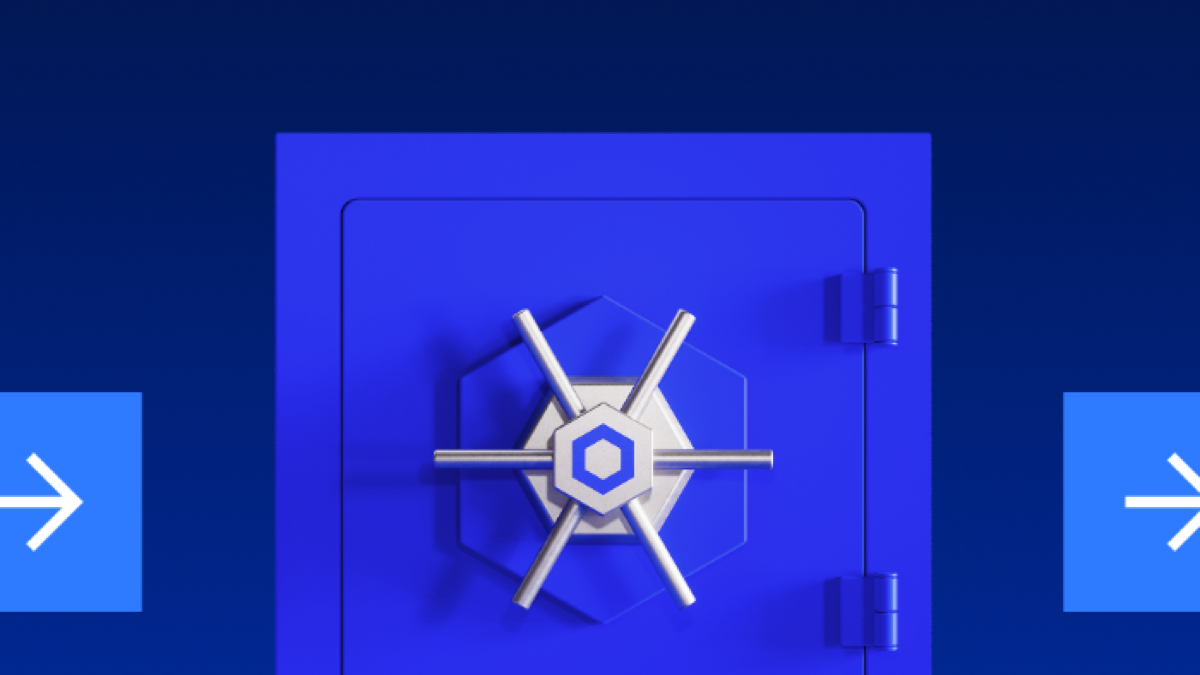


DeFi Typically, vaults store assets and strategies on a single main chain, but users may be spread across dozens of different chains. In the past, to deposit funds onto another chain, users had to bridge networks, switch networks, authorize tokens, and then complete the deposit process, with each step involving fees and the risk of errors. Chainlink On October 8th, it was announced that CCIP Vault Adapters would go live, aiming to integrate all these steps into a single cross-chain deposit process. Officials stated that a vault on a single network could accept deposits from over 80 supported chains without the need to redeploy a separate vault for each chain. This represents an update in cross-chain distribution capabilities, but it does not guarantee the earnings or security of all vaults.
The published materials mention that protocols such as Aave, Lombard, Venus, and Veda have been adopted or are participating in integration. These names indicate that the products have received attention from the ecosystem, but the actual deployment scope, user entry points, and available assets may vary across different projects. The standard ERC-4626 vault can be integrated through factory contracts, while customized processes may require modifying adapters. Writing "the protocol has been announced to be adopted" as simply "all users of this protocol can now deposit funds with one click from any chain" would confuse product support with full-scale launch.
A vault with multiple entrances: Solving the issue of liquidity fragmentation
For vault operators, replicating a set of contracts on each chain is not simply a matter of market expansion. With each additional deployment, there comes an additional set of balances, strategy parameters, governance operations, and risk control monitoring; the liquidity that was originally concentrated on the main chain may be divided into several thin layers. The Chainlink solution allows the core logic of the vault and accounting records to remain on one “main chain,” while other supported chains serve as entry points. Users initiate from the source chain, and cross-chain messages and assets pass through the CCIP pathway to ultimately be deposited on the target chain. The advantage is not that the more chains there are, the better; rather, it saves operators the need to rebuild the product itself for each entry point.
The changes on the user side lie in the process. Manual bridging usually requires understanding whether the fuel fees of the target chain are correct, whether the assets have been credited correctly, and whether subsequent authorizations are successful. A one-click interface encapsulates these steps, which can reduce the likelihood of users giving up due to the complexity of the process. However, a shorter interface does not mean that transaction risks are eliminated. Users should still be aware of what is deducted from the source chain, what is received by the target wallet, what the conditions for completing the cross-chain transfer are, and where the funds will be held in case of failure. This is especially true for larger amounts: although clicking fewer buttons is more convenient, transparency and traceability must be maintained.
The official also mentioned that treasury token credentials can be set by operators to be cross-chain tokens, allowing users to choose to transfer their shares to other chains for use. This represents a potential combination of capabilities, but it does not mean that every treasury will offer this option, nor does it mean that shares on any one chain can immediately be used as collateral in all applications. The credentials represent ownership rights to the treasury assets, and their price and redemption conditions are still subject to the underlying strategies. If shares are transferred across chains and enter more protocols, the potential for earnings may increase, but so do the risks associated with liquidation, price prediction mechanisms, and multi-layer smart contracts.
For development teams, pre-built adapters reduce the workload of writing cross-chain code repeatedly, but testing is not omitted as a result. The number of decimal places of tokens, transaction fees, the network status of the source and target chains, pause permissions, withdrawal waiting periods, and abnormal rollbacks can all affect the actual results for users. Especially for non-standard vaults such as asynchronous redemptions and multi-asset deposits, just because the official says that adapters can be extended does not mean that installing a template is sufficient to launch safely. Third-party audits, limiting initial quotas, and monitoring real transactions are still tasks that need to be completed when pushing convenient features into a production environment.
To measure success or failure, one cannot simply count how many chains are supported.
"Over 80 chains" is a promotional figure indicating the product coverage, but it cannot be directly used to calculate the number of new valid deposits. What a treasury is truly concerned about is: how many users who were previously unreachable have completed their first deposit, how much lower the total cost of cross-chain transactions is compared to manual operations, whether the deposit arrival times are stable, and whether failed transactions can be explained by both customer service and on-chain records. If new entry points attract a large number of small-value attempts, but users exit before encountering transaction fees or qualification restrictions, then the coverage figure will not automatically convert into total locked-up value. Operators should compare the actual conversion rates, rather than just displaying a list of chains.
Risks can also cross boundaries of responsibility. The treasury strategy itself may incur losses, source-chain wallets may be stolen, and cross-chain infrastructure as well as target-chain contracts may experience failures. When users see a button, there are actually multiple underlying components behind it. If the front end only displays "deposit successful" without explaining when the assets will be credited to the treasury, when the shares will become visible, or where to check in case of delays, it hides these complex risks in the very places that need the most clarification. For blockchain finance, good abstraction is not about concealing risks, but about presenting necessary information at the moments when decisions need to be made.
Redemption is particularly worth testing separately. When depositing is smooth, users may assume that exiting also requires just one click; however, some vaults have waiting periods, asset liquidity restrictions, or different cross-chain return paths. Product pages should explain deposit and redemption processes separately, rather than letting the entry experience represent the entire lifecycle. Only when all three stages—funding entry, holding, and exit—are seamless can what is known as cross-chain accessibility be considered a complete experience.
This release also reflects the changes in competition among DeFi. In the past, vaults competed on strategic returns, fees, and security records; as the number of products increased, the ability to reach dispersed users also became a dividing line. However, broadening entry points may attract short-term funds, but long-term retention still depends on whether the strategy can withstand market fluctuations, whether the disclosures are credible, and whether redemptions are smooth. Cross-chain technology can reduce friction in acquiring users, but it cannot replace the vault's own investment and risk management capabilities.
As of now, what can be confirmed is that Chainlink has launched CCIP Vault Adapters and provided the integration methods for the standard treasury as well as a list of early ecosystem participants. The real usability of each asset and each transaction path still needs to be verified through the launch pages of specific projects and on-chain transactions. What is most worth monitoring next is not how smoothly the "one-click" process is depicted in the promotional videos, but whether users from different sources on various chains can safely deposit and redeem funds, and whether it is still possible to track the whereabouts of the funds in case of issues. For cross-chain distribution to truly mature, both convenience and verifiability must grow together.