The interactive chatbot platform Character.AI allows users to create AI characters and converse with them. The company, which has been established for only five years, has now applied for protection under Chapter 11 of the U.S. Bankruptcy Code. Prior to this, the company faced a series of lawsuits and encountered difficulties in expanding the scale of its popular platform. According to a court document, the company stated that its assets and liabilities are between 50 million and 100 million dollars.
Character.AI CEO Colin Adams stated in a statement: "Over the past year, in the face of significant legal, regulatory, and operational obstacles, Character.ai has taken meaningful measures to maintain and improve its business. After a comprehensive assessment of feasible alternatives, the board of directors believes that this sale process, supervised by the court, provides the best opportunity to maximize value for all stakeholders of the company."
The startup also agreed to sell some of its assets to Disney for $20 million and grant Disney a non-exclusive, perpetual license to its technology.
The company stated that Disney will provide transitional services to the former Character.AI employees who joined this entertainment giant last month along with the former CEO Karandeep Singh Anand.
Adams indicates that the company will continue to operate during the sale process, which is expected to be completed in late November or early December. However, he also pointed out that there have been no bids or buyers for the company's assets yet.
Character.AI The past five years have been quite turbulent for the company. It was founded at the end of 2021 by former Google engineers Noam Shazeer and Daniel De Freitas. Shazeer is one of the co-authors of a milestone Transformer paper. Initially, the company focused on training basic models and developed a AI chatbot platform that allowed users to create custom characters to chat with.
By September 2022, driven by strong platform demand, this startup joined the ranks of unicorns after raising $150 million in a financing round. At that time, the company stated that within 5 months, there had been over 2 billion messages exchanged between users and its robots, with active users spending an average of more than 2 hours on the platform each day.
In May 2023, the app Character.AI attracted over 1.7 million installations in its first week on the market. However, about a year later, in August 2024, Google made a deal worth $2.7 billion to obtain licensing for the models of this startup. Shazeer and De Freitas also returned to this search giant. At that time, the company's Chief Legal Officer, Dominic Perella, took on the role of interim CEO, and the company shifted its focus from training basic models to growth.
However, the growth momentum of Character.AI did not slow down. By October of that year, its platform had reached 20 million monthly active users.
But after a 14-year-old boy from Florida committed suicide, the company faced difficulties. The boy's mother stated that he became obsessed with a chatbot on the platform, and subsequently the company was sued. Not long after, Texas also launched an investigation to assess whether the platform complied with child privacy and safety laws. Since then, the company has reached settlements in some of these lawsuits, added more security features, and prohibited minors from using its platform.
However, the company ultimately had no choice but to file for bankruptcy, which indicates that these changes did not manage to fundamentally improve the sustainability of this startup.
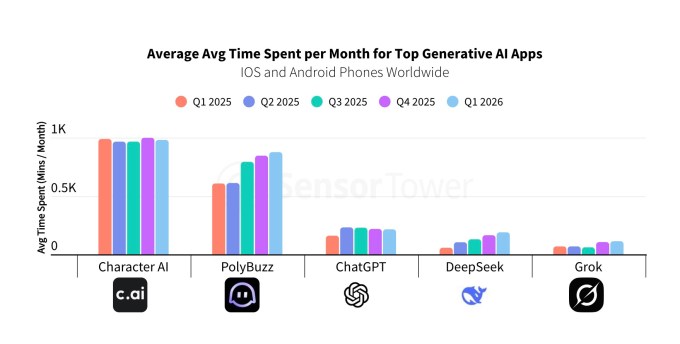
This also demonstrates that it is indeed very challenging to scale and commercialize AI products targeting consumers. According to data from the analytics company Sensor Tower, Character.AI was once one of the applications with the highest user engagement times. However, high engagement can be a double-edged sword: the more users there are, the higher the AI costs, which in turn increases the pressure to monetize those users.
According to the data from PitchBook, Character.AI has raised over $193 million in multiple rounds of financing, with investors including Lightspeed, SV, angels, Greycroft, and a16z.