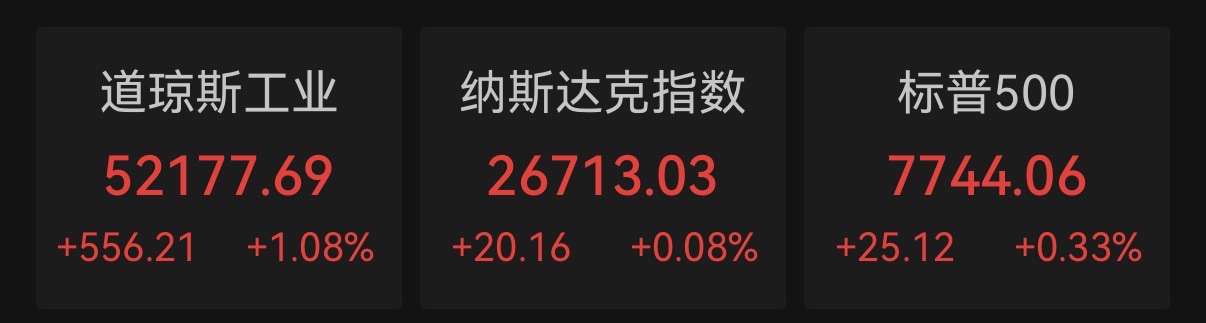
The main headlines that caught the attention of global financial media last night and this morning are:
Leverage ETF attracts record amounts of capital inflow amid the plunge in chip stocks
As the market value of the chip industry evaporates by $1 trillion, ETF investors are making large purchases during this wave of selling. A fund that triples investors' daily exposure to this industry is set to record a record level of capital inflows this week.
Data shows that the $72 billion VanEck semiconductor fund ($BJW_KEEP_00002__) has attracted over $430 million in capital inflows over the past three trading days, and this week's capital inflows are expected to reach their highest level since early September. Some investors are even more bold, investing approximately $3.8 billion daily in the triple-leveraged Direxion daily semiconductor triple long ETF ($BJW_KEEP_00005__), despite the fund's market value having fallen by nearly 21% this week. Such a scale of capital inflows is sufficient for this $19 billion fund to set a new record for weekly capital inflows.
However, the overall environment is far from reassuring: As investors' concerns about spending on artificial intelligence and intensifying global competition continue to exert pressure, the Philadelphia Semiconductor Index has fallen by 12% over the past six trading days, with the market value of its constituent stocks shrinking by approximately $1 trillion. Concerns about overly high valuations and rising interest rates have also exacerbated the volatility in this sector.
U.S. mortgage rates remain unchanged for a week, and the housing market continues to face pressure
U.S. mortgage loan rates have remained unchanged over the past week, providing little relief to the housing market that has been hit by borrowing costs returning to 7%.
Fannie Mae stated in a statement on Thursday that the average interest rate for 30-year fixed-rate mortgages remained at 7.4%. This rate has been hovering at its highest level since November 2023. It was 6.27% a year ago.
Rising borrowing costs have hit both buyers and sellers hard. Mortgage loan rates exceeded 7% last month and have not yet fallen since. As the affordability of housing deteriorates, rising interest rates force sellers to lower their prices on one hand, while also deterring potential buyers on the other.
Meta Launches the "Most Powerful" Open-Source Large Model that Can Run Locally on Apple Computers
Meta has launched what it claims to be the "most powerful" open-source large model in the United States. This model is named Muse Spark Open, and one of its main features is that it is specifically designed to work with Apple's Mac computers.
Meta released its evaluation results on Thursday, stating that this new model has 816 billion parameters and a context window of 1 million token, and its performance is superior to other mainstream open-source weight models.
Muse Spark Open natively supports multimodal capabilities, is designed for complex coding tasks and agent-based work scenarios, and can run locally on Apple computers. However, according to Engadget, local deployment of this model requires a very high level of hardware memory, with at least 1TB of memory needed; devices equipped with M5 Ultra chips and Mac Studio can achieve the best performance.
Jensen Huang stated that the financial strength of CoreWeave has improved, and NVIDIA no longer needs to provide backup support for them.
NVIDIA CEO Jensen Huang stated that the financial situation of CoreWeave Inc is improving. This data center operator purchases NVIDIA's computing devices.
Jensen Huang stated during an event in Stockholm: “The strength of CoreWeave is growing every day.” He believes that NVIDIA has no need to provide backup support for CoreWeave. “I am very optimistic. Their capital costs are actually decreasing.”
At a time when the credit market is taking a negative attitude towards CoreWeave and believes that its default risk is on the rise, Jensen Huang is attempting to boost external confidence in the company. CoreWeave is an important case study to test whether the business models of a group of emerging enterprises can be successful. These enterprises have emerged to meet what companies such as NVIDIA refer to as an almost endless demand for AI computing power. Companies like CoreWeave, with the support of suppliers including NVIDIA, have taken on large amounts of debt, which has raised concerns in the market about "circular financing," suggesting that this financing model may create artificial demand.
Senior Wall Street figures say Brent crude oil has become a "sentimental contract" and is out of touch with the real world
A senior Wall Street figure, Jeff Currie, stated that the world's most important oil benchmark futures have now almost become a kind of "emotional contract," diminishing their utility as a tool for managing price fluctuations.
"Everything related to energy is rising in price, except for Brent crude oil," Currie said on Thursday. "It has become disconnected from the real world."
Currie is the founder and CEO of investment company Real Macro. He stated that the current price of Brent crude oil at around $106 per barrel does not reflect the extent of the threats to supply in the region from the Strait of Hormuz to the Black Sea. Recently, the threats faced by the oil market have further escalated, with frequent attacks on oil tankers in the Strait of Hormuz, and the attacks by Houthi militants against Saudi Arabia have intensified. The freight market has also seen a surge in prices.
Citi: Tech stocks are expected to contribute nearly 70% of global earnings growth next year
Citi Group strategists stated that technology stocks are expected to contribute nearly 70% of global earnings growth next year. Therefore, if the enthusiasm for artificial intelligence begins to cool down, the upward trend in the stock market could be at risk as a result.
Citi's analysis shows that, in terms of industry contribution, this ratio will place the concentration of profit growth in 2027 among the highest recorded levels. Teams including David Groman and Beata Manthey indicate that over the past 30 years, the industry sectors that have contributed the most have accounted for an average of about 40% of profit growth.
Strategists say that this high concentration poses a risk at a time when the overall earnings per share growth rate is expected to slow from 35% in 2026 to 16% next year. However, they point out that there is "almost no correlation" between profit concentration and the overall performance of the stock market.