

As the saying goes, a pot won't boil if it's constantly being watched, but the price of Costco that I have been tracking this year remains quite calm in an economically heated environment.
The basket of 45 products I track has seen a 3% increase since July, but this rise is mainly attributed to the recent surge in oil prices.
Overall, the data I observed on the shelves of local warehouses is quite different from what I had anticipated after following the news of unrest around the world. Costco takes pride in maintaining the prices on warehouse shelves as close to wholesale levels as possible, which makes it a useful early indicator for observing supply cost pressures.
This certainly doesn't qualify as a national price index, but it does reflect how the global economic power is manifested in an ordinary American community like Madison, Wisconsin.
My data shows that the prices of food groceries and goods have remained generally stable, with small increases and discounts largely canceling each other out across the entire basket of items. At the same time, commodities such as engine oil, protein powder, and aluminum foil are beginning to show the pressures brought about by their respective commodity markets. Costco has not responded to requests for comment.
At last month's teleconference, CEO Ron Vachris stated that the company is working with suppliers to address rising commodity prices and to control them. He said, "The continuous focus of all our purchasing staff is to find ways to reduce pricing."
But first of all, it's worth taking a step back and looking at things from a different perspective.
Over the past year and a half, I have been closely monitoring prices, concerned that President Trump's trade wars would have an impact on the everyday items purchased by ordinary American families.
In January of this year, I compiled a list of common items to purchase, to highlight the value of shopping at warehouse membership stores. After the attacks on Iran by the United States and Israel in February, I decided to continue to observe how the conflict in the Middle East would affect food costs in the Midwestern United States.
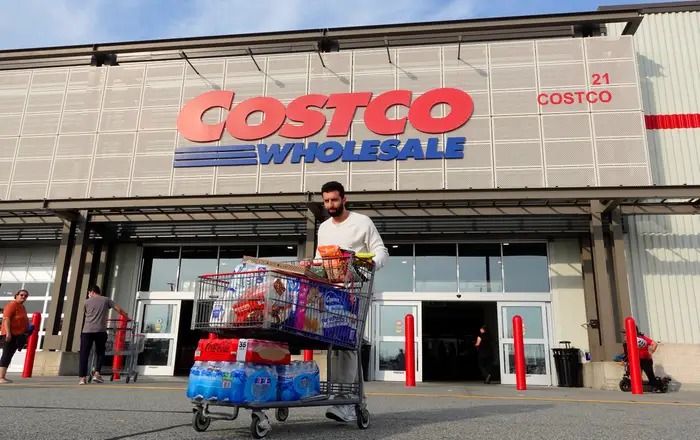
So far, the impact has been surprisingly mild. The price of the entire basket of goods has risen from $864.60 in January to $884.60 on October 13, representing a gain of 2.3%.
From January to April, there was a slight increase in the price of these products, mainly due to a 3.20-dollar rise in the price of two-pound packs of Starbucks coffee beans. In May, four-pound packs of organic ground beef were replaced with regular beef of similar size, priced at around 24.99 dollars. This move helped Costco to cope with the widely reported increase in beef prices; even hamburger vendors began to promote chicken products to customers.
By June, the price of this basket of goods was about $10 lower than in April, as the slight price reductions on most items on the list offset the $10 increase in whey protein prices, while the ongoing shortage of whey protein supply continued to put pressure on availability.
In July, the prices of bacon and berries fell, while the price of Kirkland engine oil increased by $4. Charmin reduced the paper size of its 30-roll packs of toilet paper by 60 square feet, but at the same time lowered the price by $3, slightly improving the unit value for consumers.
Recently, refinery bottlenecks and attacks on oil infrastructure have driven up diesel prices, which in turn have increased transportation costs.
In the warehouse, the most evident example of the petroleum supply issue is Kirkland Signature engine oil, whose price soared to $57.99, an increase of 60% compared to June.
Meanwhile, the price of blueberries more than doubled, rising from $3.99 in July to $8.99 in October. The prices of all fresh berries fluctuated by a few dollars throughout the year, so it is not yet clear whether this recent change is due to seasonal supply, transportation costs, or a combination of both.
Other bulk commodities are also facing supply and tariff pressures: the price of aluminum foil rose from $29.99 in July to $32.69 in October, an increase of 9%; it was $26.99 in May.
As tariff refunds are coming to an end and energy prices continue to rise, several food suppliers and grocers have warned that costs are on the increase. Perhaps it's time for this pot under close observation to start boiling over.