

According to CoinMeta's US Stocks section, on October 19, SanDisk's market cap surged by nearly 70 billion RMB overnight, driving a collective rally in US memory chip stocks. Among them: SanDisk closed up 5.53%, with its market cap rising to $199.3 billion, an increase of about $10.4 billion in a single day; SK Hynix rose over 4%, and Micron Technology gained nearly 3%. So, how long can this collective rally in US memory chip stocks last?
Table: Overview of Data Related to the Collective Rally in US Memory Chip Stocks on October 19
| Data Metric | Specific Data |
|---|---|
| Philadelphia Semiconductor Index Single-Day Performance | Up 1.61%, ending an eight-day losing streak |
| Memory Sector Individual Stock Single-Day Gains | Western Digital +6.09%, SanDisk +5.53%; SK Hynix +4.67%, Seagate +3.41%, Micron +2.97% |
| SanDisk Market Cap and Single-Day Increase | Market cap $199.3 billion, up $10.4 billion in a single day |
| SanDisk Long-Term Agreement Locked Scale | Minimum contract revenue $42 billion |
| Micron FY26Q4 Revenue and Gross Margin | Revenue $54.23 billion, Non-GAAP gross margin 87.0% |
| Micron Data Center Business Growth | Core Data Center BU quarterly revenue $18 billion |
| 2026 Q4 NAND Contract Price Forecast | Overall NAND contract prices up 15%–20% QoQ |
| 2026 Global Memory Supply-Demand Gap | DRAM gap 4.9%, NAND gap 4.2%; HBM gap 5.1%, all highest since 2011 |
| YMTC NAND Shipment Share | About 14%–17% by shipment volume in Q2 2026 |
| YMTC Revenue Share Jump | From 9% in 2025Q1 to 14% in 2026Q1 |
Note: The above content is compiled and summarized by the CoinMeta US Stocks team based on public market data. Please refer to actual data if there are any fluctuations.
Latest Analysis of the US Memory Chip Stock Market
Is the surge in US memory chip stocks a recovery or a reversal? In our view, we should first look at the sector's position and the leading structure, and then judge the quality of the rally.
Behind the Single-Day Surge Is an Oversold Recovery
Behind the single-day surge in US memory chip stocks, the sector had just experienced a severe pullback. We noted that just the previous week, the Philadelphia Semiconductor Index (SOX) had fallen for six consecutive days, SanDisk dropped over 5% in a single day, and Micron, SK Hynix, and Western Digital weakened simultaneously. Goldman Sachs Prime Brokerage data showed that in the five trading days ending October 15, hedge funds reduced their technology stock positions at the fastest pace in at least a decade. As one of the highest-beta segments in AI infrastructure, the memory sector bore the brunt of this technology stock sell-off.
Image: US Memory Chip Stocks Surge
In the view of CoinMeta's US Stocks analysis team, the October 20 rebound has a clear "oversold recovery" character, rather than confirmation of a new trend. Because distinguishing recovery from reversal depends not on the single-day gain, but on whether the trading structure and contract price signals can continue in the following trading weeks.
Why Is SanDisk the Leader of the Rebound?
Behind the US memory chip rally, SanDisk rose 5.53%. Why is SanDisk the leader?
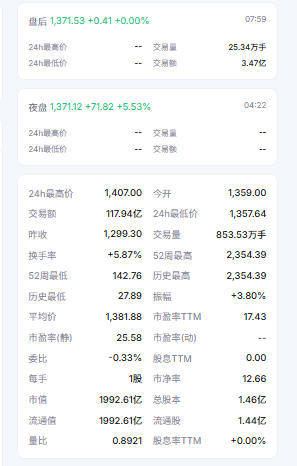
Image: SanDisk Latest Stock Data
In fact, SK Hynix rose over 4% and Micron gained nearly 3%. SanDisk's leading gain is no coincidence; its market cap is much smaller than Micron's, and its business is highly concentrated in NAND, making it most sensitive to marginal changes in NAND contract prices and long-term agreement progress. Kioxia's counterexample also confirms this from the other side: manufacturers focused on NAND but lacking long-term agreement protection saw their market cap evaporate by about 65% from its June peak during this volatility. Both exposed to NAND, the divergence between SanDisk and Kioxia points to contract structure rather than the category itself.
What Is the Underlying Logic Behind SanDisk's Rise?
SanDisk's leading gain is only the result; what really needs to be broken down is how long-term agreement price locking and supply constraints are rewriting pricing rules.
$42 Billion in Long-Term Agreements Locks in the Profit Floor
In this round of SanDisk's revaluation, the most substantive variable we see is not price increases, but a change in sales methods.
Currently, SanDisk has signed five multi-year supply agreements. The minimum contract revenue (RPO) of three contracts in the third fiscal quarter totals about $42 billion, covering over one-third of bit shipments for FY2027. Management explicitly stated that it is expected to exceed 50% subsequently, with contract terms of up to five years. Meanwhile, customers have paid billions of dollars in financial guarantees; failure to meet quarterly purchase commitments converts into liquidated damages.
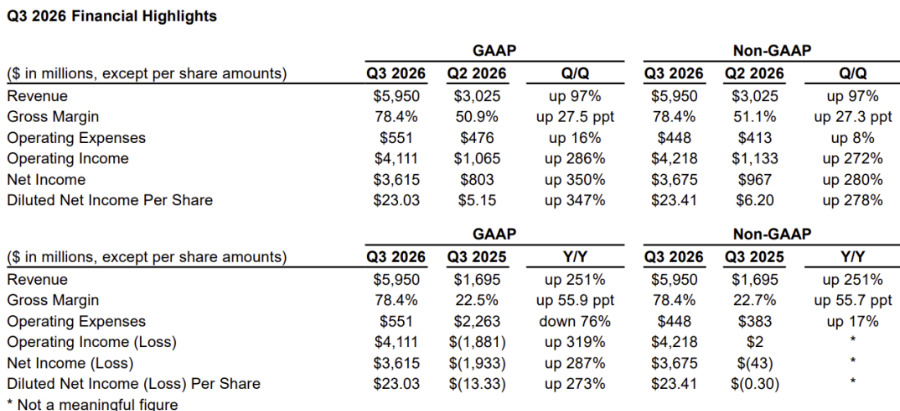
Image: SanDisk Q3 Financial Data
Our analysis of the true meaning of long-term agreements is this: it shifts the valuation anchor from the spot earnings of a cyclical stock to the stability premium of contracted cash flows. Micron's simultaneous advancement of 26 strategic customer agreements covering over 35% of expected revenue through 2030 shows that this is not an isolated move by SanDisk, but a collective shift in the business model of leading memory manufacturers.
Supply Constraints Are Why Long-Term Agreements Can Be Signed
Without supply-side cooperation, long-term agreements can only lock in prices, not scarcity. SanDisk's confidence to sign five-year agreements comes precisely from its active control over its own supply pace:
First, the company explicitly stated it will proactively cut wafer output to prevent oversupply, with bit growth relying mainly on technology node iteration rather than greenfield expansion, and capital expenditure intensity only in the low-to-mid single digits as a percentage of revenue.
At the industry level: 2026 NAND wafer starts are estimated to shrink by 5%, with only 3% annual growth in 2027, and new capacity will only gradually come online in 2028; Citi expects the tight NAND supply-demand situation to potentially last until 2028.Our analysis suggests that the premise for long-term agreements being signed for five years and customers being willing to pay $16.5 billion in financial guarantees is precisely that buyers also recognize the judgment that "enough supply will not be available in the coming years," and SanDisk happens to have the initiative on the supply side to control the pace of bit release.How Long Can US Memory Chip Stocks Continue to Rise?
US memory chip stock prices fluctuate daily, but the direction of the memory chip market depends on four trackable variables.
First, long-term agreement coverage: SanDisk has covered over one-third of bit shipments for FY2027, targeting over 50%. The ramp-up speed determines whether the "contractual revaluation" can continue.
Second, NAND contract price QoQ: Q4 NAND contract prices are expected to rise 15%-20% QoQ, and enterprise SSDs by 23%-28%. The QoQ direction reflects marginal profitability better than YoY gains.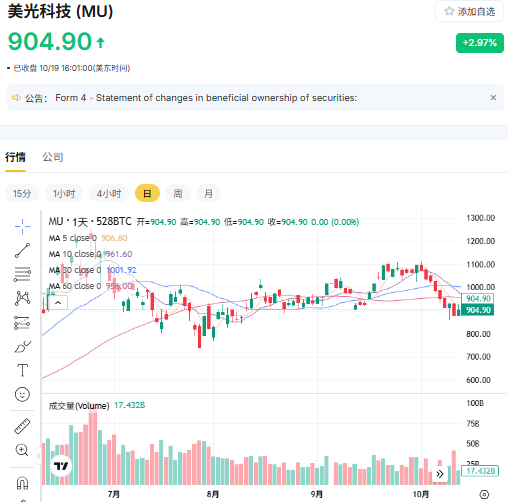
Image: Micron Latest Stock Price
Third, supply discipline: Micron's FY2027 capital expenditure plan exceeds $45 billion, but DRAM output growth in 2027-2028 remains "in the low twenties percentage points" below 2026. The larger the gap between spending and output, the more credible the scarcity.
Fourth, China NAND supply: In Q2 2026, YMTC's shipment share was about 16.5%, ranking third globally. Our advice is to focus on whether enterprise SSD penetration accelerates. Long-term agreement coverage and supply discipline determine the ceiling of how long the rally can last; contract QoQ and Chinese supply determine when the turning point comes. Ordinary users only need to track these four readings quarterly, without having to watch stock prices daily.FAQ on US Memory Chip Stocks
Q1: Is SanDisk's surge due to NAND price increases?
Answer: Not entirely. Price increases provide a short-term catalyst, but the core of SanDisk's revaluation is that long-term agreements have locked in the profit floor.
Q2: Can US memory chip stocks continue to rise?
Answer: The collective rally in US memory chip stocks has short-term support, but one-sided expectations should be tempered. Bank of America believes valuations have reached a cyclical bottom, with selling prices and profit margins remaining at super-cycle levels in 2027-2028. Future upside depends on long-term agreement coverage and the enterprise SSD competitive landscape.
Q3: Is it risky to chase the rally in memory chip stocks now?
Answer: The cost-effectiveness of chasing the rally is declining. Although Bank of America judges valuations have bottomed, while Cathie Wood calls for buying, BofA strategists explicitly stated that "the end of a sell signal does not equal a buying opportunity."
Conclusion
The collective rally in US memory chip stocks, with SanDisk adding $70 billion in market cap overnight, appears in the short term as an oversold recovery resonating with sector sentiment. In the medium term, it is a mapping onto stock prices of a structural shift in NAND from spot exposure to long-term agreement locking. Our analysis suggests that how far this US memory chip rally can go does not depend on a single day's intraday chart, but on whether long-term agreement coverage can continue to ramp toward 50%, whether NAND contract prices can maintain double-digit QoQ growth, whether the gap between Micron's capex and bit output persists, and whether YMTC's enterprise SSD penetration accelerates. Putting these four variables into a quarterly tracking list brings you closer to the answer than watching stock prices every day.
Disclaimer: Readers are strictly advised to comply with local laws and regulations. This article is compiled based on public market data for reference and educational purposes only, and does not constitute investment advice. Follow CoinMeta for the latest updates.