

Ukrainian President Volodymyr Zelensky said on Monday that Kiev has been waiting for nearly a month for U.S. Defense Secretary Pete Hegseth to approve a batch of key missile interceptors.
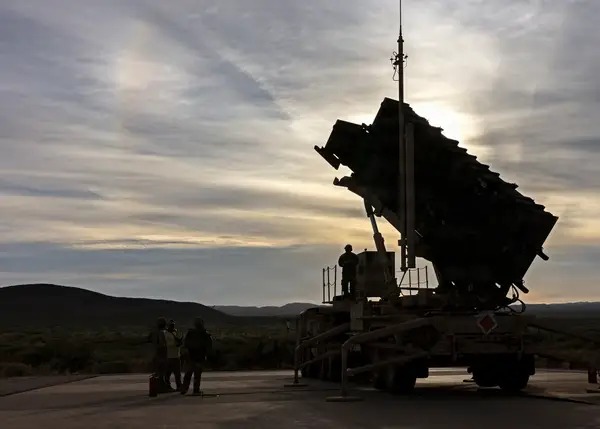
Zelensky said that Ukraine has been waiting for approval to purchase interceptors for its Patriot and NASAMS systems. Among them, the Patriot system is Ukraine's most reliable defense against Russian ballistic missiles.
The Ukrainian president stated that he has instructed his team to "communicate with the US side on this matter again. Dialogues with other countries are also continuing."
Most of Ukraine's air defense systems, including the interceptors required for its Patriot batteries, have been provided through NATO's "Ukraine Priority Needs List" initiative ( PURL ). Under this mechanism, allies and partners purchase weapons from the United States first, and then transfer them to Kiev.
It is currently unclear how many interceptors have been put on hold, nor is it known why Hergesseth has not yet approved the transfer.
A senior official from the US Department of Defense told Business Insider that there has been "no change in department policy regarding intelligence sharing or any capabilities that we are providing to Europeans to assist Ukraine."
This official added that PURL advocates for "continuing as before."
Ukraine has been facing a shortage of interceptors, which makes it difficult to effectively defend against the increasingly severe attacks by Russian ballistic missiles. At the same time, armed jet drones have also caused heavy damage to Kiev in a series of deadly bombings.
The MIM-104 Patriot surface-to-air missile system, manufactured in the United States, is a key component of Kiev's defense system. Ukrainian officials have been urging the United States and European allies to provide more interceptors, particularly the PAC-2 and PAC-3 models. However, global ammunition stocks are under increasing pressure.
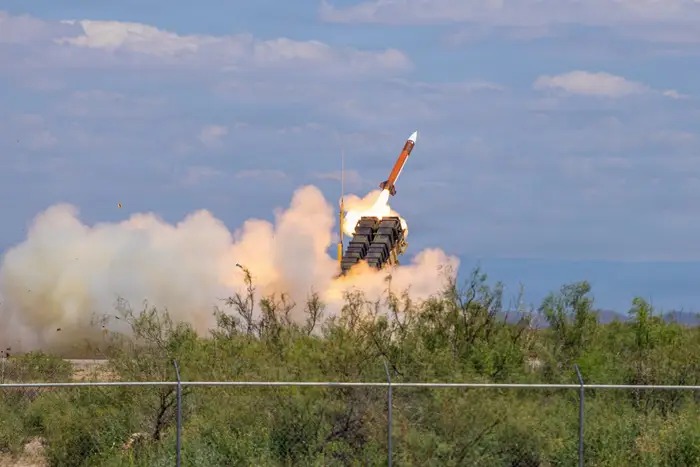
"We are advancing on multiple fronts – cooperating with the United States, Europe, and other partners that possess PAC-2 and PAC-3 missile inventories," Zelenskyy wrote on social media on Monday.
The war in Iran has placed immense pressure on ammunition stocks. Colonel Yuri Ignat, a spokesman for the Ukrainian Air Force, stated on Monday that the Patriot interceptors launched by the United States and its allies in the Middle East could have provided several years of support for Kiev's defenses.
NASAMS (a national advanced surface-to-air missile system) is another important component of Ukraine's air defense network, jointly developed by the United States and Norway. It is not designed to intercept ballistic missiles, but rather to deal with medium and short-range targets such as aircraft, cruise missiles, and drones.
Zelenskyy's statement comes at a time when tensions between Ukraine and the United States have been increasingly worsening on a broader scale, with these tensions escalating over the past few weeks.
The Trump administration publicly condemned Ukraine's drone attacks on Russian energy facilities, and Washington blamed Kiev for high oil and diesel prices. However, industry experts believe that the war in Iran is the main source of disruptions in the global market.
In October, Ukrainian officials reported that Kiev did not receive any advance warnings from international partners about the launch of Russian ballistic missiles through regular channels, leaving them with little time to detect the incoming targets before the missiles struck. The seemingly interrupted intelligence sharing was resumed a few days later.
Earlier this month, Ukraine also suddenly encountered disruptions to the Starshield service. Sources stated that this military-grade Starlink version of internet speed restrictions affected drone operations, logistics, and communications.
Ukrainian Defense Minister Yevgeny Hramal said on Saturday that monitoring systems have recorded that the internet speeds for Starshield and Starlink have been restored. Starlink provides commercial satellite internet services for SpaceX.
This incident has raised the alert of Ukrainian officials. SpaceX CEO Elon Musk accused Kiev of violating the Starlink service terms by using civilian services for drone attacks, and stated over the weekend that this ultimately led to a disruption in services. However, some senior drone advisors in Kiev have refuted this claim.